58 thoughts on “Poll: Do you ever clean primer pockets?”
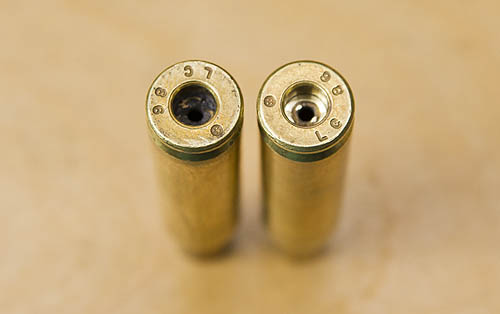
I de-cap my brass and then clean with stainless steel media, so the primer pockets get cleaned during the tumbling. Makes for a very nice looking case, inside and out. You should try it!
I always deprime and clean my handgun and rifle cases by tumbling with stainless media as well, however I deprime and use an ultrasonic cleaner for my .204 Ruger cases because the pins bridged at the necks and jammed in the case……absolute PITA to get out. I almost never have this occur with my 6.5 necked cases.
I don’t have stainless media (yet), but I decap before I use a vibratory tumbler with corn cob, plus some liquid polish, and while it takes a while longer to get done it cleans the primer pockets also. So far I’m happy with the corn cob – even though I also have to knock out the occasional chunk of media that jams itself inside the brass.
I do have a big urge to try stainless, but I’ll need to do some studying on it before I switch. – I’m pretty sure I’d also have to get a new tumbler (I had a rotary that would have worked with wet media but I gave it away). Plus even though stainless is faster at cleaning, in every post I’ve read the user was doing much smaller loads than I do – I can do from 250 to 300 .45 acp rounds at a time. And I don’t have to dry them afterwards, so the time saved might not be as great as I imagine.
But as I said I still have a big urge to try it out…..
I’m like you, cleaning primer pockets is not a special action, it’s part of the process. By the way I de-cap with a universal de-capping die on an old Lee Pro-1000 to save getting al that dirt in my working press. Then the de-cap/sizing die in station 1 on the main press is only actually resizing clean brass.
Hello Gavin,
Hey just a thought, you have a good following and always seem to come-up with interesting projects, so I think it’s time for a “Wet Tumbling” with stainless media project. I went that route few months back…very addicting, all that shiny brass, clean primer pockets and clean insides too!
No thanks. For pistol, you’re really not gaining anything. I”ll just tumble and then sit down in front of my press. I *am* using a progressive, no way I want to add that extra step for NO benefit.
I agree with Ron M in that I do not clean the primer pockets on my pistol brass for my plinking rounds. For self defense rounds I would clean the primer pocket.
I fire my rifle round 8 to 10 times and neck size only. I fire 223, 308 and 300 Win, I deprime my rounds and then clean in my vibratory cleaner, primer pocket are always clean at completion. Pistol I don’t clean.
Pistol virtually never, except when playing with the Chronograph to see how uniform can get test loads to perform. Also ream flash-holes think may “enhance” results ?
Rifle for bench, yes but no for “bulk” 5.56 used in various “gun games”, etc.
I don’t load on a progressive or turret press. I do everything on a single stage – I feel more in control that way. I’m not out to make large amounts of ammo at one sitting. I actually enjoy my time at the reloading bench, so I do all the detail things that many people don’t. I’m well aware of the fact that some of them haven’t been proven to actually do any good, but I do them anyway. I’ve been handloading since 1984 and that’s the way I’ve always done it.
I finally found that other person in this world thatuses a single stage! I’m with you 100%. I have not been reloading as long as you, I’ve been doing it only for 6yrs.
Well there are three of us using single stage presses. Started reloading in 1984 or 1985 for better accuracy and have been hooked ever since for all of the reasons stated here.
Now there are four of us. I too enjoy my time at the bench. It’s a great stress reducer and the added quality control of a single stage press is a bonus
Make that 4 of us. Granted, i’m somewhat new to reloading, only about 1000 rounds so far, i make all of mine to a high degree of consistency. And of course i reload with a single stage press. If i dont have time to go to the range I reload.
500/hour versus 50/hour?
Wish I had that patience!
If any of you are tradesmen (plumbers, HVAC, auto repair, construction, electrician, etc…), I’d like to know. You’re probably among the best around. Most folks are eager for the shortcut.
Single stage since mid seventies. Have been thinking about a progressive though. Two sons in the Marine Corps, when they come home I better have around 1,000 rounds of something ready to go. Now in my 68th year so I think it helps keep my mind sharp!
I use single stage press only-and know quite a few other guys that do-none of you single stagers are alone
I’m with you Mike. I have a variety of presses of various ages or antiquity along with a Lyman 45 and 450 sizer. It’s not about the speed. It’s entirely about precision and simply enjoying my hobby. I spend some days focused on Casting or sizing. Other days are “brass days”. I inspect each piece I’m cleaning while decapping, annealing, trimming, cleaning primer pockets or any number of other small tasks that I take pleasure in performing in-between my range days.
So far I’ve only loaded pistol ammo (.45acp, 40s&w, 9mm, and .380). I don’t clean primer pockets because I’m going for volume. Rifle would be different.
I’ve only been reloading for about a year. And I use the tumble method and when I tumble I use a 50/50 mix of Walnut and Corn cob media and add 4 capfuls of Dillon’s polish. As for the primer, I don’t remove it until after I’ve tumbled because the primer hole tends to end up getting media stuck in it. then after tumbling I de-cap and then clean the primer pocket. And I clean the primer pocket for both pistol and rifle because I think it’s a good habit to have.
And it might not be the best or easiest way, but it works. However, I’m more then willing to try something new providing it works better without costing more. I mean, if it costs more but you don’t need to replace it as often, then it’d be worth it. And in reading about it here, I’m curious to know more about it and where those of you who use it, get the stainless steel media you’ve mentioned and use? And does stainless steel media play hell with the tumbler? Does using stainless steel media require a specific tumbler?
And does anyone use, or has anyone tried the ceramic ball media? And does it play hell with your tumbler?
Stainless media requires a specific tumbler. It is a wet media so you add water and dish detergent. It also takes about 3-4 hours to clean the brass.
I bought the kit from here… http://www.stainlesstumblingmedia.com/
I find it interesting that many of you say NO to clean primer pockets on handgun brass but YES to rifle brass. Having spent time on both handgun & rifle competitions, and having been an avid reloader for quite a few years, I gotta ask why to the NO on handgun? I realize some (like me) are willing to donate more time to produce quality ammo,,,,and then some just want to pump out volume to go bang.
In my opinion, it’s a good idea to clean primer pockets on ANY brass, as crud tends to build up in the pocket often causing a real issue with proper primer seating. Considering the tolerances between primer pocket and primer are pretty much non existent (exact fit) why would anybody close their eyes to a crud build up?
Justin, thanks for posting the link to the stainless steel media,,,,,I am seriously going to ask Santa for that one!
Another thought on that. If someone doesn’t clean the primer pocket it means they aren’t paying attention to crud stuck in the flash hole or crud building up around the hole.
When I first started loading/reloading I never cleaner primer pockets and I had occasional problems with seating primers. Harder to seat, sideways and crushed, they prompted me to start cleaning brass in a tumbler, then cleaning primer pockets. At first I used a hand tool and found that too difficult when doing large numbers. Next I began using either a hand drill or drill press with a pocket cleaning brush in the chuck, better and faster but still tedious and tough on the hands.
Now, many years later I load several different pistol and rifle calibers and have developed a step by step process that has eliminated most primer pocket problems. First is to deprime fired brass using a simple single stage press with a universal decaping die. Second I tumble the brass and third I use a Casemate Prep Center. Using the correct size primer pocket cutting tool and flash hole deburring tool takes care of primer pockets and a bore brush on another station cleans residual residue on the inside if necessary.
((Extra info as a caution: Over cleaning and overworking cases may cause serious problems.
Next, if necessary I can deburr and chamfer the case mouth while I’m at it although when I first started I overdid the case mouth treatment and experienced bullet set back with jacketed bullets as they couldn’t bite or catch purchase. And applying extra crimp only reduces the case mouth size which is another problem as most popular pistol cartridges headspace on the case mouth. I found that pistol cases rarely need to be cut back as they tend to shorten if anything rather than lengthen, again due to head spacing on the case mouth rather than the rim. Relatively low pressure pistol cases like 45 acp will last for many reloads without much prep other than cleaning which protects your dies and removes a little friction in the magazine and a small amount upon chambering.))
I bought some stackable bins (three for each caliber sized as necessary) and separate my brass by stages with fired brass in one, deprimed in the second and fully prepped in the third. I put cardboard cut to size with the appropriate labels written on them in the slots provided for simple identification which prevents confusion.
If loading on a single stage press this completely eliminates excess force and crushed primers. If using a progressive press, this combined with cleaning of the priming mechanism plus any required adjustments due to switching primer size and careful loading of primers into the magazine allow trouble free loading. One in a while if the particular combination of cartridge components seem to be a little sticky or I’m loading a smaller batch I just use a hand priming tool or a single stage press to prime and then remove the decapping tool from the press tool head and primers from the magazine before starting to load allows efficient loading without problems.
I don’t think the priming process on any progressive press is ever 100% trouble free but you can develop techniques and tricks to make your particular combination of loading tools and cartridge components as trouble free as is possible. I suspect even commercial reloaders with quality equipment screen out some mistakes and so of course we rarely see them.
Clean primer pockets allow for deliberate case to case uniformity. Isn’t that what handloading is all about? My most recent press is the Lee Classic Turret Press. I went nuts with it at first loading handgun cartridges. I then tried it on rifle cases and compared bullet seating uniformity between it
and my Forster Co-Ax Press……no difference. Checked rounds with Hornady’s concentricity gauge.
Had good results with both. This press is unique in that it allows the user to interrupt the process at any point. I chose to do this after size and decap and the primer is in the seating tool. I lower the ram to just short of the priming operation, remove the case and clean the primer pocket. After doing this for a time, I realized that it would speed things up if the primer pocket cleaning tool were mounted to the press near the ram. I made a small mount from a piece of steel tubing with an ID just
larger than the diameter of the upright columns. I cut out a piece of the tubing so it will just slip
over the column. This piece is about 1.5″ long. A hose clamp will slip over the top and hold the piece to the left column. On the lower portion of the tube, I made cuts so as to facilitate a 1/2″ tab
to be bent out about 30 deg. I drilled and tapped this tab to accept the primer pocket cleaning
tool that normally screws into the hand held handle from Redding. Now cleaning the primer pockets has been easily integrated into the operation for each case. I also taped a 35mm film
can to the column just below the cleaner to catch the abrasive crud that falls from the pockets
as they are being cleaned.
I actuallly just started cleaning the primer pocket for all my handgun rounds. And always have for rifle.
I only use a single stage press. I have a progressive setup for 38 special 148 gr WC. But haven’t been shooting them for a while. Just bought a SP101 so will start it up again. Been thinking about using it for my .380 auto since I reload this the most right now. Every Tuesday my wife and I go to the range.
Until today I did all my loading on a single stage Forster Coax. I just finished setting up my Dillon 650. I don’t load pistol yet but I cleaned primer pockets for both my rifles.
Best is a combination of what factors are imporant to you. If it is cost? probably vibratory tumbling. If it is perfect brass, wet tumbling with stainless pins hands down. If it is labor, sonic.
All Rifle for hunting – do everything
Semi Auto .223 for production sake i clean about every other load
Pistol – do not clean but i shoot alot in the yard here and i am not a competion guy YET (have been thinking that way lately).
Strickly for carry rounds are just like rifle – do it all
Good luck
Sorry guys most of my brass is cleaned with vineger. Doesn’t have to be that shinyfor me.
to each his own.
Not a good idea. Vinegar is an acid. This will attack the grain boundaries of the brass and cause brittle failure. This is also called season cracking. Acid dipping is the standard test for brittle brass. You are reducing the life of your cases. If you want to clean the case both inside and out, then use an ultrasonic cleaner with warm/hot soapy water. It will take some time but you will end up with clean brass and without resorting to mechanical cleaning. Soapy water is alkaline and will not attack the brass. Then tumble the cases. After lubrication for sizing, go back to the ultrasonic cleaner with warm/hot soapy water to remove all of the lubricant, and then tumble until the brass is clean and shiny to your requirements. The tumbling will put a coating on the brass which resists staining for some time.
I am having trouble loading new Remington 9.5 primers in new Winchester 30-06 cases. The primer pocket does not appear to be deep enough to accommodate the primer. Any comments or suggestions
I recently bought the stainless steel media cleaning kit. GREAT STUFF! Primer pockets come out shiny brand new looking as well as the entire inside of the case. I have some Wolf primers which are big (compared to WSP or Fed 100s) and the ONLY way I can get good seating is to clean primer pockets.
Been using a RCBS single stage press for 19 years to load .44 mag and .357. Used to clean primer pockets after each firing but got away from it . Pocket did not seem to hold primers as well after several cleanings. This was the case with several manufacturers of the brass. I have since loaded 20,000 plus rounds without cleaning the pockets and have never had a single problem seating the primers (any mfg.) nor with detonation. The cases are discarded after being reloaded twenty times. I usually use a light target load (5.5 gr. Of Hodgdon Clays) for shooting up to 50 yds. and 19.8 hrs. of Accurate #9 out to 100 yds. All with hard (24 Brinnell) cast bullets. I do clean the pockets of the rifle cases. I have never experienced any difference in performance of the round being on target whether the pocket was cleaned or not. As long as the flash hole is clean- it works for me.
I hand clean each pocket in all my pistol and revolver ammo. I cut Q-Tips in half at the shaft midline and chuck it up in a rechargeable Dremel tool set on low speed. I take wet brass out of the cleaner (I use dishwashing liquid and hand wash my dirty in a bucket of warm water). The softened primer pocket junk wipes easily with the Dremel. I can do about 25 cases per each Q-Tip. When you see all the gunk inside of the primer pocket, why wouldn’t you clean it out before reloading the case? Precise craftsmanship demands nothing less. BTW, the Q-Tip will automatically make a slim “tail” on its tip that also cleans the primer pocket’s blast hole with each insertion into the primer pocket.
I shoot a lot of IDPA, about 10,000 rnds/year. With a reduced 3lb pull Glock trigger, I can get light strikes with harder primers or with brass that was reloaded several times if I do not clean primer pockets, Therefore I decap the brass, ultrasonic clean, dry & then tumble the 9mm brass. Have not had a problem since.
I hand load with a single stage primer. I am still using my old Herter’s single stage reloader for .45 cal and I make sure all primer pockets are clean. Also it gives me a chance to check out the brass (range brass) and look for .45 cal with small primer pockets, such as Federal, Federal NT, Blazer and one other that escapes my memory right now. If you have a primer that will NOT go into a .45 casing, then check the primer pocket to make sure it is not a small pistol primer pocket.
I tumble all my brass in water (I) cup with (1) teaspoon of dawn dish soap and (2) teaspoons of stay-fresh (the stuff used to keep frute looking fresh when canning). I get mine at b-mart. I check the primer pockets, and if the look bad, I clean with q-tips. I have been loading since 1962, and would be hard to say how many rounds I’ve loaded. I think I’ve loaded most every caliber used in our country for hunting and compition. I still have my first RCBS junior, but I use it mostly for small pistol. I moved up to an RCBS chucker in the ’80’s some time. I load for several friends, and I love to get the kids into this sport, and keep them off the street.
Not a good idea. Vinegar is an acid. This will attack the grain boundaries of the brass and cause brittle failure. This is also called season cracking. Acid dipping is the standard test for brittle brass. You are reducing the life of your cases. If you want to clean the case both inside and out, then use an ultrasonic cleaner with warm/hot soapy water. It will take some time but you will end up with clean brass and without resorting to mechanical cleaning. Soapy water is alkaline and will not attack the brass. Then tumble the cases. After lubrication for sizing, go back to the ultrasonic cleaner with warm/hot soapy water to remove all of the lubricant, and then tumble until the brass is clean and shiny to your requirements. The tumbling will put a coating on the brass which resists staining for some time.
always clean, this way i can get almost the exact result every time.
i dry vib clean the range pick-up. gets dirt off.
then resize, (case bulge thing) clean and trim as needed.
then reload.
sure extra steps but just a way to keep my reloads a constant as possible.
seeing as when i start to finish a loading i will do a couple thousand- five thousand at a time. so i always have rounds ready.
I load .380 , 9mm, 40 S&W, 38 Spec. I acquired 1000 gr of stick powder. Anyone had experience using stick in those cal.? Would you use the same wt. of stick as usual wt. of Bullseye for example? I’d like to use it if possible.
I’ve been tumbling with stainless, and a Thumlers model B, for about 3 years now, on rifle and pistol, and I’ll never go back. The only thing the Lyman turbo tumbler gets used for these days, is boron nitride bullet coating.
I’m a single stage press guy too, and take my time with each step, I cleaned the pockets by hand but that would get pretty old, pretty quick. When I learned about the wet tumbling, I bit the bullet so to speak. Hey guess what, If you already clean your primer pockets, this will eliminate that step, and save your hands in the process.
I read all the comments above, but only saw one post that mentioned cutting/uniforming primer pockets. That’s sad. If you use a primer pocket tool, you’ll quickly see how many cases have pockets that are cut too shallow and often, not squarely cut. If a case won’t set flat on a piece of glass, the pocket isn’t deep enough.
I reload every round with the idea that it might save my life. The time it takes to make the case perfect is time well spent, in my book.
If you decide to start uniforming pockets, remember that there are THREE cutters that are needed: 1) Small Pistol and Small Rifle, 2) Large Rifle and 3) Large Pistol. Don’t even think about adjustable depth tools. FIXED length, only.
pretty new at reloading but I’m using the Lee Classic Turret which is similar to a progressive so cleaning the pocket for IDPA shooting is a waste of time.
For defense – I always reload with Hornady Critical Defense ammo before leaving the range or a match.
When loading for pistol competition, I tumble brass with walnut media with primers in. Usually batches of 3-500 rds. I then place 1-200 cases on towel that I have sprayed liberally (towel only) with wd40 and roll cases on towel, then do the rest and start reloading without any sizing lube. I use Dillon carbide dies and have done this for over 25 yrs. Rifle brass I tumble with walnut media before sizing and priming with Dillon lube, then re-tumble with primers in case. Doing this technique over 25 yrs without single issue, has allowed me have a constant supply of ready brass in any of the 28 calibres I load.
I use a universal decapping die, then
Sonic clean rinse blow out excess water, dry under high velocity fan then size & trim. Dies never get dirty.
Sonic clean dies once a year anyway.
After brass work is done then corn tumble.
Dryer sheets do wonders to clean media every few months!!!
 Loading ...










































I de-cap my brass and then clean with stainless steel media, so the primer pockets get cleaned during the tumbling. Makes for a very nice looking case, inside and out. You should try it!
It’s the ONLY way to go…
went to tumbling about 2 years ago, would not even think about cleaning any outher way.
I always deprime and clean my handgun and rifle cases by tumbling with stainless media as well, however I deprime and use an ultrasonic cleaner for my .204 Ruger cases because the pins bridged at the necks and jammed in the case……absolute PITA to get out. I almost never have this occur with my 6.5 necked cases.
I don’t have stainless media (yet), but I decap before I use a vibratory tumbler with corn cob, plus some liquid polish, and while it takes a while longer to get done it cleans the primer pockets also. So far I’m happy with the corn cob – even though I also have to knock out the occasional chunk of media that jams itself inside the brass.
I do have a big urge to try stainless, but I’ll need to do some studying on it before I switch. – I’m pretty sure I’d also have to get a new tumbler (I had a rotary that would have worked with wet media but I gave it away). Plus even though stainless is faster at cleaning, in every post I’ve read the user was doing much smaller loads than I do – I can do from 250 to 300 .45 acp rounds at a time. And I don’t have to dry them afterwards, so the time saved might not be as great as I imagine.
But as I said I still have a big urge to try it out…..
I’m like you, cleaning primer pockets is not a special action, it’s part of the process. By the way I de-cap with a universal de-capping die on an old Lee Pro-1000 to save getting al that dirt in my working press. Then the de-cap/sizing die in station 1 on the main press is only actually resizing clean brass.
I do the same. Very rarely do I have to do any further cleaning of the primer pockets.
Hello Gavin,
Hey just a thought, you have a good following and always seem to come-up with interesting projects, so I think it’s time for a “Wet Tumbling” with stainless media project. I went that route few months back…very addicting, all that shiny brass, clean primer pockets and clean insides too!
You might want to differentiate (or specify) what type of brass.
I don’t know many who clean primer pockets for pistol.
Know many who do for rifle.
So your results might be misleading.
Actually, like Justin says, if you de-cap first, and use stainless steel media in a wet tumbler, it all comes out like new..
De-cap, tumble… THEN start loading?
No thanks. For pistol, you’re really not gaining anything. I”ll just tumble and then sit down in front of my press. I *am* using a progressive, no way I want to add that extra step for NO benefit.
What if your life depends on the pistol rounds you are reloading? I keep the same standard
for all the rounds I reload. ONLY an observation.
Thanks, TL
I agree with Ron M in that I do not clean the primer pockets on my pistol brass for my plinking rounds. For self defense rounds I would clean the primer pocket.
I fire my rifle round 8 to 10 times and neck size only. I fire 223, 308 and 300 Win, I deprime my rounds and then clean in my vibratory cleaner, primer pocket are always clean at completion. Pistol I don’t clean.
I do not clean for pistol but do sometimes for rifle and always for black powder. Keep up the good work!
Pistol virtually never, except when playing with the Chronograph to see how uniform can get test loads to perform. Also ream flash-holes think may “enhance” results ?
Rifle for bench, yes but no for “bulk” 5.56 used in various “gun games”, etc.
Gary- that’s pretty much my mentality verbatim 🙂
I clean my primer pockets for my 22k hornet pistol . but not for my other pistols
I don’t load on a progressive or turret press. I do everything on a single stage – I feel more in control that way. I’m not out to make large amounts of ammo at one sitting. I actually enjoy my time at the reloading bench, so I do all the detail things that many people don’t. I’m well aware of the fact that some of them haven’t been proven to actually do any good, but I do them anyway. I’ve been handloading since 1984 and that’s the way I’ve always done it.
I finally found that other person in this world thatuses a single stage! I’m with you 100%. I have not been reloading as long as you, I’ve been doing it only for 6yrs.
Well there are three of us using single stage presses. Started reloading in 1984 or 1985 for better accuracy and have been hooked ever since for all of the reasons stated here.
Now there are four of us. I too enjoy my time at the bench. It’s a great stress reducer and the added quality control of a single stage press is a bonus
Make that 4 of us. Granted, i’m somewhat new to reloading, only about 1000 rounds so far, i make all of mine to a high degree of consistency. And of course i reload with a single stage press. If i dont have time to go to the range I reload.
500/hour versus 50/hour?
Wish I had that patience!
If any of you are tradesmen (plumbers, HVAC, auto repair, construction, electrician, etc…), I’d like to know. You’re probably among the best around. Most folks are eager for the shortcut.
Single stage since mid seventies. Have been thinking about a progressive though. Two sons in the Marine Corps, when they come home I better have around 1,000 rounds of something ready to go. Now in my 68th year so I think it helps keep my mind sharp!
I use single stage press only-and know quite a few other guys that do-none of you single stagers are alone
I’m with you Mike. I have a variety of presses of various ages or antiquity along with a Lyman 45 and 450 sizer. It’s not about the speed. It’s entirely about precision and simply enjoying my hobby. I spend some days focused on Casting or sizing. Other days are “brass days”. I inspect each piece I’m cleaning while decapping, annealing, trimming, cleaning primer pockets or any number of other small tasks that I take pleasure in performing in-between my range days.
So far I’ve only loaded pistol ammo (.45acp, 40s&w, 9mm, and .380). I don’t clean primer pockets because I’m going for volume. Rifle would be different.
I’ve only been reloading for about a year. And I use the tumble method and when I tumble I use a 50/50 mix of Walnut and Corn cob media and add 4 capfuls of Dillon’s polish. As for the primer, I don’t remove it until after I’ve tumbled because the primer hole tends to end up getting media stuck in it. then after tumbling I de-cap and then clean the primer pocket. And I clean the primer pocket for both pistol and rifle because I think it’s a good habit to have.
And it might not be the best or easiest way, but it works. However, I’m more then willing to try something new providing it works better without costing more. I mean, if it costs more but you don’t need to replace it as often, then it’d be worth it. And in reading about it here, I’m curious to know more about it and where those of you who use it, get the stainless steel media you’ve mentioned and use? And does stainless steel media play hell with the tumbler? Does using stainless steel media require a specific tumbler?
And does anyone use, or has anyone tried the ceramic ball media? And does it play hell with your tumbler?
Thanks in advance
Stainless media requires a specific tumbler. It is a wet media so you add water and dish detergent. It also takes about 3-4 hours to clean the brass.
I bought the kit from here… http://www.stainlesstumblingmedia.com/
Here are directions from a guy that did it on the cheap with a harbor Freight $50 tumbler.
http://www.ar15.com/forums/t_6_42/367311_Wet_tumbling_on_the_cheap___Yes___It_can_be_done_.html
I find it interesting that many of you say NO to clean primer pockets on handgun brass but YES to rifle brass. Having spent time on both handgun & rifle competitions, and having been an avid reloader for quite a few years, I gotta ask why to the NO on handgun? I realize some (like me) are willing to donate more time to produce quality ammo,,,,and then some just want to pump out volume to go bang.
In my opinion, it’s a good idea to clean primer pockets on ANY brass, as crud tends to build up in the pocket often causing a real issue with proper primer seating. Considering the tolerances between primer pocket and primer are pretty much non existent (exact fit) why would anybody close their eyes to a crud build up?
Justin, thanks for posting the link to the stainless steel media,,,,,I am seriously going to ask Santa for that one!
Another thought on that. If someone doesn’t clean the primer pocket it means they aren’t paying attention to crud stuck in the flash hole or crud building up around the hole.
When I first started loading/reloading I never cleaner primer pockets and I had occasional problems with seating primers. Harder to seat, sideways and crushed, they prompted me to start cleaning brass in a tumbler, then cleaning primer pockets. At first I used a hand tool and found that too difficult when doing large numbers. Next I began using either a hand drill or drill press with a pocket cleaning brush in the chuck, better and faster but still tedious and tough on the hands.
Now, many years later I load several different pistol and rifle calibers and have developed a step by step process that has eliminated most primer pocket problems. First is to deprime fired brass using a simple single stage press with a universal decaping die. Second I tumble the brass and third I use a Casemate Prep Center. Using the correct size primer pocket cutting tool and flash hole deburring tool takes care of primer pockets and a bore brush on another station cleans residual residue on the inside if necessary.
((Extra info as a caution: Over cleaning and overworking cases may cause serious problems.
Next, if necessary I can deburr and chamfer the case mouth while I’m at it although when I first started I overdid the case mouth treatment and experienced bullet set back with jacketed bullets as they couldn’t bite or catch purchase. And applying extra crimp only reduces the case mouth size which is another problem as most popular pistol cartridges headspace on the case mouth. I found that pistol cases rarely need to be cut back as they tend to shorten if anything rather than lengthen, again due to head spacing on the case mouth rather than the rim. Relatively low pressure pistol cases like 45 acp will last for many reloads without much prep other than cleaning which protects your dies and removes a little friction in the magazine and a small amount upon chambering.))
I bought some stackable bins (three for each caliber sized as necessary) and separate my brass by stages with fired brass in one, deprimed in the second and fully prepped in the third. I put cardboard cut to size with the appropriate labels written on them in the slots provided for simple identification which prevents confusion.
If loading on a single stage press this completely eliminates excess force and crushed primers. If using a progressive press, this combined with cleaning of the priming mechanism plus any required adjustments due to switching primer size and careful loading of primers into the magazine allow trouble free loading. One in a while if the particular combination of cartridge components seem to be a little sticky or I’m loading a smaller batch I just use a hand priming tool or a single stage press to prime and then remove the decapping tool from the press tool head and primers from the magazine before starting to load allows efficient loading without problems.
I don’t think the priming process on any progressive press is ever 100% trouble free but you can develop techniques and tricks to make your particular combination of loading tools and cartridge components as trouble free as is possible. I suspect even commercial reloaders with quality equipment screen out some mistakes and so of course we rarely see them.
Clean primer pockets allow for deliberate case to case uniformity. Isn’t that what handloading is all about? My most recent press is the Lee Classic Turret Press. I went nuts with it at first loading handgun cartridges. I then tried it on rifle cases and compared bullet seating uniformity between it
and my Forster Co-Ax Press……no difference. Checked rounds with Hornady’s concentricity gauge.
Had good results with both. This press is unique in that it allows the user to interrupt the process at any point. I chose to do this after size and decap and the primer is in the seating tool. I lower the ram to just short of the priming operation, remove the case and clean the primer pocket. After doing this for a time, I realized that it would speed things up if the primer pocket cleaning tool were mounted to the press near the ram. I made a small mount from a piece of steel tubing with an ID just
larger than the diameter of the upright columns. I cut out a piece of the tubing so it will just slip
over the column. This piece is about 1.5″ long. A hose clamp will slip over the top and hold the piece to the left column. On the lower portion of the tube, I made cuts so as to facilitate a 1/2″ tab
to be bent out about 30 deg. I drilled and tapped this tab to accept the primer pocket cleaning
tool that normally screws into the hand held handle from Redding. Now cleaning the primer pockets has been easily integrated into the operation for each case. I also taped a 35mm film
can to the column just below the cleaner to catch the abrasive crud that falls from the pockets
as they are being cleaned.
God Bless, TL
I actuallly just started cleaning the primer pocket for all my handgun rounds. And always have for rifle.
I only use a single stage press. I have a progressive setup for 38 special 148 gr WC. But haven’t been shooting them for a while. Just bought a SP101 so will start it up again. Been thinking about using it for my .380 auto since I reload this the most right now. Every Tuesday my wife and I go to the range.
Until today I did all my loading on a single stage Forster Coax. I just finished setting up my Dillon 650. I don’t load pistol yet but I cleaned primer pockets for both my rifles.
what is the best way to clean brass sonic or tumbling ?
Best is a combination of what factors are imporant to you. If it is cost? probably vibratory tumbling. If it is perfect brass, wet tumbling with stainless pins hands down. If it is labor, sonic.
All Rifle for hunting – do everything
Semi Auto .223 for production sake i clean about every other load
Pistol – do not clean but i shoot alot in the yard here and i am not a competion guy YET (have been thinking that way lately).
Strickly for carry rounds are just like rifle – do it all
Good luck
Sorry guys most of my brass is cleaned with vineger. Doesn’t have to be that shinyfor me.
to each his own.
Not a good idea. Vinegar is an acid. This will attack the grain boundaries of the brass and cause brittle failure. This is also called season cracking. Acid dipping is the standard test for brittle brass. You are reducing the life of your cases. If you want to clean the case both inside and out, then use an ultrasonic cleaner with warm/hot soapy water. It will take some time but you will end up with clean brass and without resorting to mechanical cleaning. Soapy water is alkaline and will not attack the brass. Then tumble the cases. After lubrication for sizing, go back to the ultrasonic cleaner with warm/hot soapy water to remove all of the lubricant, and then tumble until the brass is clean and shiny to your requirements. The tumbling will put a coating on the brass which resists staining for some time.
I am having trouble loading new Remington 9.5 primers in new Winchester 30-06 cases. The primer pocket does not appear to be deep enough to accommodate the primer. Any comments or suggestions
I recently bought the stainless steel media cleaning kit. GREAT STUFF! Primer pockets come out shiny brand new looking as well as the entire inside of the case. I have some Wolf primers which are big (compared to WSP or Fed 100s) and the ONLY way I can get good seating is to clean primer pockets.
Been using a RCBS single stage press for 19 years to load .44 mag and .357. Used to clean primer pockets after each firing but got away from it . Pocket did not seem to hold primers as well after several cleanings. This was the case with several manufacturers of the brass. I have since loaded 20,000 plus rounds without cleaning the pockets and have never had a single problem seating the primers (any mfg.) nor with detonation. The cases are discarded after being reloaded twenty times. I usually use a light target load (5.5 gr. Of Hodgdon Clays) for shooting up to 50 yds. and 19.8 hrs. of Accurate #9 out to 100 yds. All with hard (24 Brinnell) cast bullets. I do clean the pockets of the rifle cases. I have never experienced any difference in performance of the round being on target whether the pocket was cleaned or not. As long as the flash hole is clean- it works for me.
I hand clean each pocket in all my pistol and revolver ammo. I cut Q-Tips in half at the shaft midline and chuck it up in a rechargeable Dremel tool set on low speed. I take wet brass out of the cleaner (I use dishwashing liquid and hand wash my dirty in a bucket of warm water). The softened primer pocket junk wipes easily with the Dremel. I can do about 25 cases per each Q-Tip. When you see all the gunk inside of the primer pocket, why wouldn’t you clean it out before reloading the case? Precise craftsmanship demands nothing less. BTW, the Q-Tip will automatically make a slim “tail” on its tip that also cleans the primer pocket’s blast hole with each insertion into the primer pocket.
I shoot a lot of IDPA, about 10,000 rnds/year. With a reduced 3lb pull Glock trigger, I can get light strikes with harder primers or with brass that was reloaded several times if I do not clean primer pockets, Therefore I decap the brass, ultrasonic clean, dry & then tumble the 9mm brass. Have not had a problem since.
yes always I cut the pocket if needed –clean an debur
I hand load with a single stage primer. I am still using my old Herter’s single stage reloader for .45 cal and I make sure all primer pockets are clean. Also it gives me a chance to check out the brass (range brass) and look for .45 cal with small primer pockets, such as Federal, Federal NT, Blazer and one other that escapes my memory right now. If you have a primer that will NOT go into a .45 casing, then check the primer pocket to make sure it is not a small pistol primer pocket.
I tumble all my brass in water (I) cup with (1) teaspoon of dawn dish soap and (2) teaspoons of stay-fresh (the stuff used to keep frute looking fresh when canning). I get mine at b-mart. I check the primer pockets, and if the look bad, I clean with q-tips. I have been loading since 1962, and would be hard to say how many rounds I’ve loaded. I think I’ve loaded most every caliber used in our country for hunting and compition. I still have my first RCBS junior, but I use it mostly for small pistol. I moved up to an RCBS chucker in the ’80’s some time. I load for several friends, and I love to get the kids into this sport, and keep them off the street.
Not a good idea. Vinegar is an acid. This will attack the grain boundaries of the brass and cause brittle failure. This is also called season cracking. Acid dipping is the standard test for brittle brass. You are reducing the life of your cases. If you want to clean the case both inside and out, then use an ultrasonic cleaner with warm/hot soapy water. It will take some time but you will end up with clean brass and without resorting to mechanical cleaning. Soapy water is alkaline and will not attack the brass. Then tumble the cases. After lubrication for sizing, go back to the ultrasonic cleaner with warm/hot soapy water to remove all of the lubricant, and then tumble until the brass is clean and shiny to your requirements. The tumbling will put a coating on the brass which resists staining for some time.
always clean, this way i can get almost the exact result every time.
i dry vib clean the range pick-up. gets dirt off.
then resize, (case bulge thing) clean and trim as needed.
then reload.
sure extra steps but just a way to keep my reloads a constant as possible.
seeing as when i start to finish a loading i will do a couple thousand- five thousand at a time. so i always have rounds ready.
I load .380 , 9mm, 40 S&W, 38 Spec. I acquired 1000 gr of stick powder. Anyone had experience using stick in those cal.? Would you use the same wt. of stick as usual wt. of Bullseye for example? I’d like to use it if possible.
I’ve been tumbling with stainless, and a Thumlers model B, for about 3 years now, on rifle and pistol, and I’ll never go back. The only thing the Lyman turbo tumbler gets used for these days, is boron nitride bullet coating.
I’m a single stage press guy too, and take my time with each step, I cleaned the pockets by hand but that would get pretty old, pretty quick. When I learned about the wet tumbling, I bit the bullet so to speak. Hey guess what, If you already clean your primer pockets, this will eliminate that step, and save your hands in the process.
I read all the comments above, but only saw one post that mentioned cutting/uniforming primer pockets. That’s sad. If you use a primer pocket tool, you’ll quickly see how many cases have pockets that are cut too shallow and often, not squarely cut. If a case won’t set flat on a piece of glass, the pocket isn’t deep enough.
I reload every round with the idea that it might save my life. The time it takes to make the case perfect is time well spent, in my book.
If you decide to start uniforming pockets, remember that there are THREE cutters that are needed: 1) Small Pistol and Small Rifle, 2) Large Rifle and 3) Large Pistol. Don’t even think about adjustable depth tools. FIXED length, only.
A job worth doing, is worth doing right… right?
pretty new at reloading but I’m using the Lee Classic Turret which is similar to a progressive so cleaning the pocket for IDPA shooting is a waste of time.
For defense – I always reload with Hornady Critical Defense ammo before leaving the range or a match.
When loading for pistol competition, I tumble brass with walnut media with primers in. Usually batches of 3-500 rds. I then place 1-200 cases on towel that I have sprayed liberally (towel only) with wd40 and roll cases on towel, then do the rest and start reloading without any sizing lube. I use Dillon carbide dies and have done this for over 25 yrs. Rifle brass I tumble with walnut media before sizing and priming with Dillon lube, then re-tumble with primers in case. Doing this technique over 25 yrs without single issue, has allowed me have a constant supply of ready brass in any of the 28 calibres I load.
Yes – Always, because I’m anal. If circumstances would necessitate rapid reloading of mass quantities, I wouldn’t.
I use a universal decapping die, then
Sonic clean rinse blow out excess water, dry under high velocity fan then size & trim. Dies never get dirty.
Sonic clean dies once a year anyway.
After brass work is done then corn tumble.
Dryer sheets do wonders to clean media every few months!!!