
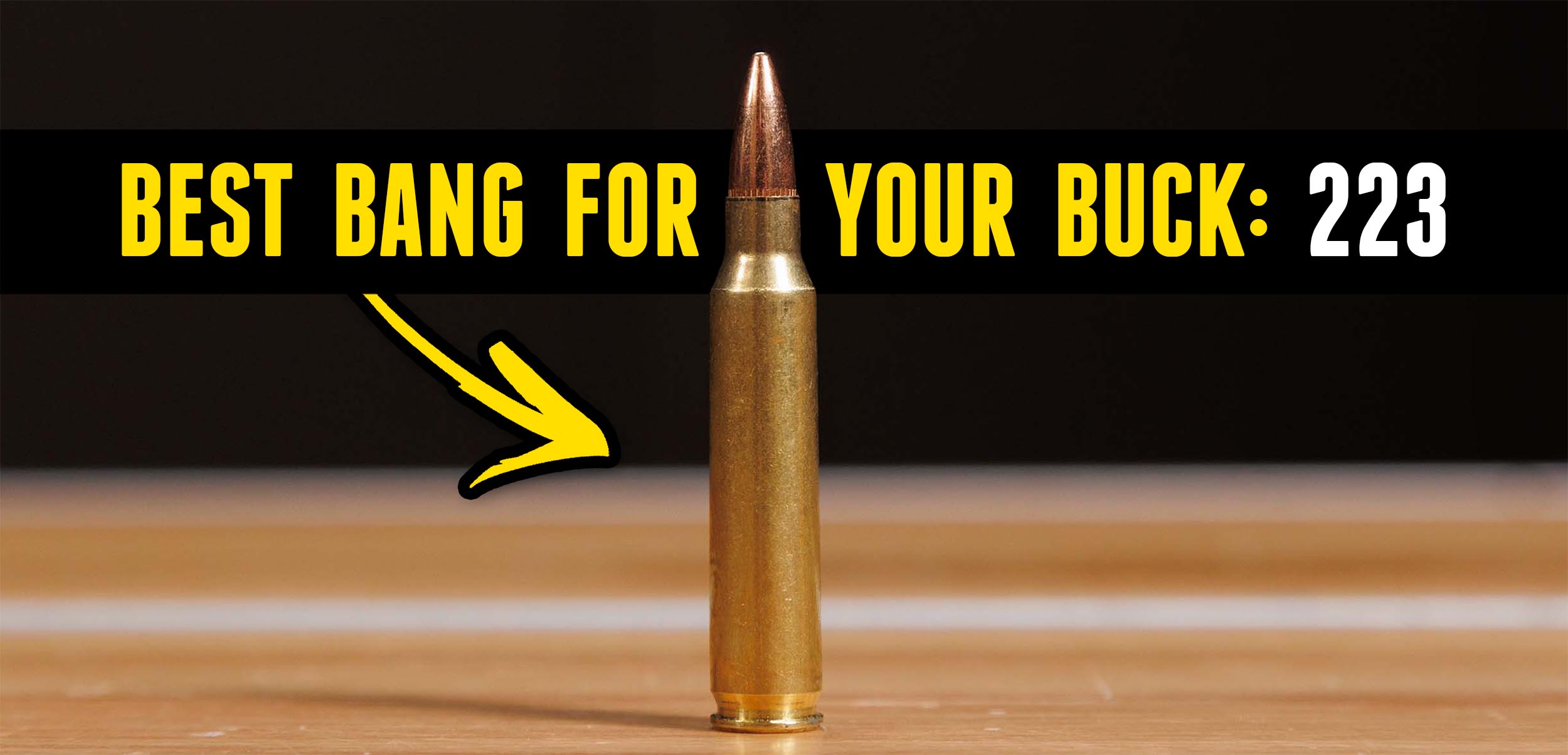
ARs are fun to shoot, but shooting in volume can add up. You don’t need heavy bullets for general plinking and close targets. I decided to try out Berry’s jacketed 55-grain and 62-grain 223 bullets with the goal of creating accurate, budget-friendly ammunition. Here’s how I put it together!
Disclaimer
Ultimate Reloader LLC / Making with Metal Disclaimer: (by reading this article and/or watching video content you accept these terms). The content on this website (including videos, articles, ammunition reloading data, technical articles, gunsmithing and other information) is for demonstration purposes only. Do not attempt any of the processes or procedures shown or described on this website. All gunsmithing procedures should be carried out by a qualified and licensed gunsmith at their own risk. Do not attempt to repair or modify any firearms based on information on this website. Ultimate Reloader, LLC and Making With Metal can not be held liable for property or personal damage due to viewers/readers of this website performing activities, procedures, techniques, or practices described in whole or part on this website. By accepting these terms, you agree that you alone are solely responsible for your own safety and property as it pertains to activities, procedures, techniques, or practices described in whole or part on this website.
Cartridge Background and Reloading Considerations
The 223 Remington was released as a commercial cartridge and adopted by the military in 1963, but development started years earlier. This bottleneck evolved from the 222 Remington and accepts a small rifle primer and 0.224” bullet.
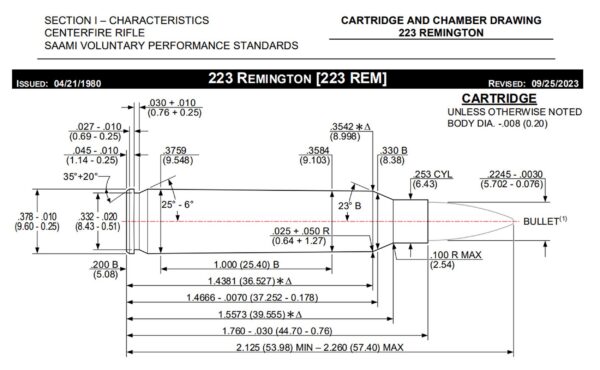
Maximum cartridge overall length is 2.260” and SAAMI MAP is 55,000 psi. Trim length is a personal preference.
Gavin has previously published a video explaining the differences between 223 Remington and 5.56, as well as covered reloading for the AR-15.
There are a few special considerations for loading 223 Remington. Beware of crimped primer pockets in fired brass and trim cases after each firing. Adding a chamfer aids bullet seating.
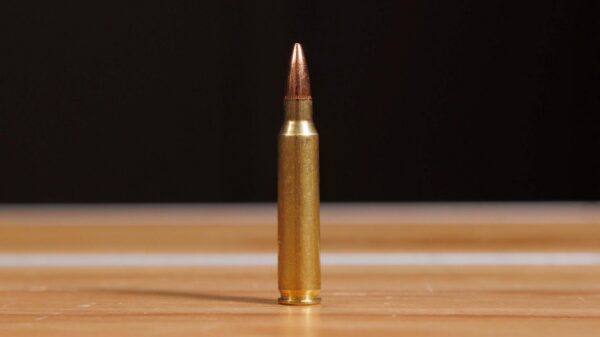
Also consider whether you are shooting a bolt-action rifle or AR-15. Hotter loads from an AR may require magnum primers. The shoulder also needs to be bumped back more in semi-autos. Bullets may be cannelured or non-cannelured, with crimp based on application.
Components & Equipment
Berry’s jacketed bullets do not carry the same velocity restrictions that their plated bullets do. I referenced Hodgdon’s online reloading data center and consulted a powder burn rate chart to determine the most affordable, optimal powder we had on hand for light bullets.
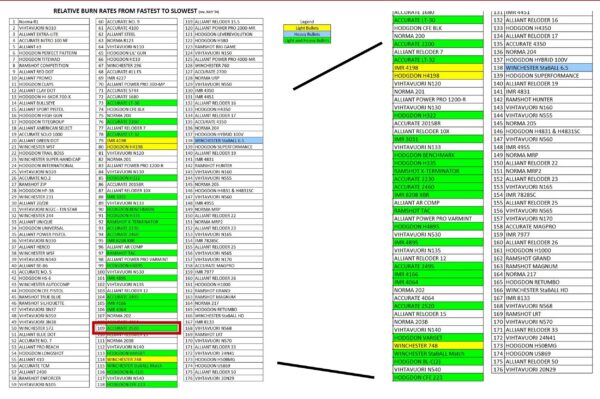
I settled on Accurate 2520. Accurate 2520 has a burn rate near Varget, the powder I use most often for 223, but costs approximately $15 less per pound (as of the writing of this article). This powder works for both light and heavy 22-caliber bullets.
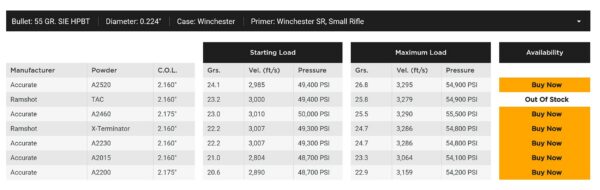
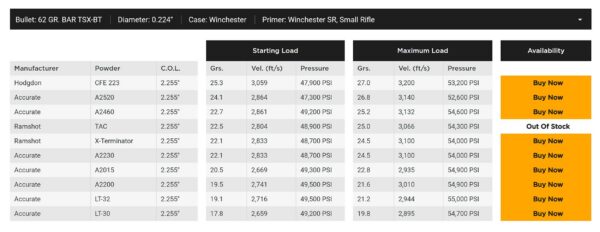
I decided to start with a charge weight 90% of the maximum charge. For both the 55-Grain FMJ and 62-Grain FMJ-BT, this came out to 24.1 grains.
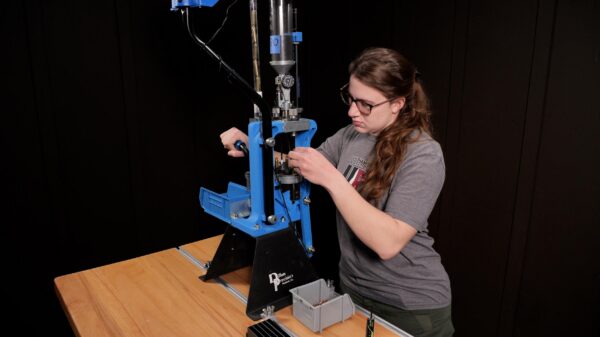
I loaded all rounds on a Dillon XL750 with a Redding mandrel die and RCBS seating die. (This press had also been recently upgraded with Armanov accessories.)
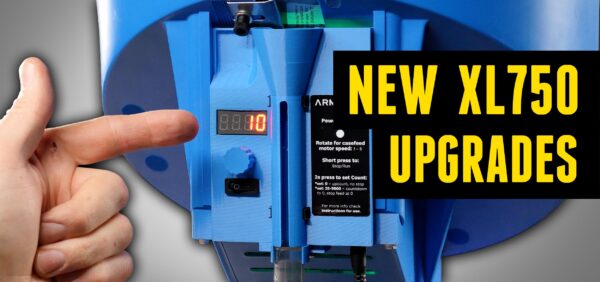
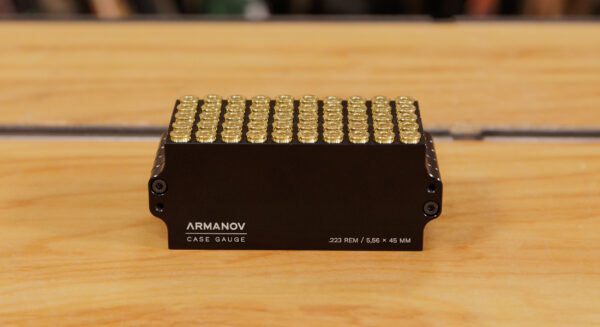
I loaded previously-processed brass, so I didn’t need to resize, but I still decided to use the mandrel die to make sure the necks were consistent. I was not running a hot load, so I used CCI 400 small rifle primers. I always run all of my 223 ammunition through a case gauge, and switched over to the 10-round ammo checker from Amanov some time ago. I really love this tool as it makes it easy to check ammunition at once, but if you press the tips against a hard surface, the headstamps will come up just enough to quickly and easily mark. (Anyone who tries to find their brass later will appreciate this!) Gavin had several connected together, so it made the process even faster.
Chronograph Results
I fired 10-shot strings over the Athlon RangeCraft Velocity PRO Radar Chronograph of both the 55-grain and 62-grain loads through a 20” Stag Retro AR-15.
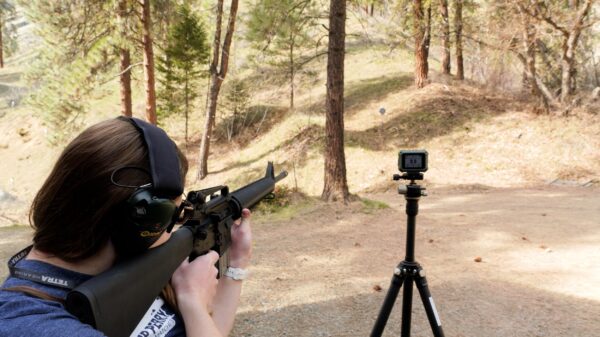
The average velocities were very similar. The SDs were larger than I would like, but as this was an experiment in economy, I didn’t spend any time on load development.

For comparison, I fired Hornady’s 55-Grain American Frontier ammunition from the same gun, getting an average velocity of 2,982 fps and SD of 34.7 fps.
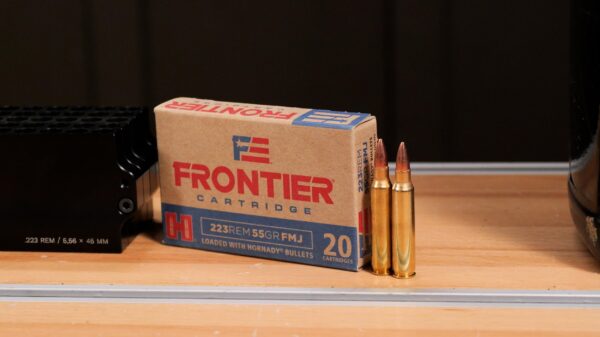
This velocity is lower than Hornady’s published data, but this is to be expected. Hornady’s data was collected with a 24” barrel (likely a bolt-gun).
Shooting
I fired a number of 100-yard groups off a bench with a Stag 16” carbine equipped with an Element Optics HYPR-7 and one with a 20” Stag Retro AR-15 with iron sights.
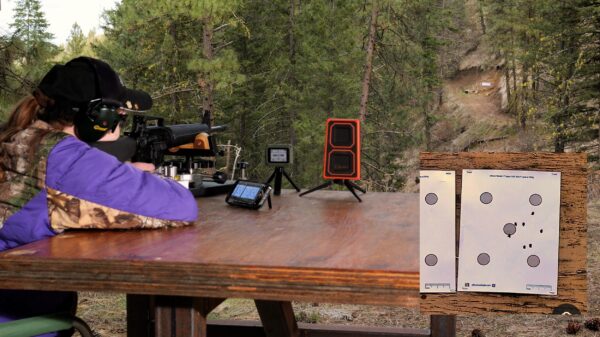
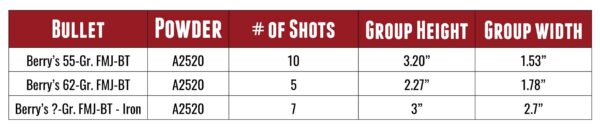
The approximately 3” groups accurately represented what the guns were capable of at that distance.

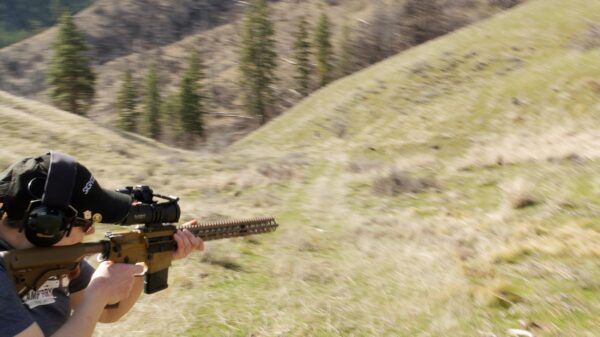
I also shot some offhand, off a tank trap, and did some more tactical style shooting through our Rock Chuck Olympics pistol run n’ gun course.
Economics
I used the Ultimate Reloader cost calculator to see exactly how the cost of my loads compared to factory ammunition. Using new brass, my 55-grain load came out to $0.65 a round, $0.35 with used brass. Hornady Frontier 223 Rem 55-Grain FMJ Ammunition came out to $0.65 at Midsouth Shooters Supply, so savings really comes with reusing brass.
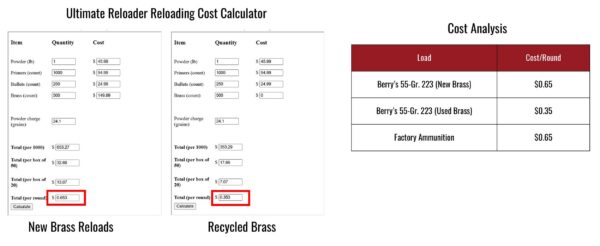
As always, keep in mind that sales on components reduce reloading costs, and Midsouth often offers special buys. Also realize that the lowest-priced factory ammunition does not necessarily offer the same performance reloads can, as you lose the ability to fine-tune your recipe. This may not matter for your purposes, but is something to consider.
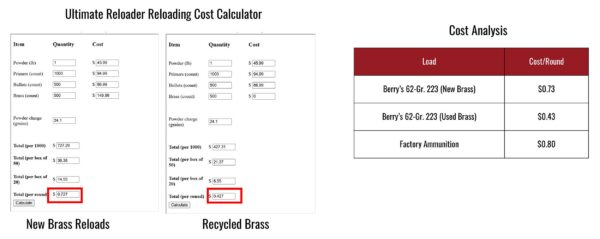
Reloading the 62-grain bullets offered an even greater cost savings. The cost to load new brass came to $0.73 per round. Loading fired brass came to $0.43 per round. The lowest comparable 62-grain factory ammunition I found, Federal American Eagle, cost $0.80 per round.
Conclusion
As a reloader, always be on the lookout for deals on components you may use across multiple cartridges, and save your brass! I didn’t do any in-depth load development for this story, as I only sought to create budget plinking ammunition without considerable time investment, so I could do more work in the future to lower SDs.
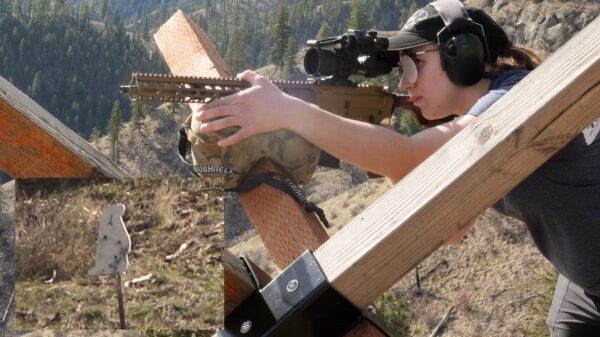
Much of the appeal of reloading comes from having this capability. I was happy with how these Berry’s jacketed bullets performed and am curious to see how they would perform from an accurized AR. Let us know if that’s something you’d be interested in seeing!
Get the Gear
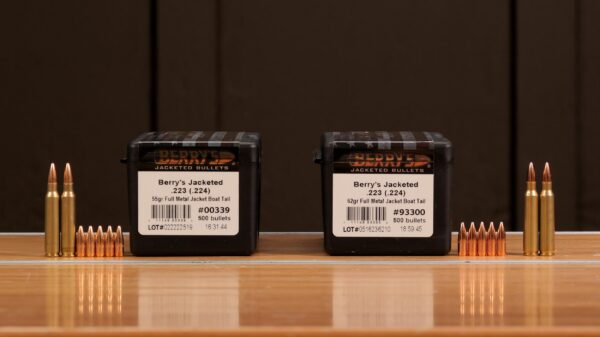
Berry’s .22-Caliber 55-Grain Full Metal Jacket-BT Bullets from Berry’s and Midsouth Shooters Supply
Berry’s .22-Caliber 62-Grain Full Metal Jacket-BT Bullets
Accurate 2520 at Midsouth Shooters Supply and Hodgdon
Primers at Midsouth Shooters Supply
223 Brass at Midsouth Shooters Supply
Hornady Frontier 223 Rem 55-Grain FMJ Ammunition at Midsouth Shooters Supply
Dillon XL750 at Creedmoor Sports and Midsouth Shooters Supply
Athlon RangeCraft Velocity PRO Radar Chronograph at Midsouth Shooters Supply
Don’t miss out on Ultimate Reloader updates, make sure you’re subscribed!
Thanks,
Serena Juchnowski
About the author