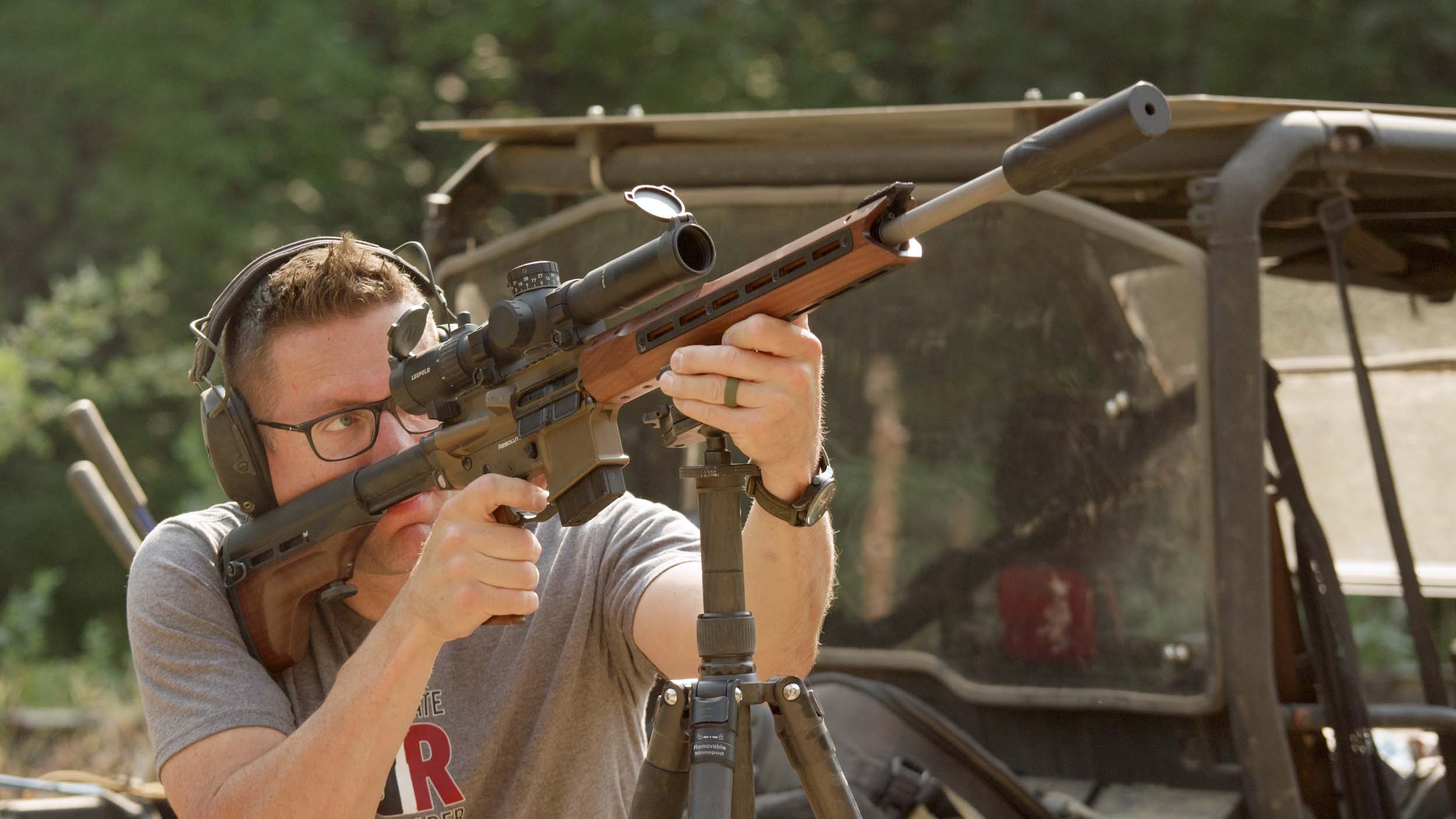
Reloading for the AR-15 is a lot like loading for other rifle cartridges, but you have to pay special attention to a few key factors. Join us as we explore bullet weight range, powder selection, burn rates, gear you’ll need, and more.
Disclaimer
Ultimate Reloader LLC / Making with Metal Disclaimer: (by reading this article and/or watching video content you accept these terms). The content on this website (including videos, articles, ammunition reloading data, technical articles, gunsmithing and other information) is for demonstration purposes only. Do not attempt any of the processes or procedures shown or described on this website. All gunsmithing procedures should be carried out by a qualified and licensed gunsmith at their own risk. Do not attempt to repair or modify any firearms based on information on this website. Ultimate Reloader, LLC and Making With Metal can not be held liable for property or personal damage due to viewers/readers of this website performing activities, procedures, techniques, or practices described in whole or part on this website. By accepting these terms, you agree that you alone are solely responsible for your own safety and property as it pertains to activities, procedures, techniques, or practices described in whole or part on this website.
223 vs. 5.56 Refresher
The AR platform is incredibly versatile, customizable, and available in a number of chamberings. We’ve featured a number of AR’s and upgrades from Ultradyne, Boyds, WOOX, and more.
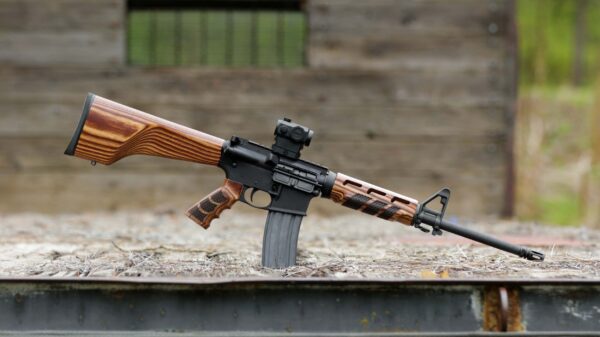
To narrow it down, we decided to focus on loading 223/5.56 — the AR’s most traditional chambering.
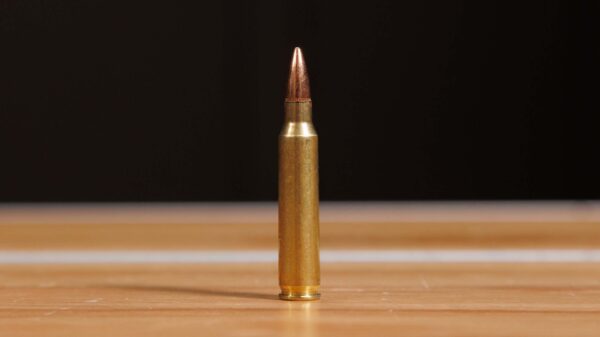
223 and 5.56 are not the exact same and it’s important to understand the differences between the cartridges.
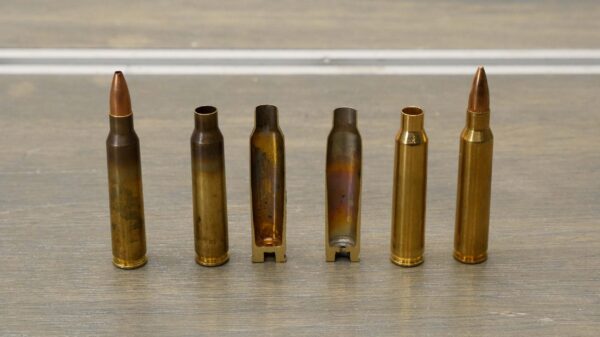
Both have the same exterior dimensions*, so use the same reloading dies/case gauge, but the chambers themselves have meaningful differences. (*5.56 tracer rounds have a long base to ogive.)
223 is a SAAMI cartridge whereas 5.56 is a NATO/EPVAT round.
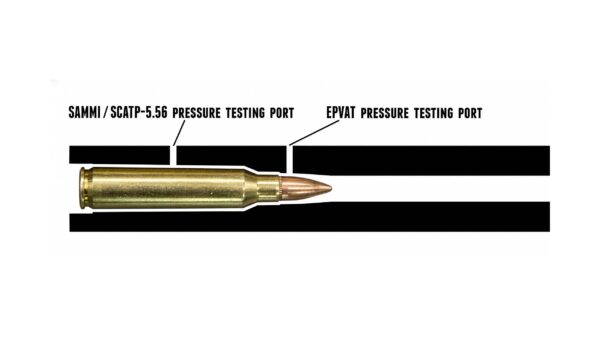
This makes it hard to compare exact pressures between the two rounds as they are measured/read in different locations per different standards.
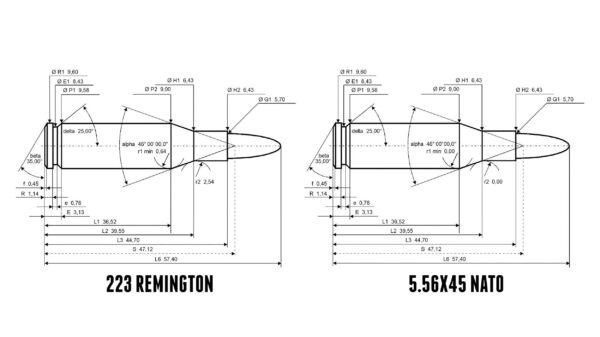
For reloading purposes, they are approximately equivalent. As a military cartridge used in machine guns, 5.56 is known for having crimped primer pockets, but 223 can have them too.
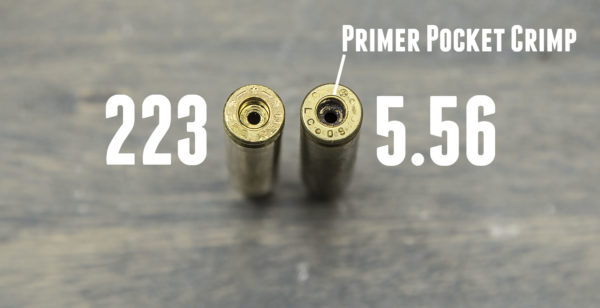
I also debunked another common myth that 5.56 brass is always thicker than 223 brass. While 5.56 and 223 have different chambers, it is possible to shoot both 5.56 and 223 out of the same chamber – called a Wylde.
Reloading Gear for the 223/5.56 in an AR-15
While you will need all of the gear and components associated with loading other bottleneck cartridges, there are a few extra things to consider when loading for the AR. Focusing on 223/5.56, press capacity must be at least 2.260”.
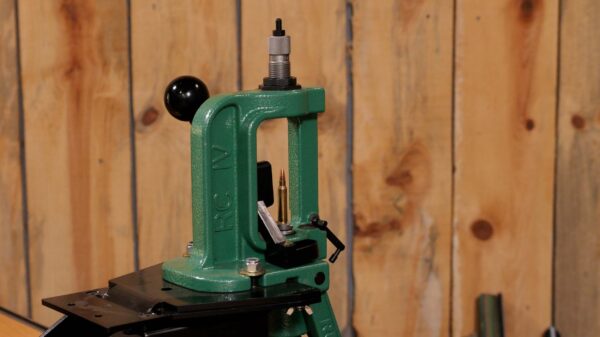
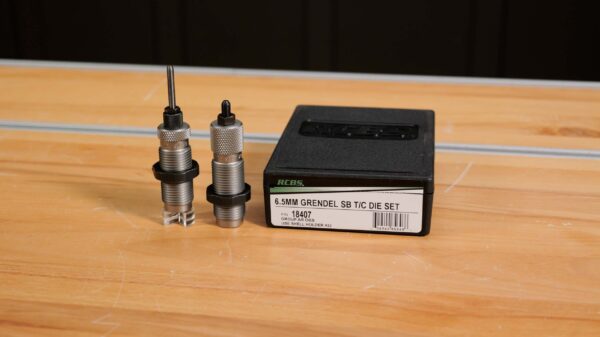
A number of different die sets exist from a variety of manufacturers. RCBS has perhaps the most extensive portfolio. Their supreme die set comes with a sizing die, seating die, and case gauge — all must-haves for AR reloading.
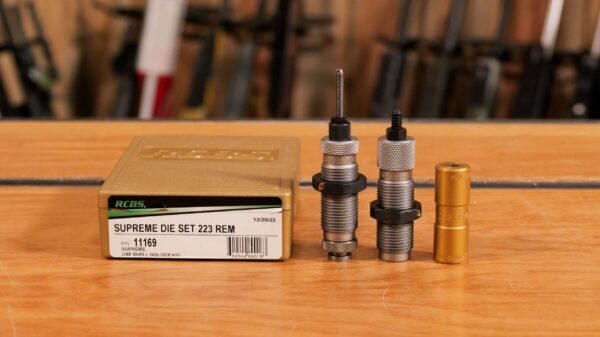
RCBS AR series die sets include a small-base full-length sizer and taper crimp seater.
Small-base dies are useful when reloading surplus brass initially fired through a machine gun (oversized chamber).
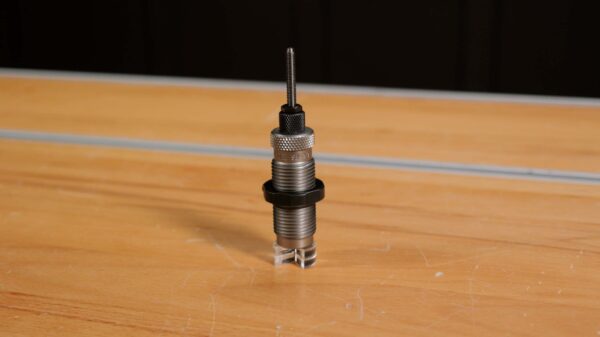
RCBS small-base X-dies also prevent brass from growing in length during resizing, eliminating the need to trim.

Brass stretches during every resizing and eventually grows past specification. We have gotten numerous firings out of brass without trimming using X-dies, but there is more to consider. You may want to put a chamfer on the case mouth to aid in bullet seating – an operation done simultaneously by some trimmers.
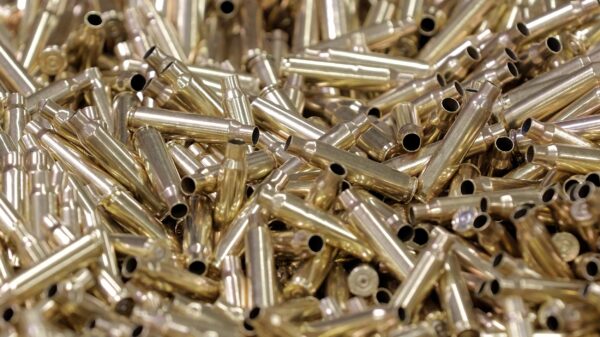
While not necessary, crimp dies are popular when loading 223/5.56, particularly with cannelured bullets. A crimp aids in feeding through semi-automatic rifles.
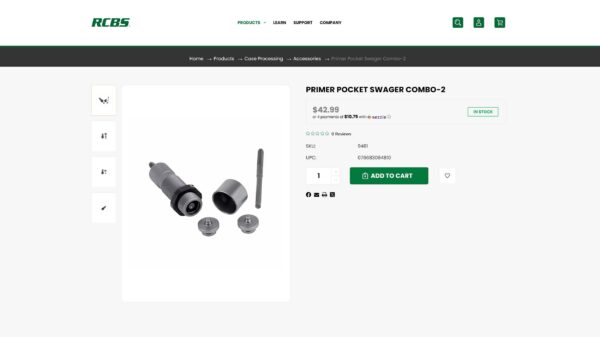
Speaking of crimp, you will have to remove any primer pocket crimps with a swaging tool before reloading the brass. There are a number of tools available to do this including on-press, bench-mounted, and stand-alone options.
Remember to run your loaded ammunition through a case gauge. There is no forcing a bolt in semi-automatic rifles — the rounds must fit precisely. 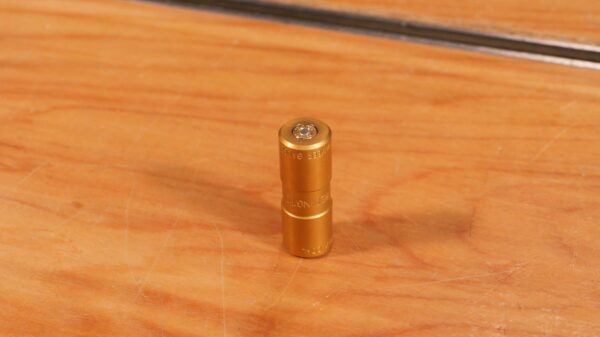
Sizing is more critical when loading for semi-automatics. The shoulder needs to be bumped back approximately twice more (0.004”) than for a bolt-action rifle to give the round more room to center in the chamber.
Reloading for the AR-15 223/5.56
I recommend loading and testing new recipes in small batches. 223/5.56 ammunition often goes quickly, so some reloaders like to produce it in bulk. Remember to always shoot a small number of rounds to make sure they cycle before loading up thousands!

Temperature is another consideration. Shooting in warmer weather generates more pressure than shooting in colder conditions. Be aware of your load’s performance in varying conditions and sensitivity to temperature changes. You do not want anything to be over pressure!
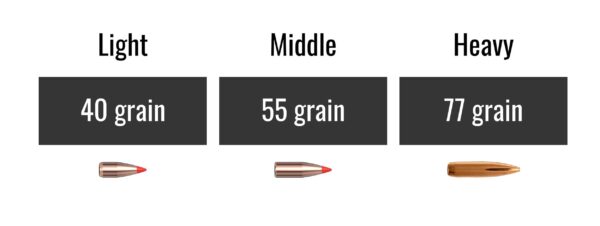
22 caliber projectile weights span a wide range. We decided to generalize, labeling 40-grain bullets as light, 55-grain bullets as in the middle, and 77-grain bullets as heavy. 55-grain bullets have been a fixture in military ammunition for decades, as have 77’s, particularly for match purposes.
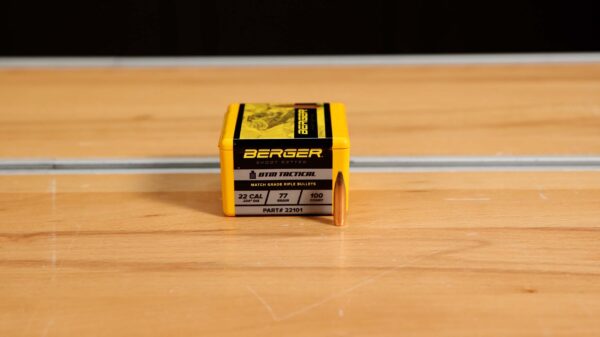
77-grain bullets are especially popular as their high BC allows them to go further. I have had great results from my bolt-action 223 trainer with 77’s.
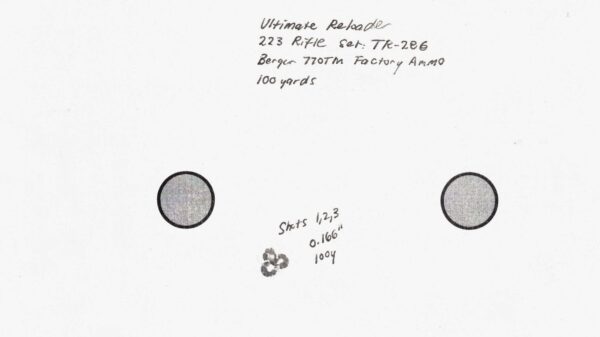
DISCLAIMER: As always, do not just take our load data and use it. Be sure to consult several manufacturer references directly from the source.
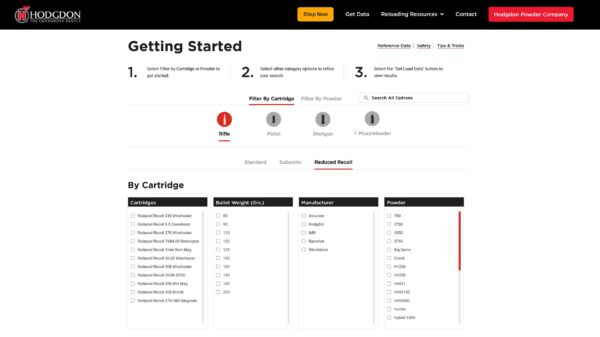
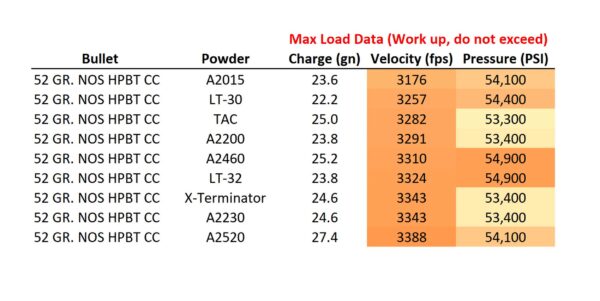
Hodgdon supplied us maximum load data for a variety of powders for reference. Close to the 55-grain sweet spot, we have 52-grain bullet data with velocities up to 3,388 fps and pressures up to 54,900 psi. These are great statistics for varminting.
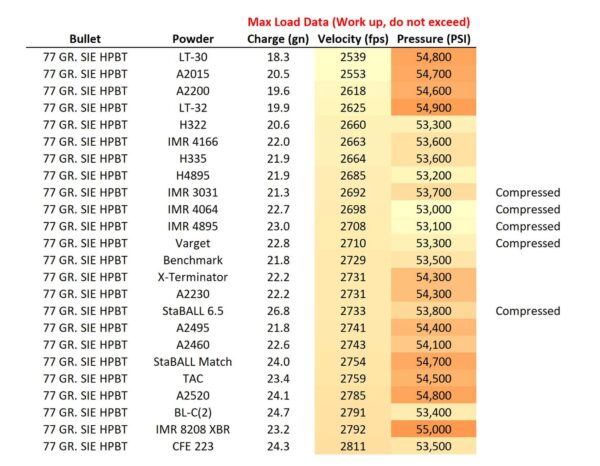
Moving to the 77-grain projectiles, maximum load velocities range from 2500 fps to 2800 fps. These are impressive velocities for this weight bullet!
I also color-coded a powder burn rate chart, marking powders ideal for light bullets, heavy bullets, and both! CFE 223 is the slowest powder marked for both light and heavy bullets, and is one we have used often.
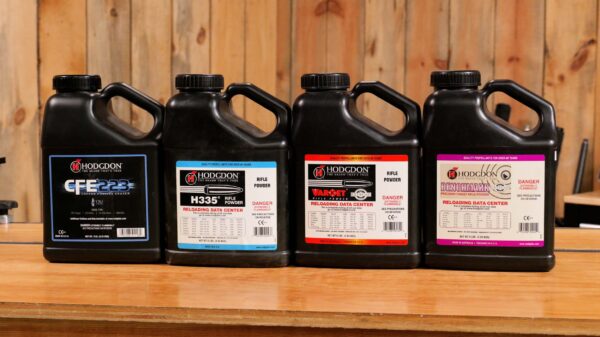
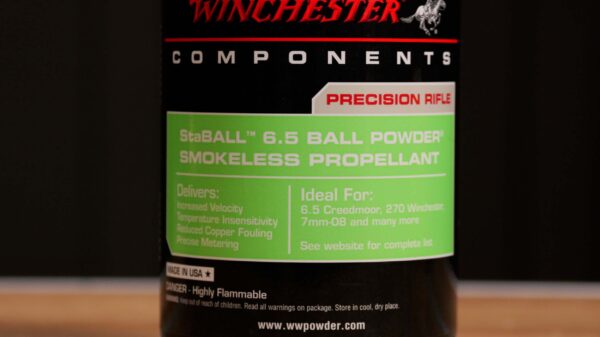
There are a number of other powders, including Varget and H335, that will work well across the board. StaBALL 6.5 is an outlier, even slower on the burn rate chart and ideal only for heavy bullets.
Conclusion
223 is such a popular caliber that there is a wealth of data and information available for it. Hodgdon’s Online Reloading Data Center is one such reference. There are also a range of powders and bullet weights to choose from. 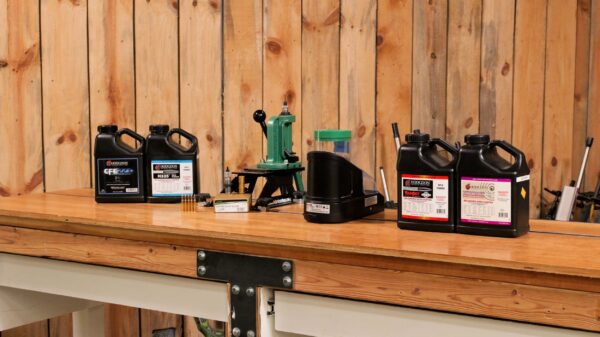
While reloading for the AR-15 is mostly like loading for other bottleneck rifle cartridges, there are a few special considerations. Be sure to test functioning before bulk loading!
Get the Gear
Hodgdon Online Reloading Data Center
Shop Hodgdon Powders at Midsouth Shooters Supply
RCBS Reloading Equipment at Midsouth Shooters Supply
Berger .22 Caliber 77-Grain OTM Hybrid Target Bullets at Creedmoor Sports
Don’t miss out on Ultimate Reloader updates, make sure you’re subscribed!
Thanks,
Gavin Gear