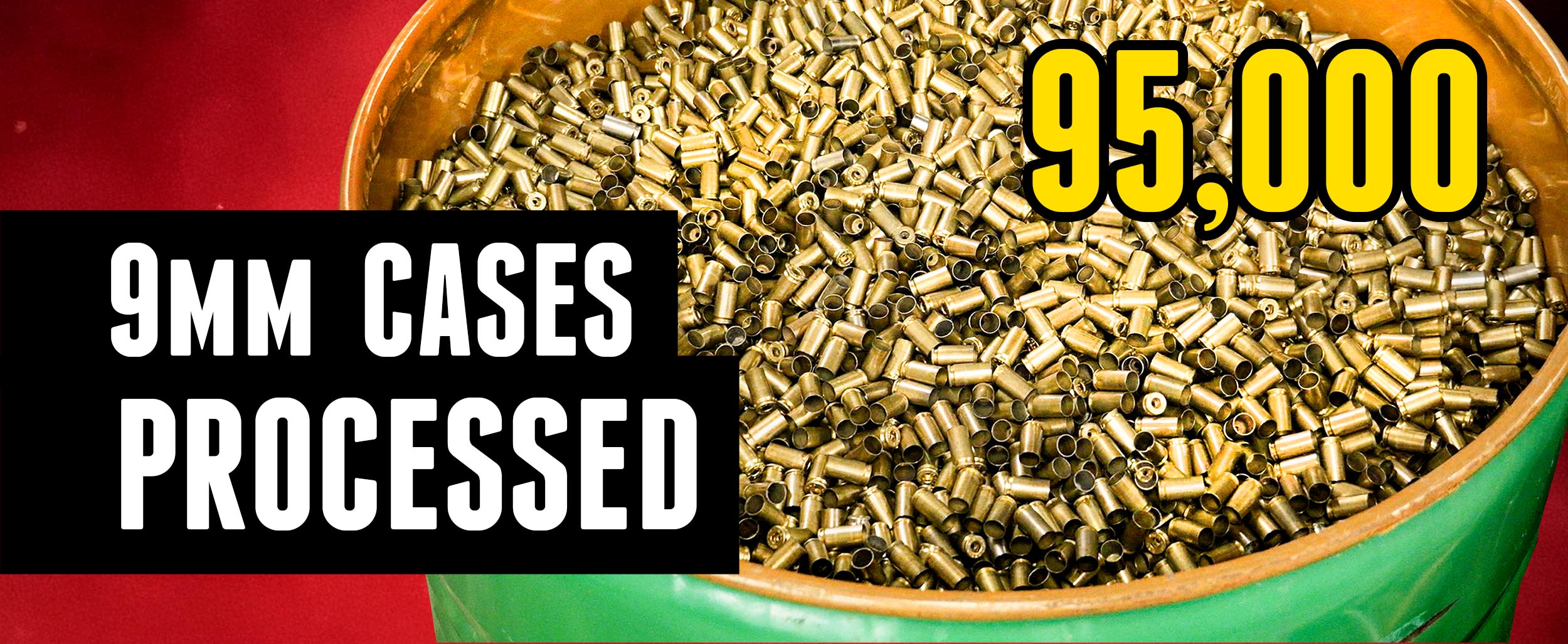
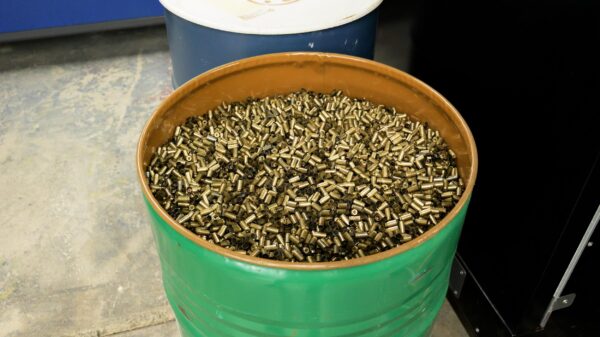
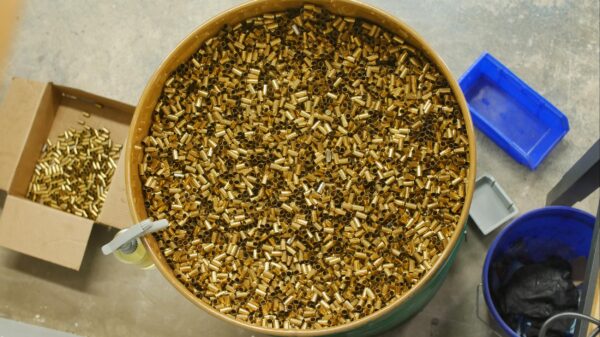
We recently set up the Mark 7 Revolution to handle a full 55-gallon drum of 9mm brass from Mojo Precision. In this video, we process all of it!
Disclaimer
Ultimate Reloader LLC / Making with Metal Disclaimer: (by reading this article and/or watching video content you accept these terms). The content on this website (including videos, articles, ammunition reloading data, technical articles, gunsmithing and other information) is for demonstration purposes only. Do not attempt any of the processes or procedures shown or described on this website. All gunsmithing procedures should be carried out by a qualified and licensed gunsmith at their own risk. Do not attempt to repair or modify any firearms based on information on this website. Ultimate Reloader, LLC and Making With Metal can not be held liable for property or personal damage due to viewers/readers of this website performing activities, procedures, techniques, or practices described in whole or part on this website. By accepting these terms, you agree that you alone are solely responsible for your own safety and property as it pertains to activities, procedures, techniques, or practices described in whole or part on this website.
About the Project
This year, we partnered with Mark 7 Reloading and Mojo Precision to take on our most insane project yet— bulk processing and loading two 55 gallon drums of brass through auto driven Mark 7 presses. In part one, we processed and loaded over 40,000 .223 cases on the Apex 10.
Mark 7’s John Vlieger stopped in to help set up the Mark 7 Revolution for pistol brass!
Setting Up the Machines
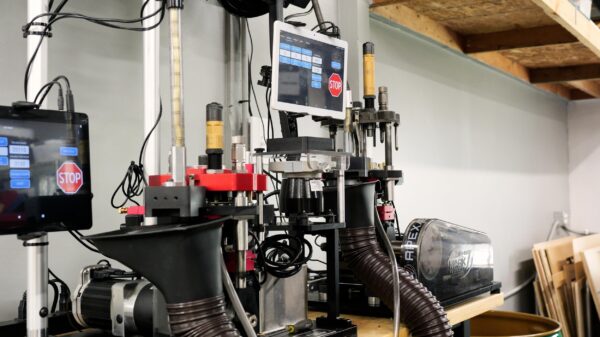
We decided to run the Mark 7 Revolution and Apex 10 in tandem, setting them up to decap, swage, and size.
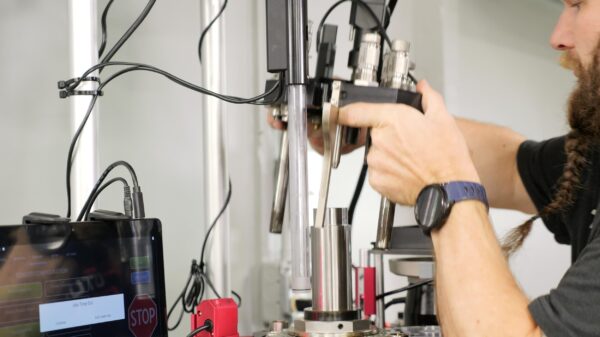
Remember that swaging and sizing are both forceful applications, so it’s important to have them directly across from one another for more consistent results. Having them side by side on the toolhead can cause distension on any progressive press.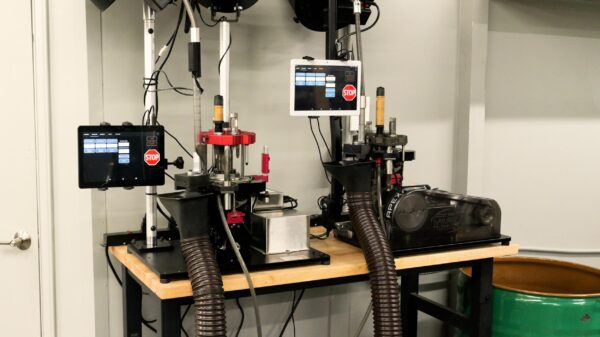
Project Start
While bulk processing .223 cases, I made adjustments at the beginning that contributed to smooth processing by the end. Processing pistol brass is no different.
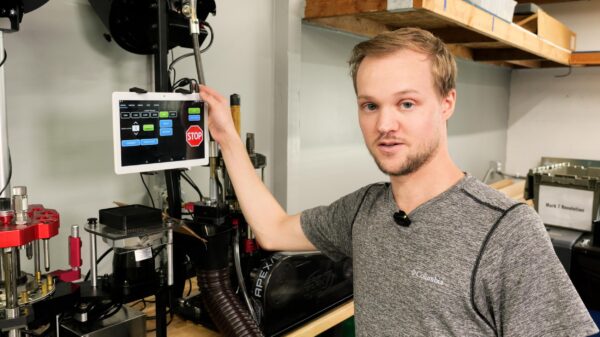
Noticing that the Apex 10 was flinging brass past the chute, I amended this by slowing down the index speed and reducing the output to 3,000 rounds per hour.
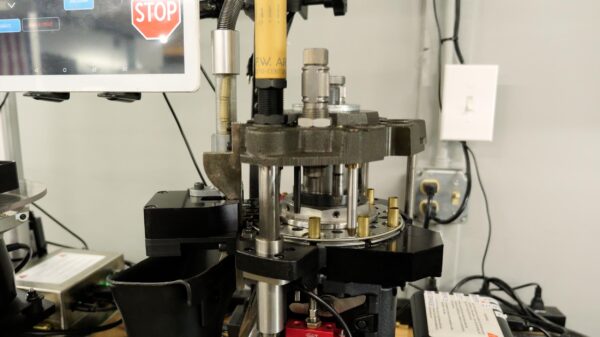
I left the Mark 7 Revolution running 3,500 rounds per hour, noting that the Revolution seemed more reliable at higher speeds than the Apex 10.
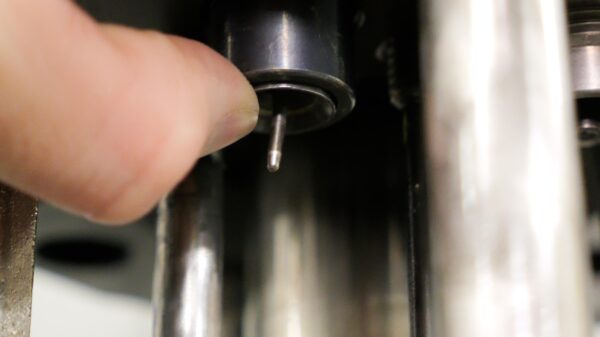
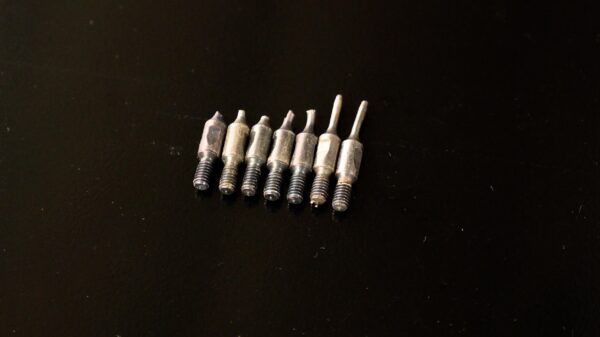
This project also saw our first bent decap pin on an FW Arms die! While the Revolution powered on, I removed the FW Arms die and replaced the pin with one of the many we had anticipated needing for our first bulk processing. (We needed none!)
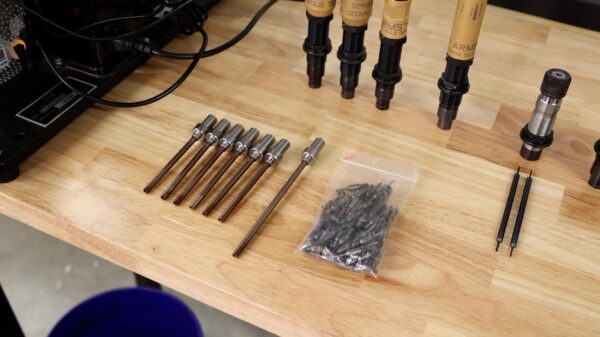
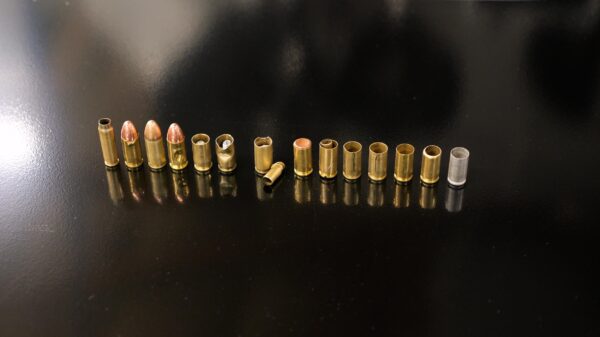
This decap pin failed when it struck an upside-down 9mm bullet stuck inside a case.
Maintenance and Bulk Processing
It didn’t take long to reach the end of the 10,000 pre-cleaned cases. I removed the fitted cardboard circle to expose the dirty 9mm cases underneath the batch Mojo Precision had pre-cleaned.
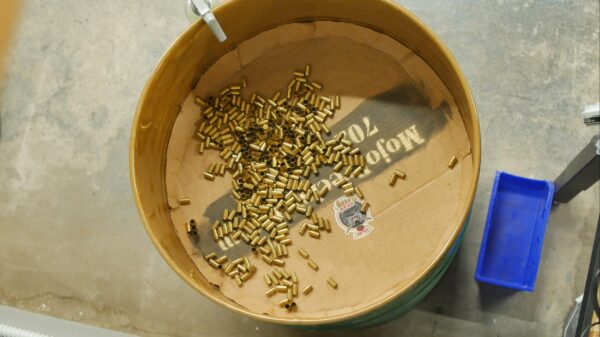
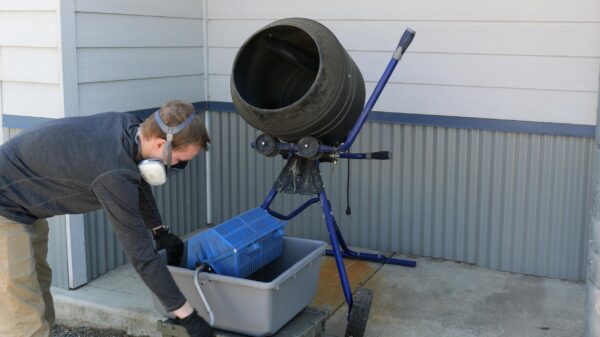
Undaunted, I pulled out a cement mixer, walnut shell media, paint thinner, and brass polish.
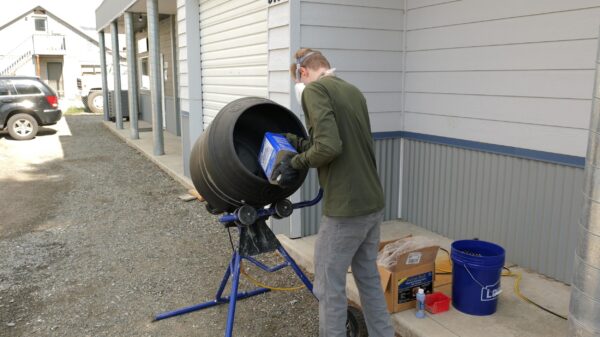
I donned a mask to protect me from the lead dust and filled the mixer with a bucketful of brass (about 10,000 cases).
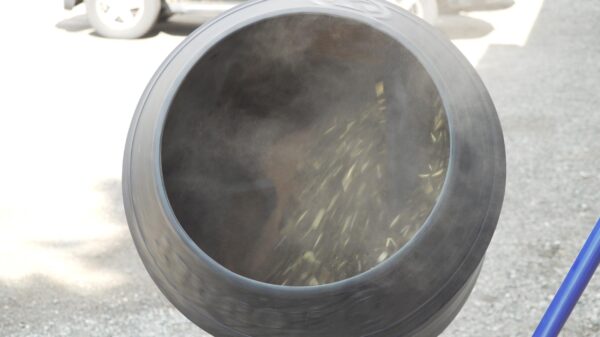
After one hour of tumbling in the media mixture, I separated the cases using the Dillon CM-2000 and put them in the case feeders.
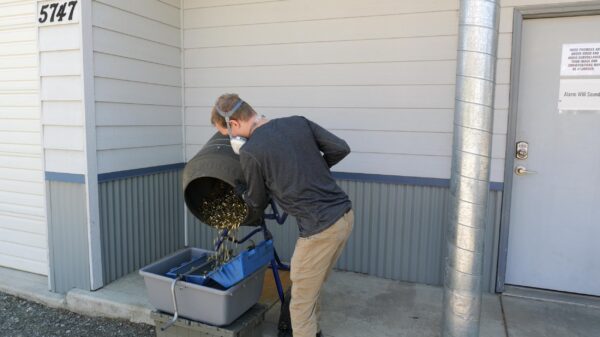
With another bucket of cases in the tumbler, I took the time to empty the 5-gallon buckets beneath each press into an empty 55-gallon drum.
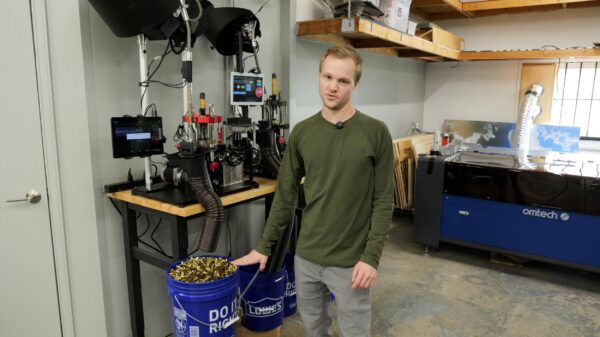
After 20,000 rounds through the Revolution I only had a few case feed stoppages and did some minor index tuning. The Apex 10 progressed at a lower rate.
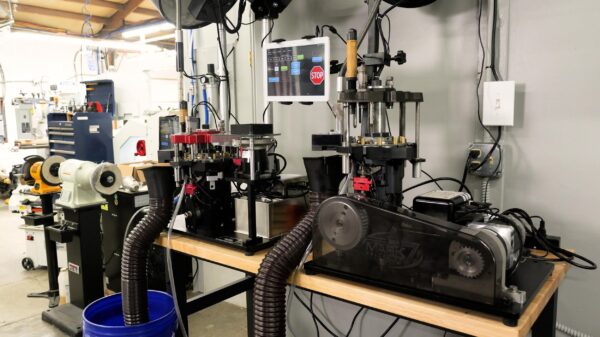
I had to work out a few kinks in reaching the 6,000 case mark threshold. After 25,000 cases on the Revolution, I decided it was time to pause to clean and grease the machines.
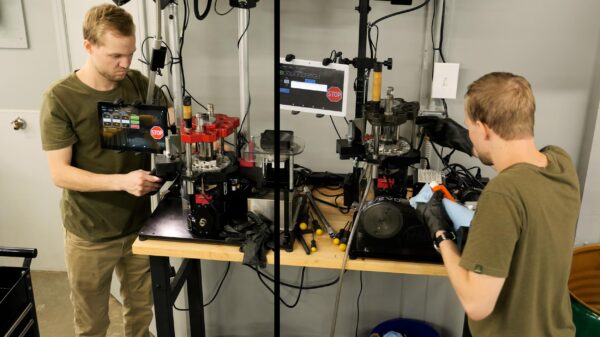
If you are regularly running these machines, it’s recommended to lube the ram and guide rods once a day and to do a maintenance pass/clean after every 10,000 rounds.
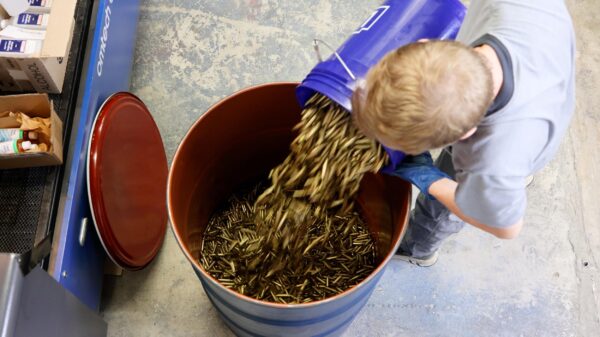
At 46,000 rounds in I noticed the indexing was a bit jittery, randomly tossing cases to the floor.

Adjusting the chute didn’t fix the issue, so I added some red and tacky beneath the shellplate. I also used this as another opportunity to do a maintenance pass and cleaning, which remedied the problems.
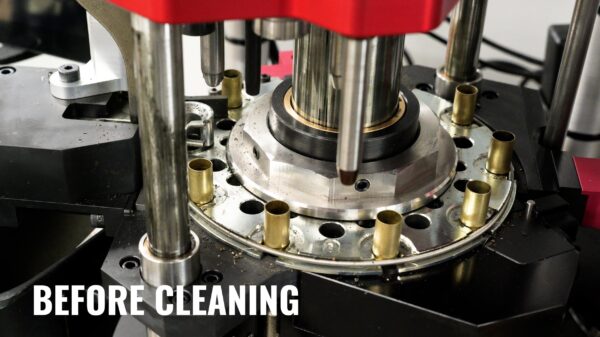
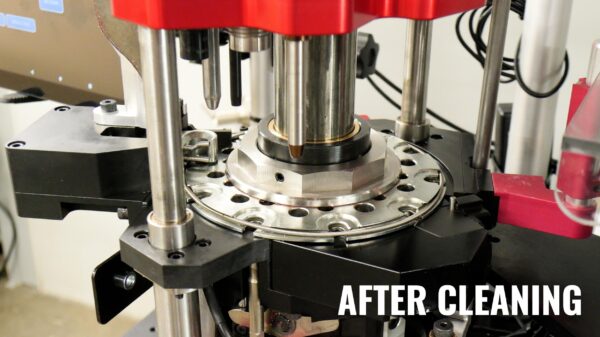
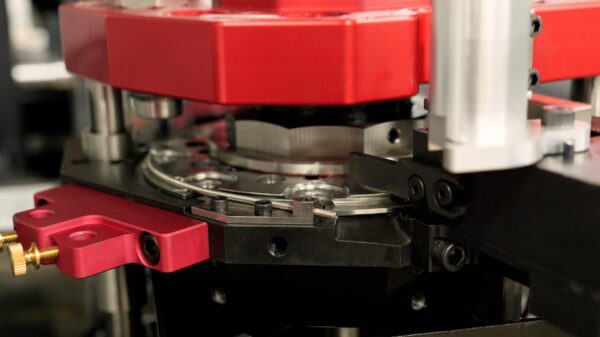
The Revolution stopped indexing about 1,000 cases later after the return extension spring had broken.
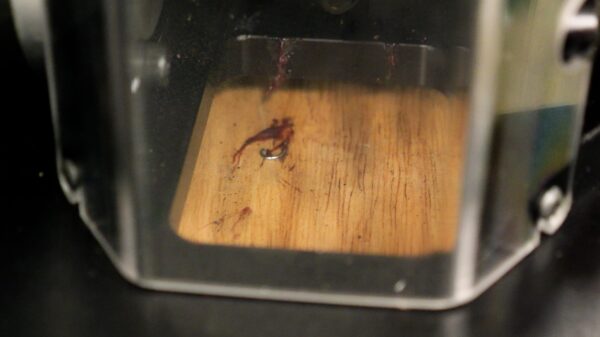
We had replacements from Mark 7 in a few days and soldiered on with the replacement! Mark 7’s support staff explained that this is not a typical failure but they recommend keeping a spare parts kit on hand just in case.
After we completed processing just shy of 95,000 cases, we took some time to review the project.
Major Milestones and Challenges
Previously bulk processing .223 on the Apex 10 made setting up for 9mm just that much easier. It was also extremely helpful to have John Vlieger from Mark 7 onsite to help with setup and training.
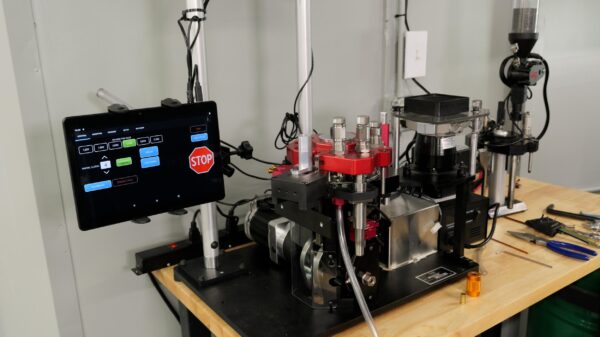
The Revolution performed well from the start, while it took a bit more effort to get the Apex 10 running smoothly. At 10,000 cases I ran out of the pre-cleaned brass and began tumbling the rest by bucketfuls in a concrete mixer. One key to bulk processing is finding an efficient way to clean the cases. The concrete mixer worked splendidly, though if I were to do this again or all of the time I would have entertained building some sort of mesh frame to separate the media.
At 13,000 rounds I poured out my first five-gallon bucket and checked in with Gavin at 20,000 rounds. Of the 95,000 cases processed, most proceeded without issue. I had to run the Apex 10 at a slower speed than the Revolution as the Apex was limited by the case feed, but the Autodrive allowed me to fine tune both machines.
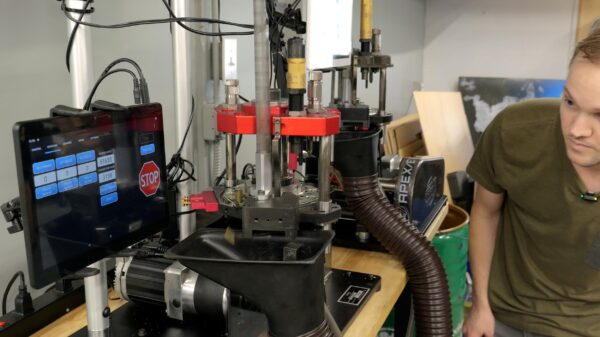
I did encounter a few surprises in addition to the challenges discussed above. As aforementioned, an upside-down bullet stuck in a case bent a decap pin.
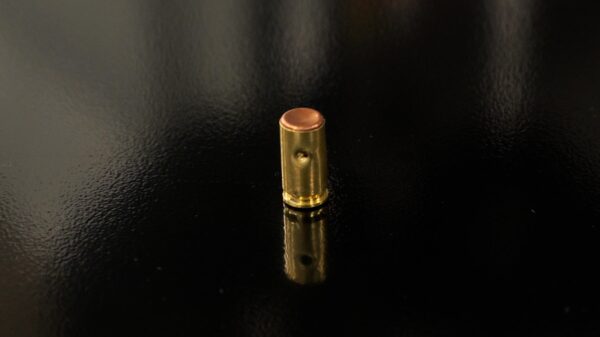
I also had a .22 LR case stuck beside a rock inside of a single 9mm case. This odd trio jammed the machine and may have broken another pin. The .22 LR stoppages continued with another obstructing the Apex 10 case feed.
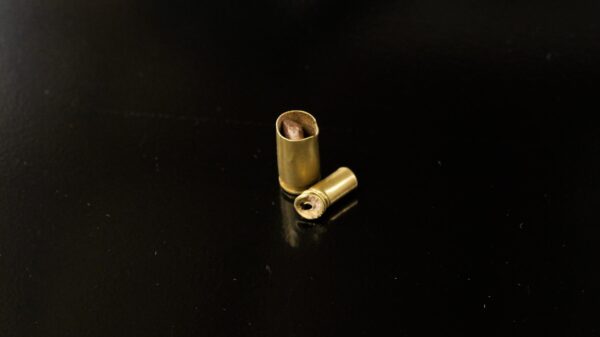
Stuck primers also posed an issue, so I swapped the DecapSense for the basic adapter.
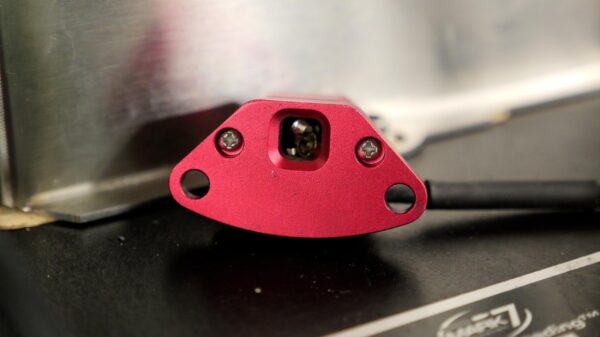
It’s important to remember to not just set and forget the machine.
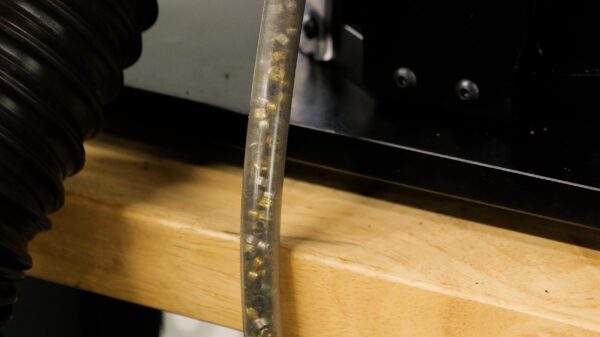
Checking to make sure spent primers have a place to go is crucial to keeping the press running.
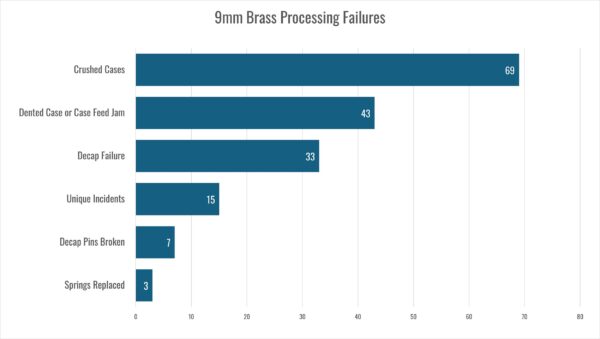
Out of approximately 95,000 cases, I had 69 crushed cases. These would normally stop the machine and were easy to clear.

The next most common failure was a dented case or case feed jam. This happened 43 times and wasn’t the fault of the machine, but the result of an oblong or damaged case moving through the case feeder.
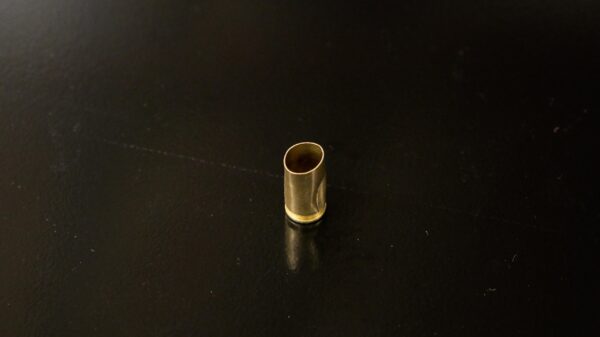
Sealed primers caused 33 decap failures, but these didn’t stop the machine, so some may still be buried in our processed drum.

The .22 cases, rock, and upside-down bullet contributed to the total unique failure count (15).
While we didn’t break any decap pins during our .223 project, we broke seven while bulk-processing twice the amount of 9mm.
Lastly, I had to replace three springs, two shellplate springs and one return extension spring.

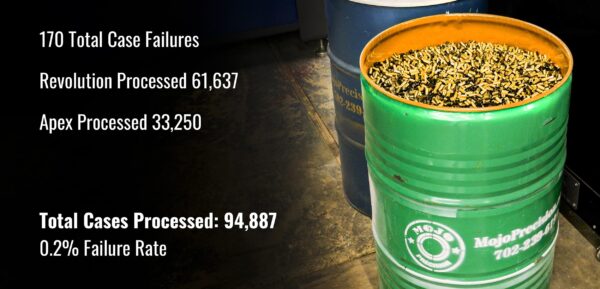
In total, we had 170 total case failures out of 94,887 cases for a 0.2% failure rate. We processed 61,637 cases on the Revolution and 33,250 on the Apex 10.
Conclusion
This intense undertaking was a great experience and allowed me to become even more familiar with Mark 7 machines. The incredibly low failure rate is a testament to Mojo Precision, especially as I found no .380 cases in our 55-gallon drum!
Once you have the machines fine-tuned and set to do as you need, it’s important to keep them running. For ammunition manufacturers or those doing brass processing, machine downtime equals lost income. Don’t be afraid to reach out to Mark 7’s tech staff with questions and keep some spare springs and parts on hand!
Get the Gear
Mark 7 Apex 10 – (Send in your Gen1 priming system to Mark 7 for credit towards a Gen 2 priming system!)
Mojo Precision – Use Code UR10 to Save 10% on All Casings
Dillon CM-2000 Case/Media Separator at Creedmoor Sports
Don’t miss out on Ultimate Reloader updates, make sure you’re subscribed!
Thanks,
Kyle Shields