
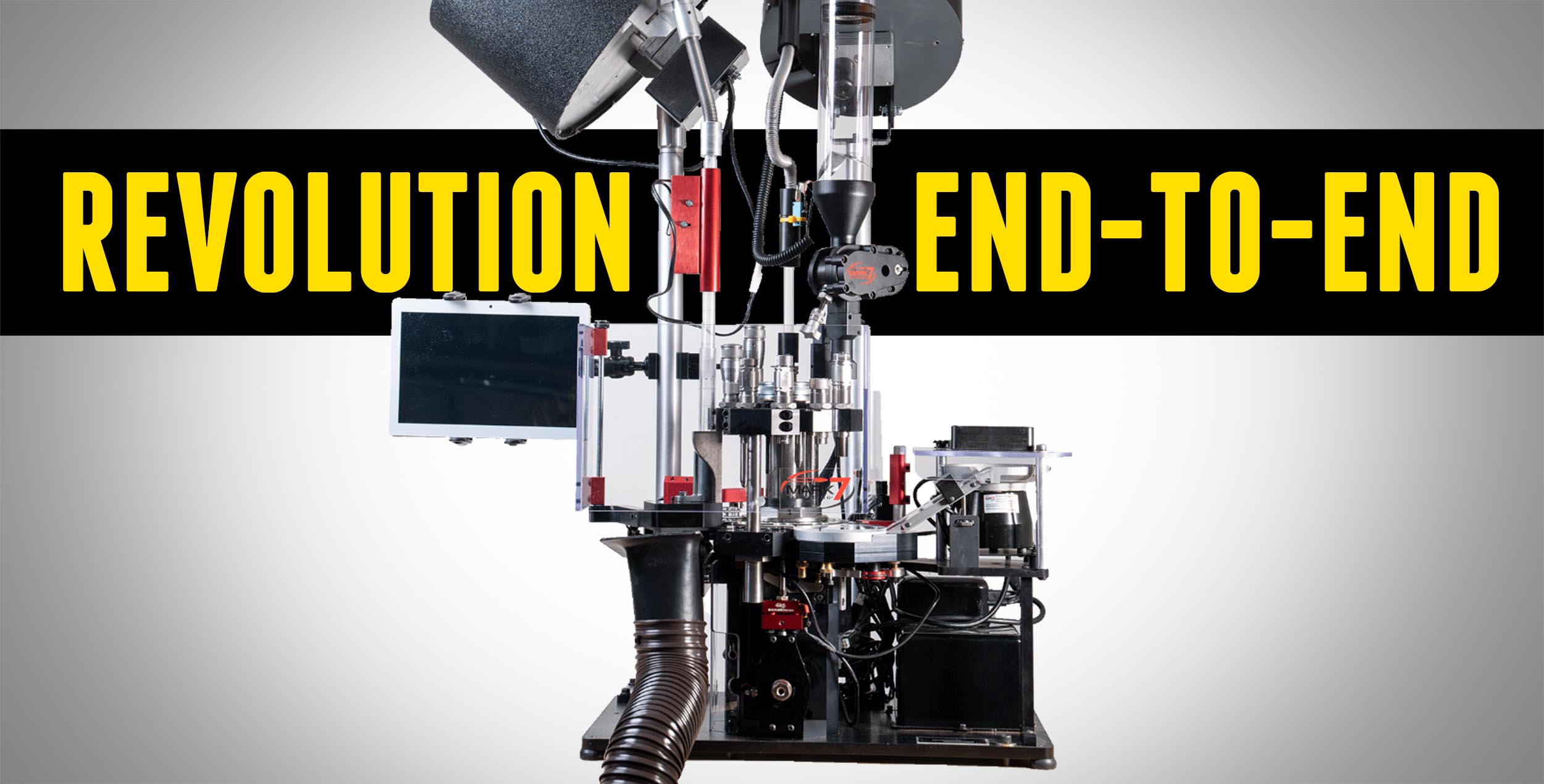
This year, we partnered with Mark 7 Reloading and Mojo Precision to take on our most insane project yet— bulk processing two 55 gallon drums of brass through auto-driven Mark 7 presses. In part one, we processed over 40,000 .223 cases on the Apex 10. Next up is 90,000 pieces of 9mm through the Mark 7 Revolution. To kick it off, we work with John Vlieger from Mark 7 to tackle the setup and do some fully-automated 9mm reloading.
Disclaimer
Ultimate Reloader LLC / Making with Metal Disclaimer: (by reading this article and/or watching video content you accept these terms). The content on this website (including videos, articles, ammunition reloading data, technical articles, gunsmithing and other information) is for demonstration purposes only. Do not attempt any of the processes or procedures shown or described on this website. All gunsmithing procedures should be carried out by a qualified and licensed gunsmith at their own risk. Do not attempt to repair or modify any firearms based on information on this website. Ultimate Reloader, LLC and Making With Metal can not be held liable for property or personal damage due to viewers/readers of this website performing activities, procedures, techniques, or practices described in whole or part on this website. By accepting these terms, you agree that you alone are solely responsible for your own safety and property as it pertains to activities, procedures, techniques, or practices described in whole or part on this website.
About the Revolution
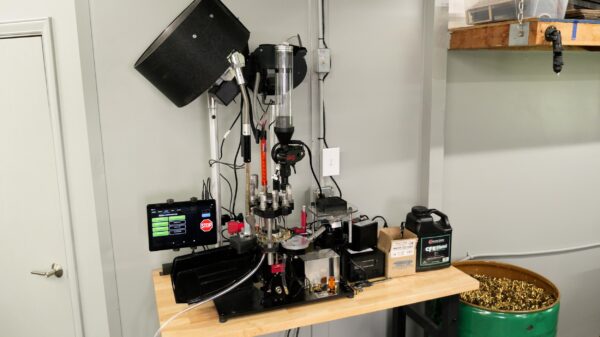
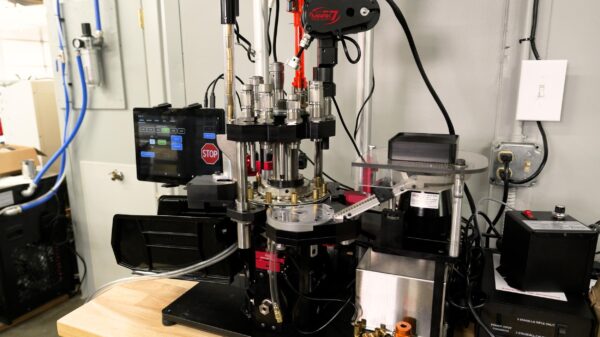
The Revolution core arrives assembled in a crate, ready to place on a stable surface.
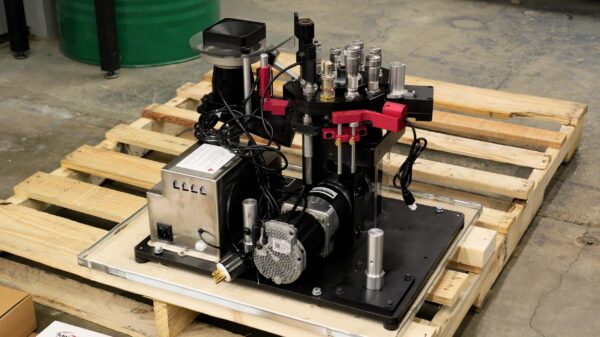
We opted for a number of extras including having Lyman dies and sensors pre-installed. (We walked through a number of Mark 7 sensors when we set up our Apex 10.)
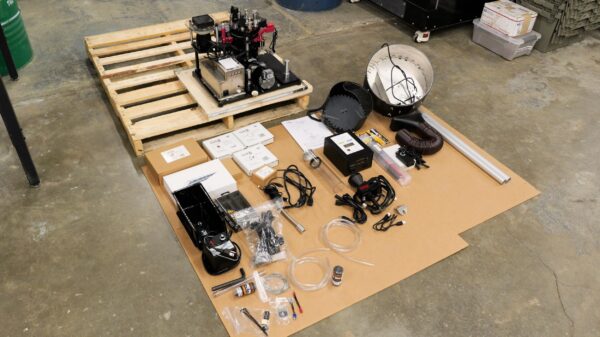
Besides the sensor boxes containing spare parts, the core also came with a variety of parts and add-ons:
- tablet and bracket
- ACRO bin
- vibratory controller
- decap hose
- spare parts
- cable management supplies
- infrared case feed sensor
- digital powder measure
- Mr. Bullet Feeder Pro
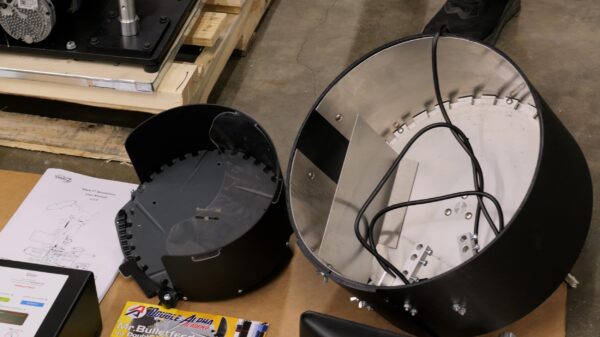
- 14” Case Feeder
- case feed poles
- offload chute
- user manual
Skipping primer tubes, the Revolution features on-board primer collation and depending upon configuration comes complete with a 14” case feeder, digital powder measure, and Mr. Bullet Feeder Pro.
From Mark 7 Reloading:
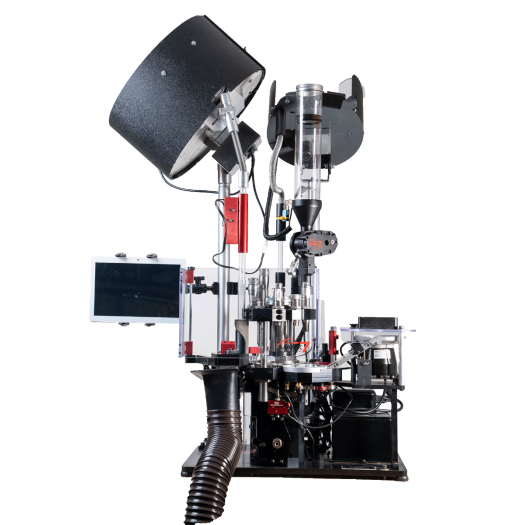
Mark 7’s 10 Station Revolution® Loading Platform is designed for commercial ammo production. Whether you’re producing tens of thousands of rounds of ammunition per day or processing brass for resale, this machine was built to handle the job. The Revolution Press is built to be easily configured for brass processing, for loading with pre-primed brass, for priming, or for full loading capabilities. Order your Revolution with only the functionality you need and retain the ability to upgrade for full reloading whenever you like!
The Loading Revolution’s are available in calibers ranging from 380 ACP up to 308 Winchester with a few other larger options. The Processing and Priming Revolutions have options ranging from 380 ACP to 338 LM. Switching between calibers is fast and easy using Mark 7’s Caliber Conversion Kits.
Depending on configuration, the press comes complete with an Onboard Collated Priming System, a 14” Case Feeder, a Digital Powder Measure, and a Mr. Bullet Feeder Pro. The Revolution comes standard with Digital Clutch Adjustment, TorqueSenseTM Technology, and all of the digital sensors needed for your configuration to warn you of any potential problems at each step of the loading process before they can cause damage or downtime.
To create the perfect system to meet your needs, we’d like to have a quick conversation with you to learn more about your business model and what calibers you have in scope. Some of our accessories can be shared between calibers, and we have several press configurations that are optimized for different loading needs. Please give us a call, and we’ll work together to create the ideal custom package for you!
The Revolution is a full commercial machine while the Apex 10 was designed to serve competitive shooters and light-volume commercial reloaders. Revolution’s parts, especially the top plate, are more resistant to wear to accommodate loading millions of rounds.
Set-Up
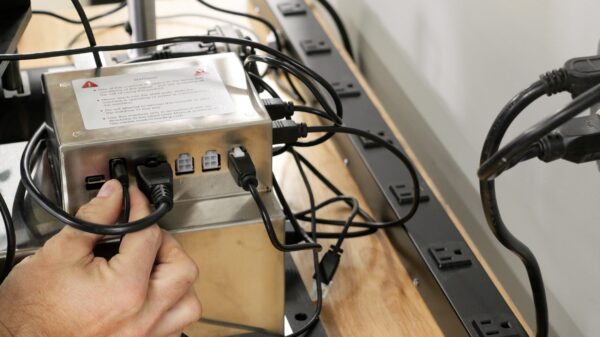
After getting the core on the benchtop, John unbundled all of the cables, plugged them into the machine, and connected the power.
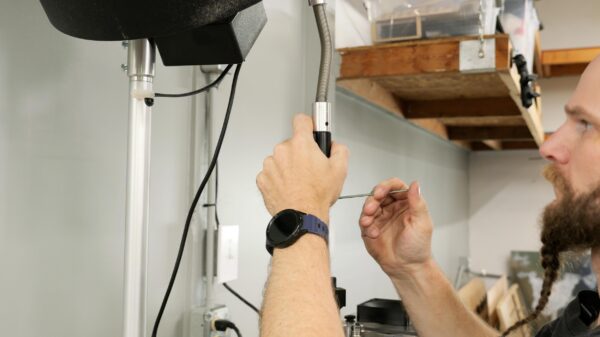
Next came installing the case feed poles, case feeder, and infrared case feed sensor.
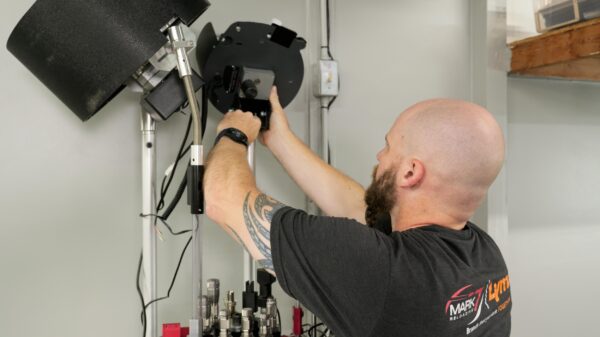
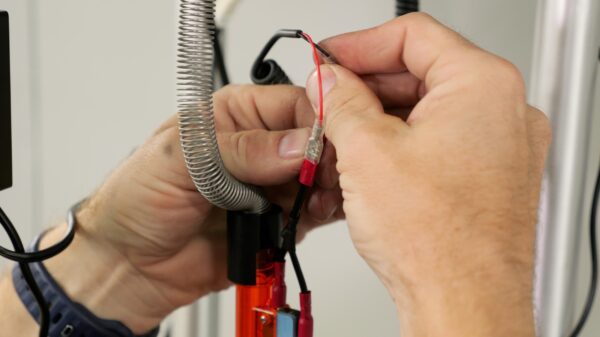
He added the bullet feeder next, then the tablet and mount so he could start moving the press head.
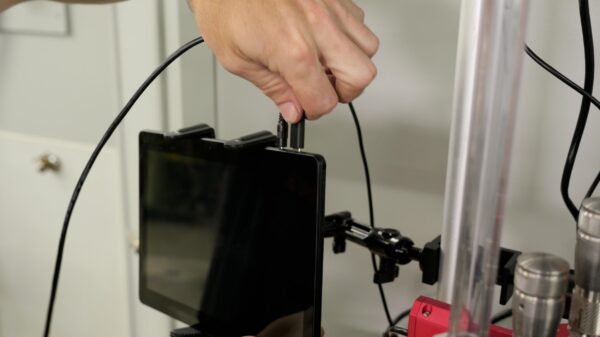
Powering the unit by flipping a switch on the back of the unit, we selected the “loader” option on the tablet screen.
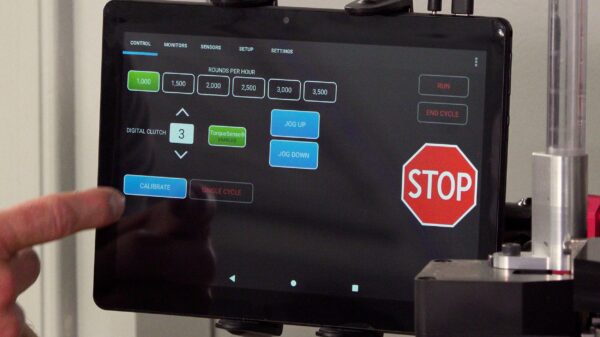
We waited for the machine to calibrate itself and return to the home position before running a cycle without components.
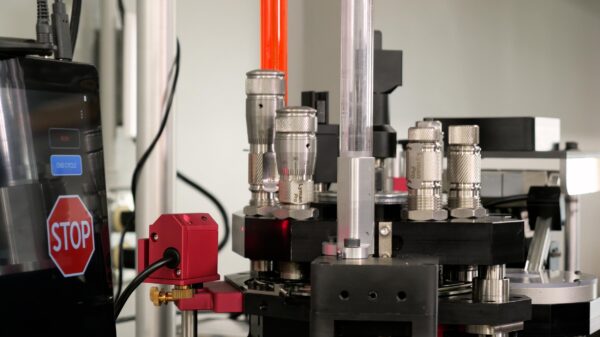
The purpose of this exercise is to watch and listen for anything that may not seem right before entering a full loading session. With a direct-drive motor, I immediately noticed it was quieter than the Apex 10.
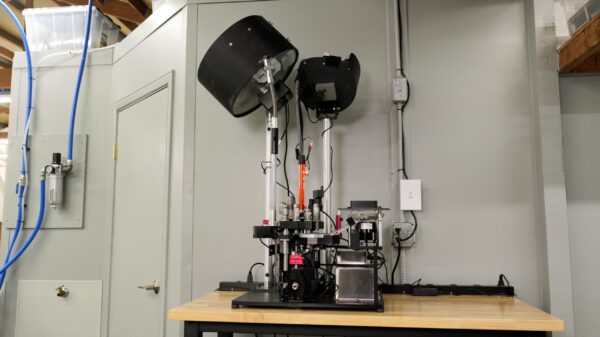
Everything worked as it should, so we proceeded with installing the digital powder measure.
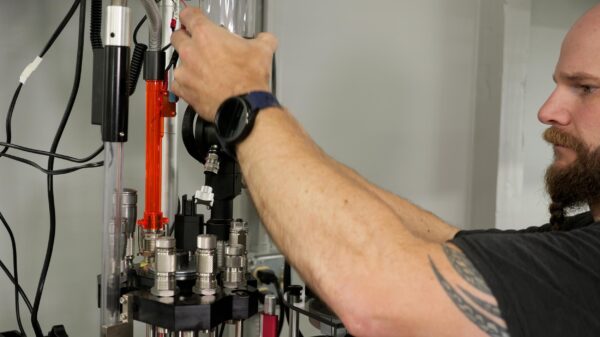
After this installation, John conducted a function check to make sure the arm auto-calibrates and the die height setting is correct. He placed a case in the shellplate to ensure that the powder measure only activates when a case is present.
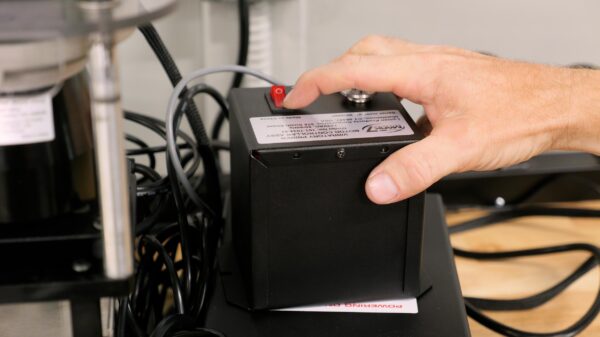
One of the last pieces to install was the vibratory controller for the priming system.
Loading
The die stations on the Mark 7 Revolution are essentially the same as on the Apex 10. The 10-station toolhead allows you to isolate each function.
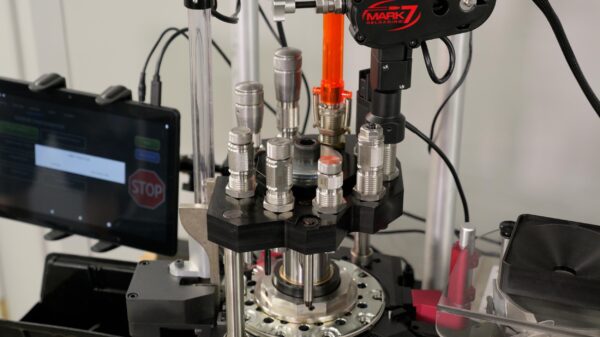
Station 1 holds the case feed with decap in station 2. (The decap location needs to connect with the offload shoot.) Swaging takes place in station 3 with a hold-down die to handle any military crimp. Next up is the sizing die over the priming station – this helps center and support the case during priming. In station 5 is expansion with an alignment M-die. This die prevents bullet toppling during automation. The digital powder measure follows in station 6 with a powder check in station 7, Mr. Bullet Feeder dropper in station 8 and seating die in station 9. Station 10 offloads the loaded rounds. Keeping all of the tasks separate makes troubleshooting easier and allows the user to fine-tune each operation.
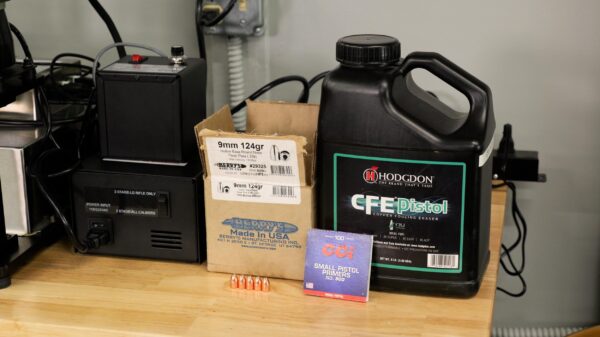
To test the machine, I settled on a tried and true 9mm load: 5.2 grains of CFE Pistol under a Berry’s 9mm 124 grain Hollow Base Round Nose plated bullet with a CCI 500 primer. The first step was to add primers.
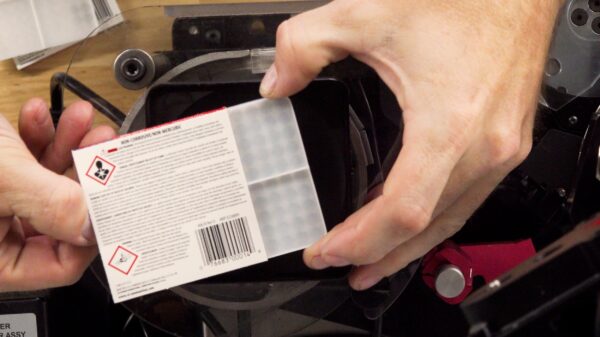
The bowl capacity is 500, but we added 300 to start, simply dumping them into the bowl—no pick-up tubes required!
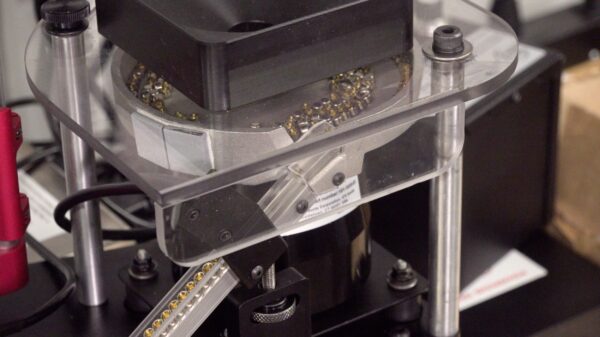
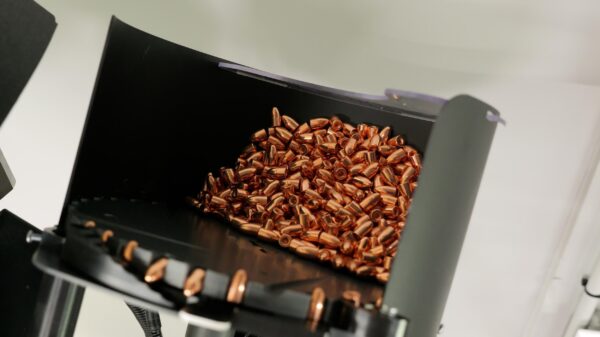
John turned on the primer system and adjusted the speed and I added bullets to the bullet feeder.
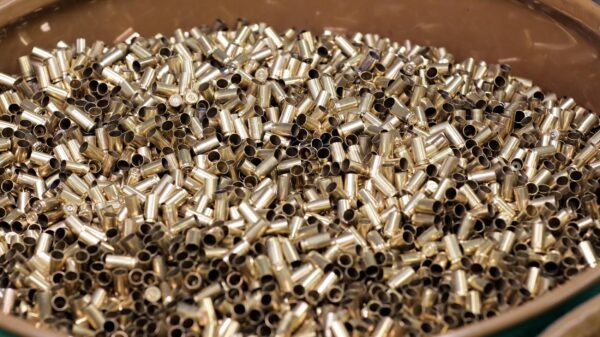
John dumped in a few binfuls of unprocessed brass into the case feed hopper and loaded the powder measure with CFE Pistol. A screen in the powder measure prevents styrofoam and debris from later clogging the system.
With all of the components loaded, John tuned the machine so that the sensors recognized the desired load as a “go situation” and stopped the machine for anything else.
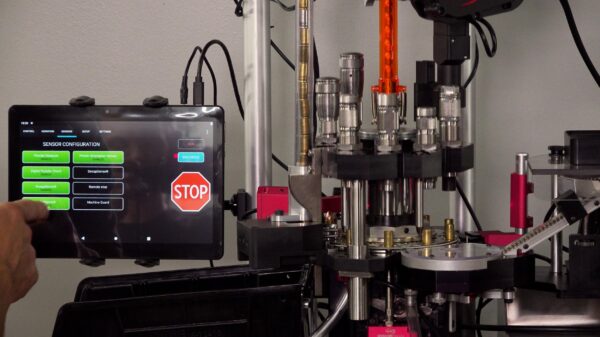
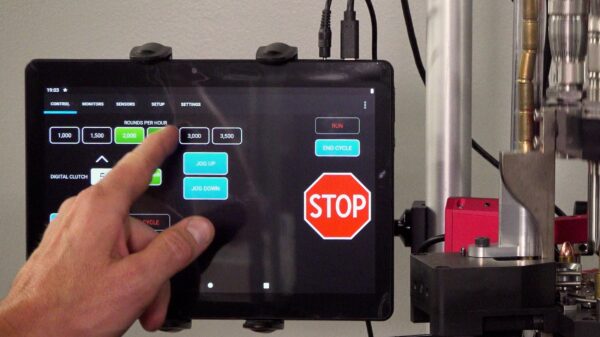
We started loading at a slower speed to ensure all was working properly and activated each of the sensors. Upon activating the primer orientation sensor, the digital clutch activated. This pressure cut-off stops the machine when an over-torque situation exists. We selected “ok” on the tablet and proceeded to increase the digital clutch from 3 to 5. With both swaging and sizing happening simultaneously, a larger cutoff was necessary.
As with any new setup, there are some adjustments that need to be made. BulletSense stopped the machine when a bullet failed to drop, leading us to make an adjustment to the bullet feeder.
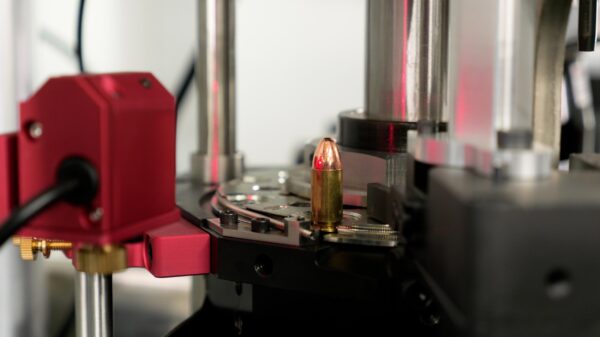
We upped the speed from 1,000 rounds per hour to 1,500 then to 2,000, continuing to watch the machine closely and keep an eye on component levels.
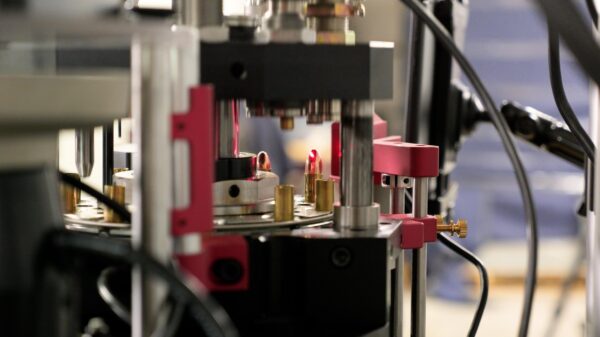
From this point on, the machine continued loading smoothly with no issues.
Conclusion
Having Mark 7’s sensors and keeping all operations separate on the Revolution makes it quick and easy to diagnose any errors during automation and minimize machine downtime.
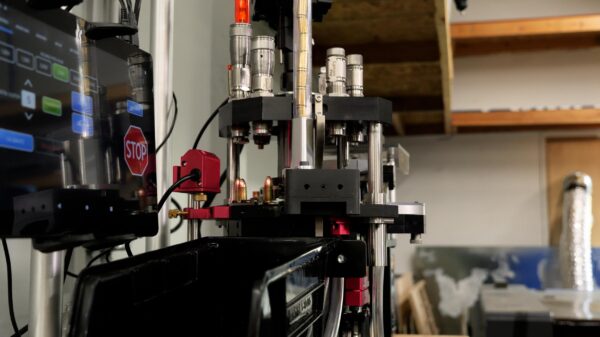
This press was far quieter than the Apex 10 and though it may look intimidating, was easy to work with given our prior Mark 7 experience. Stay tuned as we process over 90,000 9mm cases from Mojo Precision on Mark 7 machines!
Get the Gear
Mojo Precision – Use Code UR10 to Save 10% on All Casings
Berry’s 9mm .356 Diameter 124 Grain HBRN-TP at Midsouth Shooters Supply
CCI #500 Small Pistol Primers at Midsouth Shooters Supply
Hodgdon CFE Pistol Smokeless Powder at Midsouth Shooters Supply
Don’t miss out on Ultimate Reloader updates, make sure you’re subscribed!
Thanks,
Gavin Gear
About the author