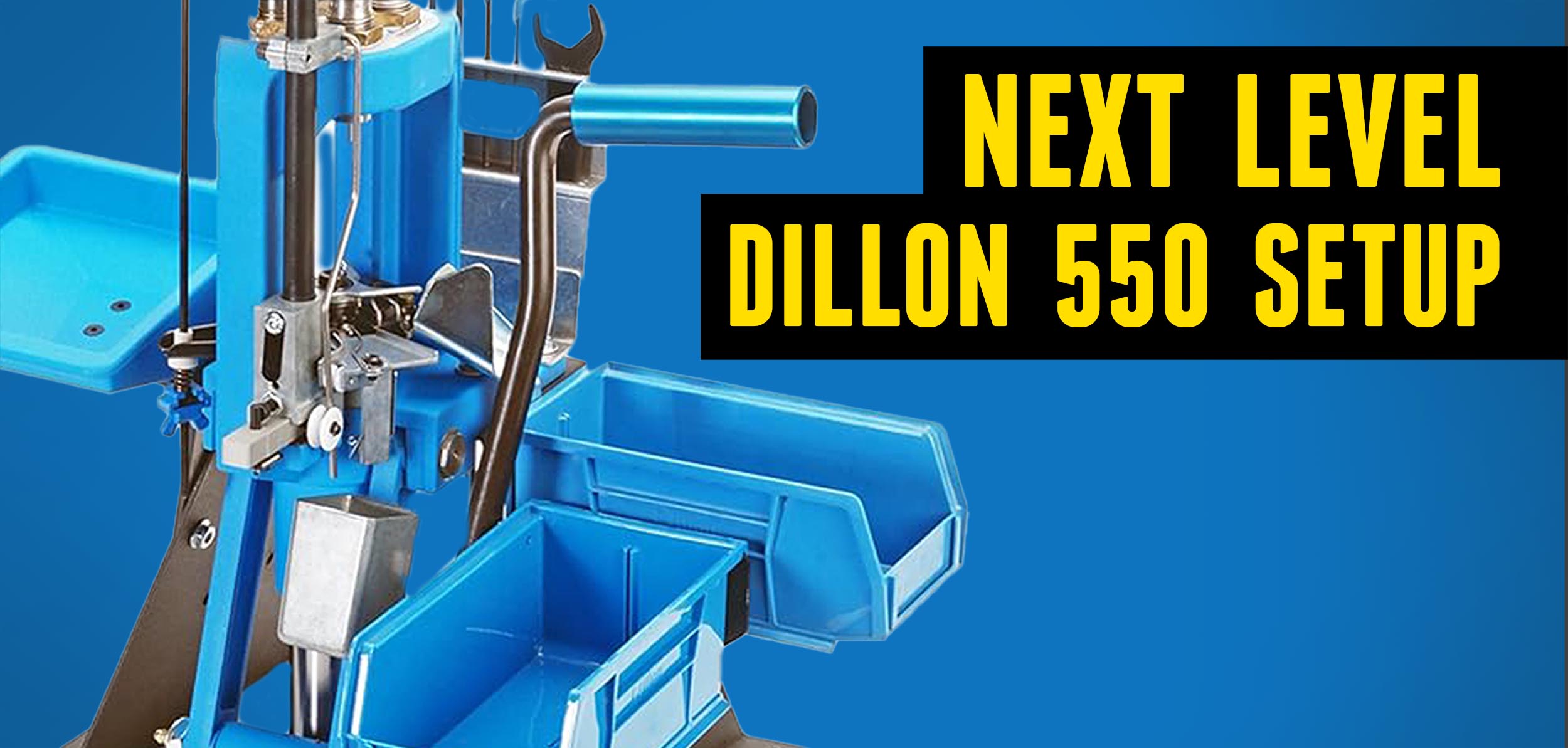
When it comes to loading precision rifle ammo, most people don’t immediately think of a progressive press. But with the right setup and careful attention to detail, the Dillon 550 can produce extremely consistent and accurate ammunition. In this article, I’ll take you through my process for loading precision rounds on the Dillon 550, sharing some key insights, first-hand experiences, and best practices along the way.
Disclaimer
Ultimate Reloader LLC / Making with Metal Disclaimer: (by reading this article and/or watching video content you accept these terms). The content on this website (including videos, articles, ammunition reloading data, technical articles, gunsmithing and other information) is for demonstration purposes only. Do not attempt any of the processes or procedures shown or described on this website. All gunsmithing procedures should be carried out by a qualified and licensed gunsmith at their own risk. Do not attempt to repair or modify any firearms based on information on this website. Ultimate Reloader, LLC and Making With Metal can not be held liable for property or personal damage due to viewers/readers of this website performing activities, procedures, techniques, or practices described in whole or part on this website. By accepting these terms, you agree that you alone are solely responsible for your own safety and property as it pertains to activities, procedures, techniques, or practices described in whole or part on this website.
Why the Dillon 550 for Precision Reloading?
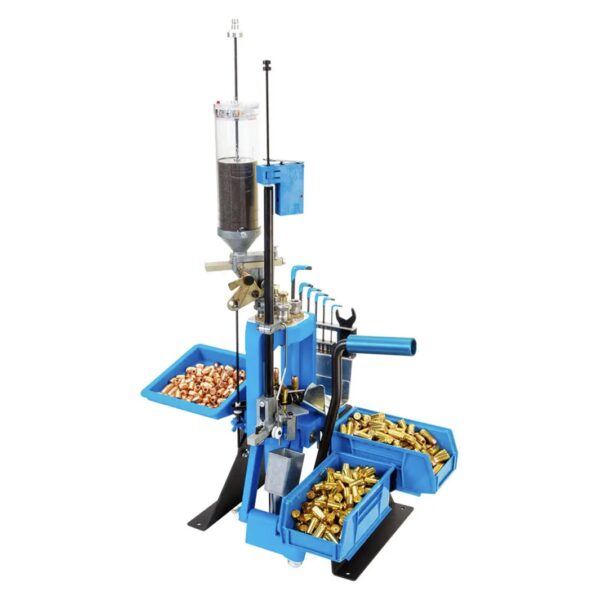
The Dillon 550 is a manually indexed progressive press, which gives me complete control over each step of the reloading process. Unlike an auto-indexing press, the 550 allows me to ensure that every powder charge is correct (especially when equipped with a powder funnel, while using an electronic dispenser) and that each bullet is seated perfectly. It combines the efficiency of a progressive press with the precision of a single-stage workflow, making it an excellent choice for precision rifle reloading.
I’ve personally used this press to load competition level ammo, and I can attest to the fact that with the right technique, you can achieve incredible consistency. I’ve won multiple competitions using rounds loaded on the Dillon 750, proving that progressive presses aren’t just for bulk ammo—they can be used for serious precision work as well. In most cases, I’ve been able to maintain single-digit standard deviations in velocity, which is a major factor in long-range shooting success.
Setting Up the Press

Before getting started, I make sure my Dillon 550 is set up correctly. This includes:
- Ensuring the shellplate is installed and aligned properly.
- Verifying that the toolhead is secure and equipped with quality dies.
- Calibrating the powder measure or install the Dillon powder funnel for charges thrown on another powder system. (In this case I’m throwing charges with the RCBS Matchmaster and charging cases with the Dillon Powder Funnel Die).
- Set up the correct large or small primer system.
I also like to have a clean and organized workspace to minimize distractions and ensure a smooth process. Having a clutter-free setup is key when you’re chasing extreme accuracy.
Die Stations:

In this case I’ve split operations into two phases, across 2 different tool heads: Brass Prep (Sizing, Mandrel, and Priming) and loading (Charging, Seating). This is new brass so decapping is not needed!
Brass Prep

I lube each case with a wipe-on lube. Easy to apply, easy to remove when done. I prepped a few of these to walk through a small batch in real time. So let’s get to work. Here’s the setup for prepping the brass
- Size and Mandrel
- Prime
You want to keep things moving, but not too fast or erratic. Progressive doesn’t have to equal “speed demon”. Yes, we want to be faster, and make things easier. But, not at the cost of attention to detail. Afterall, this is precision ammo.
Now that we’ve run a handful of brass through the process, let’s see if this truly worked out. I’ve got a gauge handy to take a look. I zero’d out my calipers and gauge on a piece of brass, and began to run each sized piece through.
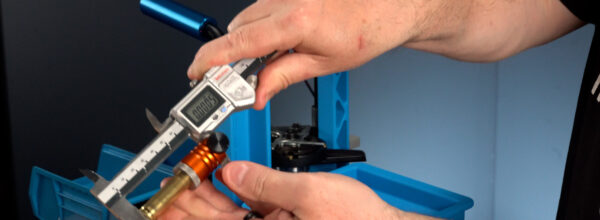
After examining each piece, we can see each piece is within 0.0005” of our original case. I’m clearly getting a consistent shoulder bump.
Sizing looks good – but what about primer seating depth? I then zeroed a piece of brass on my depth comparator, and ran all of the brass through. I saw primer seating depth within about 0.001”.
After the initial setup and testing, I’m confident I can get what I need out of this setup with the Dillon 550. My shoulder bump and primer seating depth is on point. It’s time to move the next process, loading!
Loading
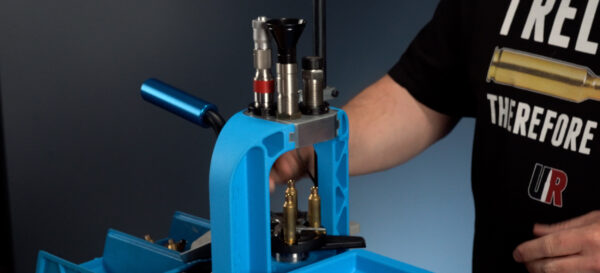
For loading, I’ve set up a new toolhead. I love being able to just pop a different toolhead in, and get right to work. The beauty of the 550 is you have some options as far as setup. You can run die stations in whatever order works for you. Here’s my setup for loading:
- Empty
- Brush Die
- Charging
- Seating
Case Insertion & Brush Die
We start with inserting a case in station 1. The brush die in station 2 is cleaning up my brass, removing any debris from previous steps. As I run up the press, I’ll find a case in station 3, and at the top of the stroke it’s time to charge.
Powder Charging
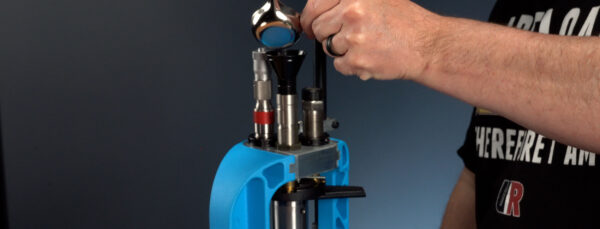
Powder consistency is critical for precision shooting. On the Dillon 550, I prefer to use a high-quality digital powder measure that can deliver less than .10gr variance. Dillon makes this easy by offering a powder funnel die and funnel system that allows you to drop your charges from another source (such as your digital powder measure) into the case as part of the standard progressive process. As a case rounds the plate into station 4, it’s time to seat.
Bullet Seating
Bullet seating is where the Dillon 550 really shines. Using a micrometer seating die, I can fine-tune my seating depth for optimal accuracy. I verify my base to ogive (BTO) frequently and make micro-adjustments as needed.
I also experiment with different bullet seating depths and find that different primer/powder/bullet combinations may work better with longer or shorter seated bullets. This is where testing is critical.
Once the press is run up, I can move ahead with steady confidence in a full progressive manner.
Running The Press
This is all about precision. My goal is to make sure the steps are done properly. I’m not in a rush. For speed, I’m going to bank on the fact that I’m accomplishing multiple steps with each stroke of the press at the same time. Slow is smooth, smooth is fast. Each time I’m inserting a case into station 1, and adding a bullet at station 4. Then at the top of the stroke, I’m charging my case in station 3. This is rinse and repeat from here!
Whenever I’ve completed my loading, it’s time for the best part – range time!
Final Inspection and Storage
Before heading to the range, I conduct a thorough quality control check. I visually inspect each round, measure OAL consistency, and even chamber-check a few rounds in my rifle.
Once I’m satisfied, I label my ammo with load data and store it in a sturdy ammo box. Keeping detailed records allows me to track performance and make necessary adjustments for future loads. I’ve found that taking notes on environmental conditions and lot numbers for components helps me refine my loads for different match conditions. For example, I discovered that changes in temperature affected my powder burn rate, requiring slight charge weight adjustments to maintain consistent velocity.
Results on the Range

With precision ammo loaded on the Dillon 550, I’ve seen outstanding results on the range. The combination of controlled indexing, consistent sizing and shoulder bump along with careful powder measurement and meticulous bullet seating produces rounds that are on par with those loaded on single-stage presses but often loaded in a fraction of the time.
In this test scenario, I set up at a 300 yard range. I’m working with my F-Class competition setup, and a 7PRCW rifle.
I proceeded to shoot 4 different groups, and monitor my velocity. Here is a quick breakdown of the results.
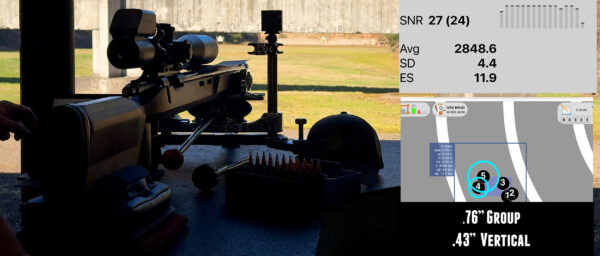
- First Group 5 shots: 0.76″
- Second Group 6 shots: 1.26″
- Third Group 5 shots: 1.30″
- Fourth Group 7 Shots: 1.34″
These results were just what I was looking for, sub half minute, with an average speed 2850. I saw consistent averages, ES, and SDs. This is reflective of the all around consistent loading process!
So, what did we do differently compared to normal loading? How did we get a different level of performance? The answer here – breaking up processes so you are interfering with the particular steps as little as possible while still maintaining speed and ease.
We are effectively isolating forces on each stroke of the press in our 2 different setups – 1. Brass Prep, and 2. Loading
By isolating brass prep to its own tool head we obtain consistent pressure for repeatable shoulder bump and priming. It keeps us from jerking the press, causing a powder spill or sticking.
For loading, we honed in on charging and bullet seating. All we had to do was raise the ram, and the only force applied was for consistent seating depth.
Key Takeaways:
- Isolate pressures by splitting up steps
- Use precision oriented equipment (like a powder funnel with precision dispenser instead of a powder measure)
- Get well honed, specific dies!
Remember, this is a bone-stock 550!
Conclusion
The Dillon 550 is often overlooked for precision rifle reloading, but my experience as well as a number of other top F Class shooters has proven that with the right techniques and attention to detail, it’s a serious contender. By controlling each stage of the process—especially brass prep, powder measurement, and bullet seating—you can produce match-grade ammo that competes with the best single-stage loads.
If you’re looking to balance efficiency with precision, don’t overlook the Dillon 550. With a few careful steps and a commitment to consistency, you can load competition-winning ammo on a progressive press. Have you used the Dillon 550 for precision reloading? Let me know your experience in the comments below!
Get the Gear
Dillon 550C Manual Indexing Progressive Reloading Press
Erik Cortina sizing die
Erik Cortina brush die
Dillon powder die and funnel
Dillon Tool Heads
Dillon bullet tray
Dillon roller handle
Vihtavuori n555
Lapua Brass
Berger 184gr hybrid Bullets
Don’t miss out on Ultimate Reloader updates, make sure you’re subscribed!
Thanks,
John Masek (F-Class John)
About the author