
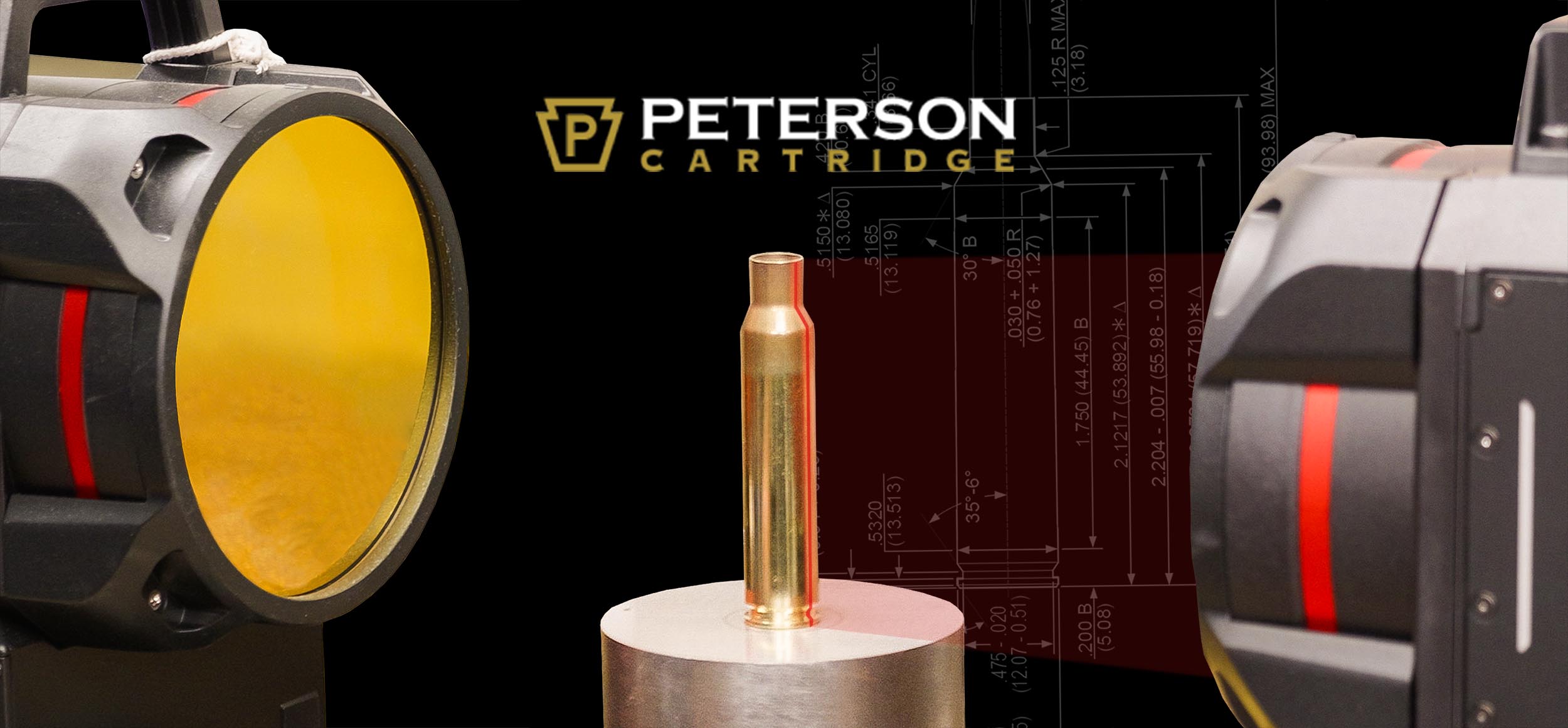
Peterson Cartridge casings are among the most precise and consistent on the market. Both the production process and inspection detail are next-level. In this video, we walk through the in-depth inspection process with company president Derek Peterson to showcase the Peterson Advantage and their commitment to uncompromising quality!
Disclaimer
Ultimate Reloader LLC / Making with Metal Disclaimer: (by reading this article and/or watching video content you accept these terms). The content on this website (including videos, articles, ammunition reloading data, technical articles, gunsmithing and other information) is for demonstration purposes only. Do not attempt any of the processes or procedures shown or described on this website. All gunsmithing procedures should be carried out by a qualified and licensed gunsmith at their own risk. Do not attempt to repair or modify any firearms based on information on this website. Ultimate Reloader, LLC and Making With Metal can not be held liable for property or personal damage due to viewers/readers of this website performing activities, procedures, techniques, or practices described in whole or part on this website. By accepting these terms, you agree that you alone are solely responsible for your own safety and property as it pertains to activities, procedures, techniques, or practices described in whole or part on this website.
About Peterson Cartridge
Headquartered in Pennsylvania, Peterson Cartridge is a family-owned company dedicated to excellence and over-measuring. Their goal is to produce extremely consistent, American-Made, match-grade brass rifle casings which are designed around, and for long-distance shooters. We recently took a tour and saw how brass is made.
The Inspection Process
Derek explained that from the very beginning, Peterson has never compromised on quality. In pursuit of this goal, they’ve fine-tuned and heavily invested in every step of their process from cup to casing, to packaging and inspection.

Peterson’s inspection process begins during production with regular samples pulled and evaluated from each batch. Some measurements are taken in the production area, but Peterson’s high-tech laboratory allows the collection of even more data. They also do first-article inspections whenever they are changing to a production run of a new caliber.
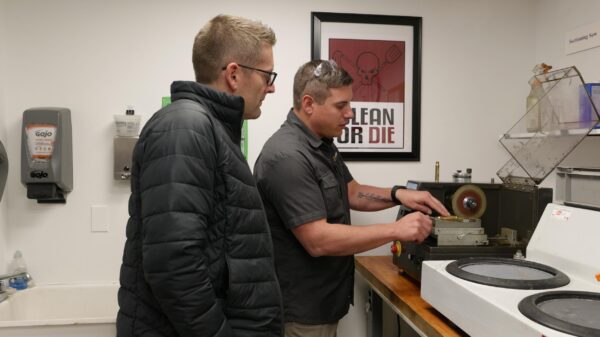
Derek first walked us through sectioning a 408 CheyTac case in preparation for a Micro Vickers Hardness Test. He explained that making a casing is different from purchasing one.
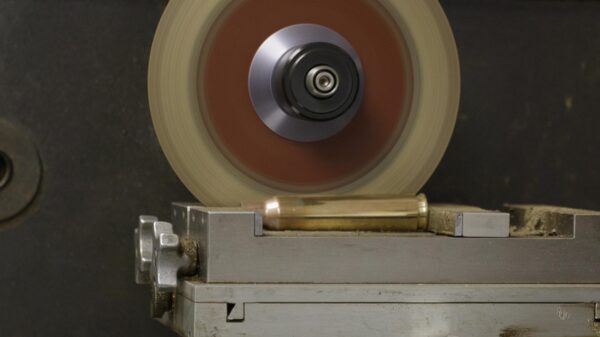
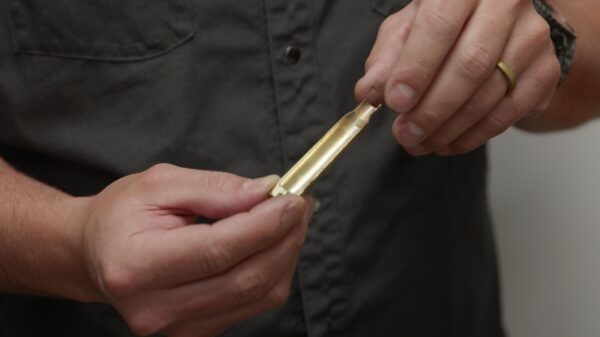
When you buy a casing, you evaluate the outside for deformities, water spots, and anything out of the ordinary. As a cartridge manufacturer, Peterson is also concerned with the inside of the casing, so they need to section them, or cut them in half.
Next comes potting the casing, using a mold to trap it in resin.
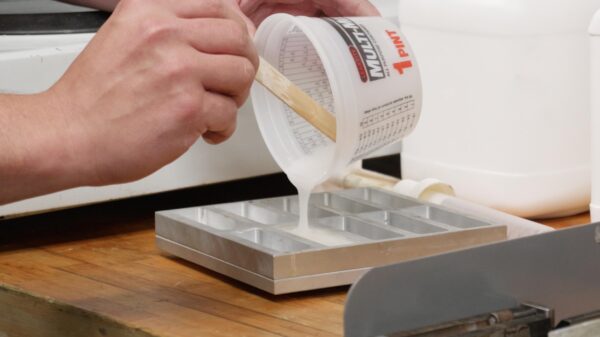
Once the resin has hardened, it is polished, then moved over to a machine that measures the hardness of the half-case at several key locations, including the primer pocket.
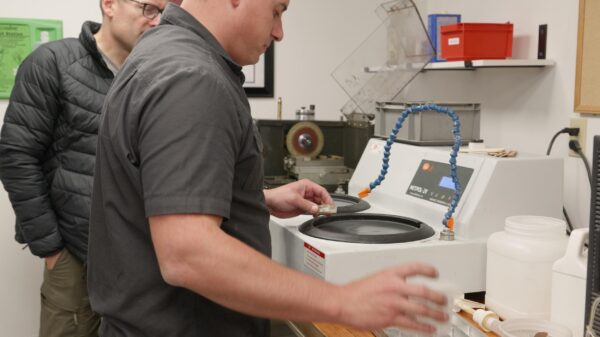
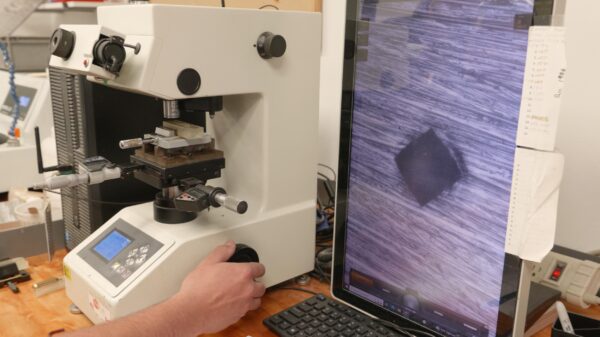
Derek expertly navigated this process, following a chart detailing known distances from the “zero” starting point.
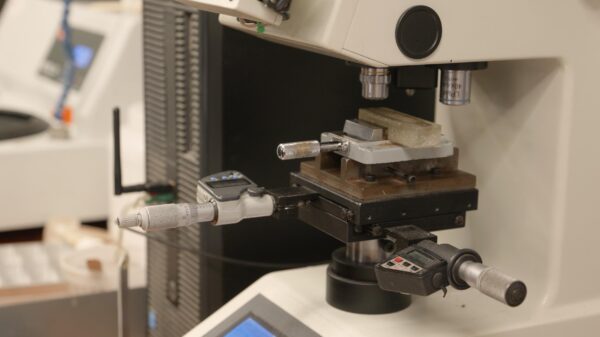
The minimum hardness for each measurement point is 180 on the Vickers scale, the test case measured 215.
Peterson’s laboratory also has the ability to measure primer exit force to see how primer pockets in their cases are holding up. The minimum peak force should be 30 pounds – the sample casing had a reading of 99.6 pounds.
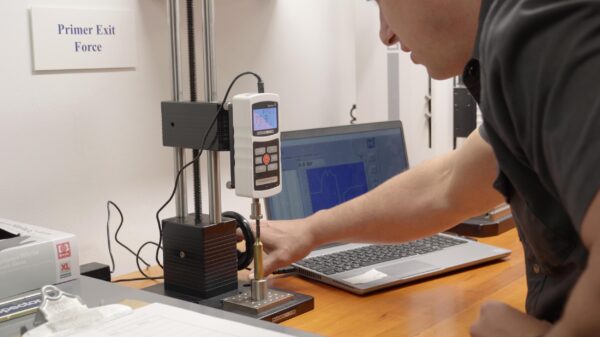
They conduct this test as part of their first-article inspections when changing to a production run of a new caliber, monitoring how the primer exit force changes with each case firing. (Fun fact: this is not a linear relationship!)
Another machine measures neck tension using a polished carbide mandrel, which is more consistent than a bullet and proportional to what a bullet will do. Too much neck tension will leave pressure marks on bullets during seating. Too little neck tension allows bullets to fall into the casing.
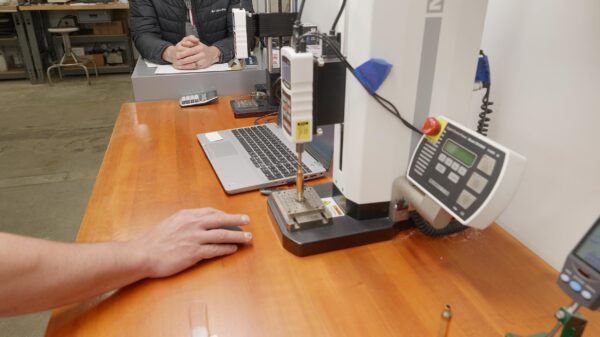
Derek reported that from the previous case measured to the sample case he tested, there were only three pounds worth of difference of entrance force and a single pound worth of difference of exit force.
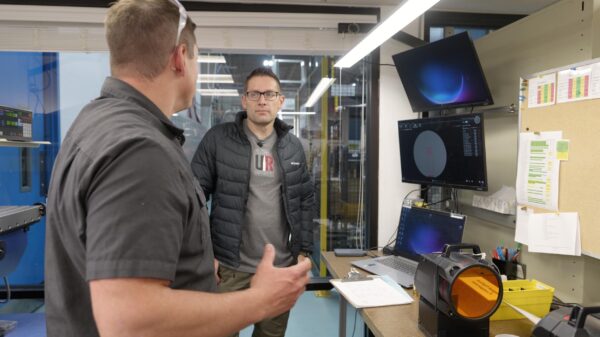
One of Peterson’s newest machines is a digital optical comparator. This impressive machine accomplishes in one second what used to take an hour using an old-school machine, capturing every single dimension of whatever case is being measured to 0.001” with the click of a button.
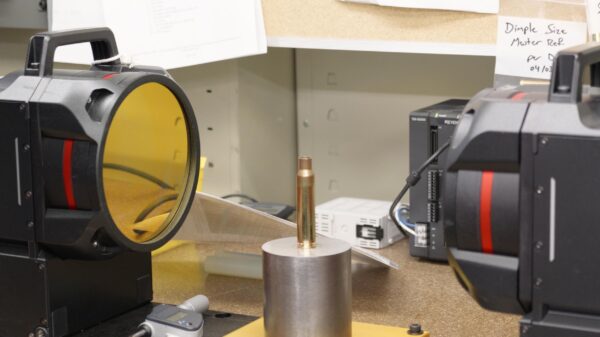
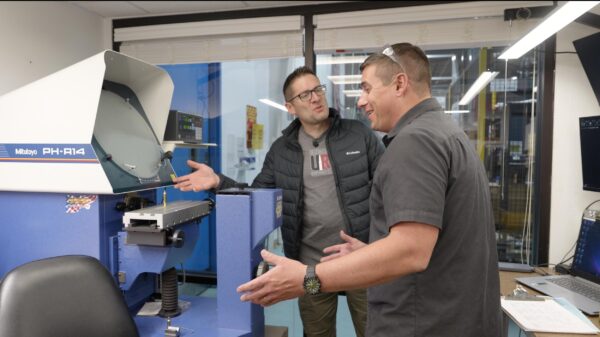
We measured a 408 CheyTac case, placing it on a stand. Switching to a live feed, the machine still continued to offer measurements in real-time on screen as we moved the case.
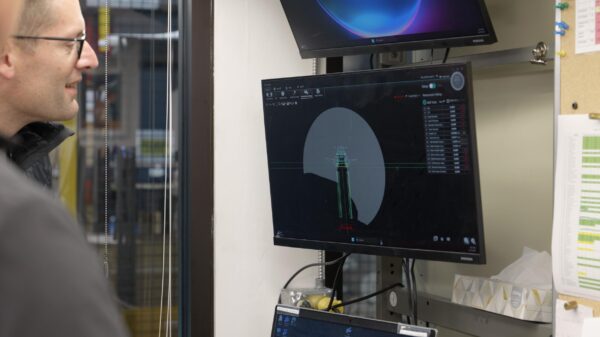
This is an incredibly swift way to ensure cases are being produced correctly, eliminating all guesswork and operator error.
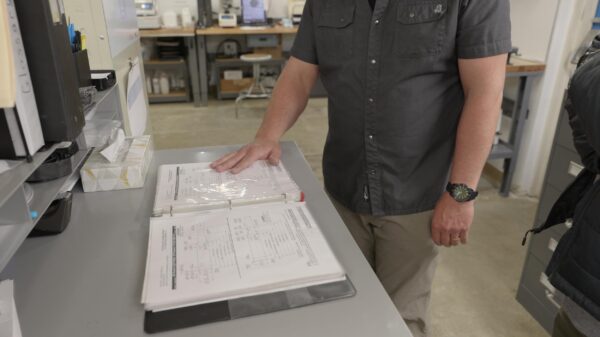
Peterson also keeps a physical SAAMI print book in their laboratory with prints of every cartridge casing they produce.
Internal Ballistics Lab
One of Derek’s favorite parts of testing is getting to load and fire the cases.
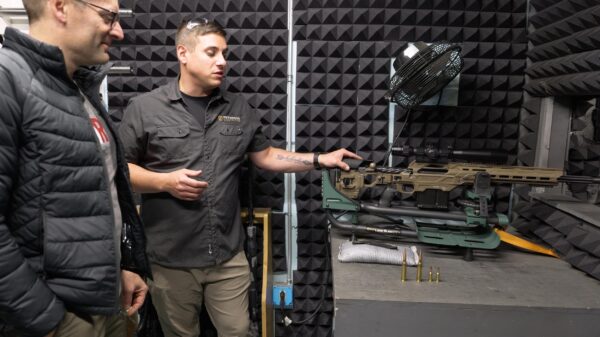
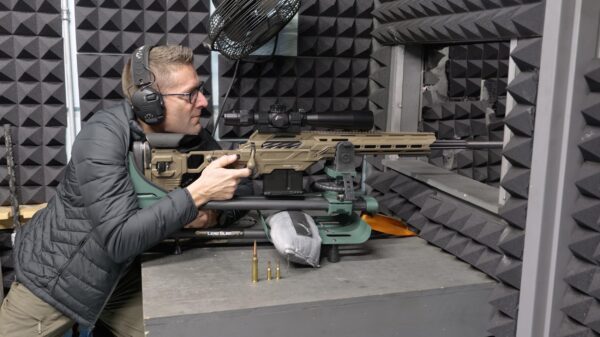
Peterson maintains an impressive inventory of bullets, powders, primers, and reloading equipment to be able to test different loads and to recreate customer loads if someone calls with a problem. Inside the Peterson factory is a specially-built internal ballistics lab where they fire all calibers they produce. I had an opportunity to fire a few big cartridges indoors, which was quite the experience!

Conclusion
There is so much more that goes on behind the scenes at Peterson Cartridge than customers realize and it was incredibly impressive to see it in person.
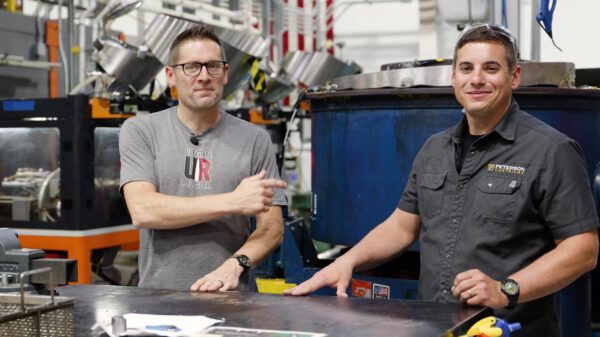
They not only use their laboratory and internal ballistics lab to evaluate finished cases, but also to perform spot checks, in-process inspections, develop new calibers, and more. Keep in mind that the lab resources and production checks are only a part of Peterson’s next-level inspection procedures – be sure to check out our “How Brass is Made” video to see the rest!
Get the Gear
Shop Peterson brass and swag directly from Peterson Cartridge!
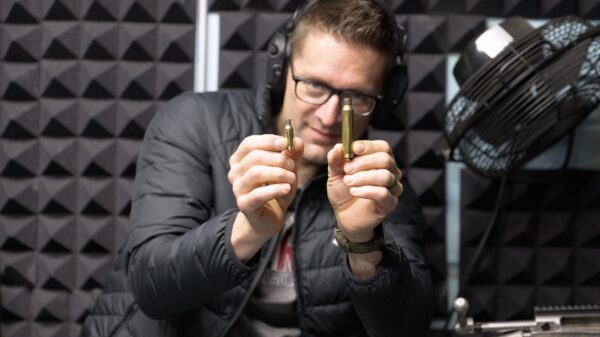
You can also find Peterson brass from a number of different retailers including Creedmoor Sports and Midsouth Shooters Supply.
Don’t miss out on Ultimate Reloader updates, make sure you’re subscribed!
Thanks,
Gavin Gear
About the author