
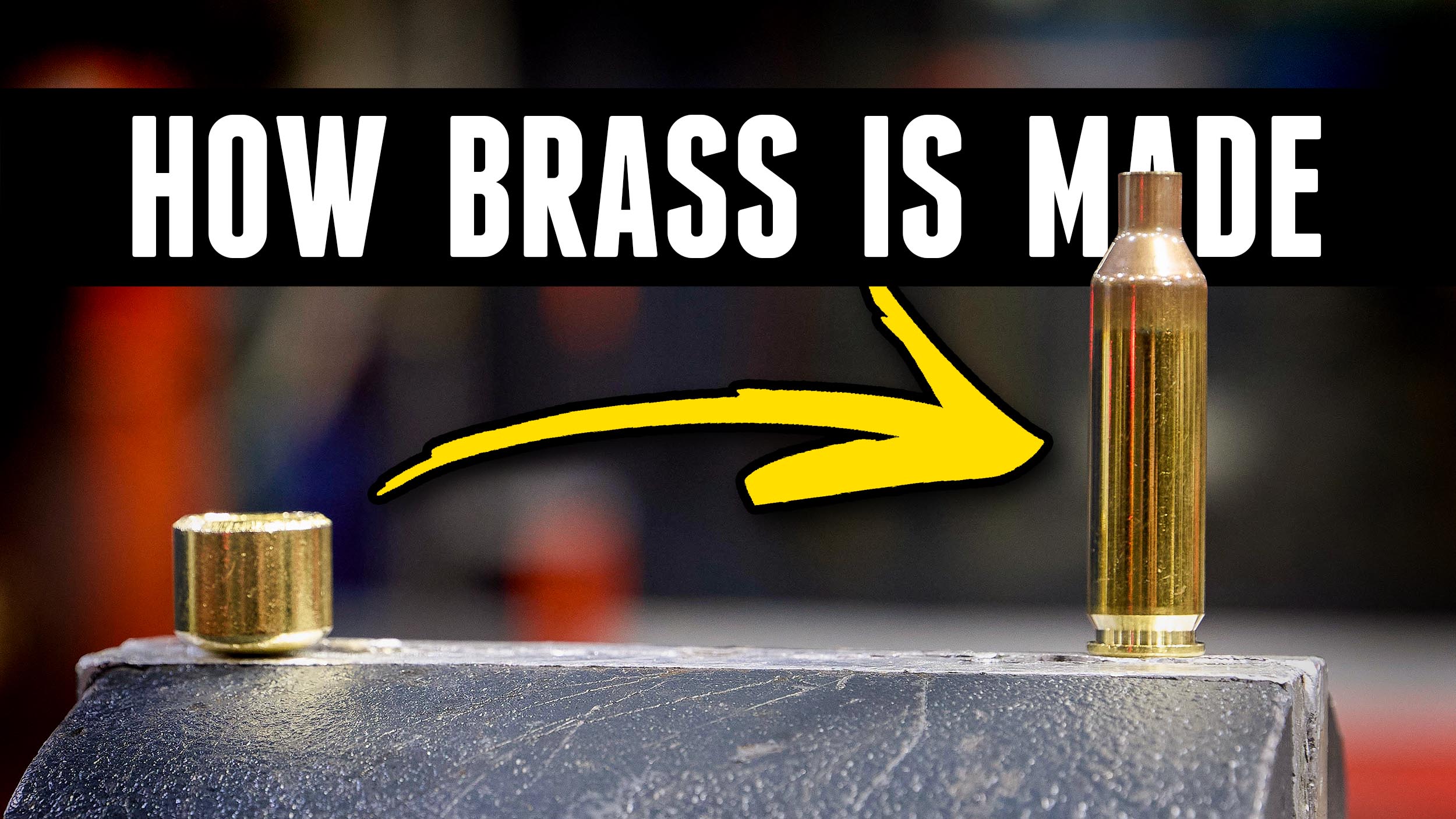
Have you ever wondered how brass is made? Peterson Cartridge took us on a factory tour to explain the full process and their tireless attention to detail and dedication to quality. Brass is a component many take for granted. You won’t after watching this video!
Disclaimer
Ultimate Reloader LLC / Making with Metal Disclaimer: (by reading this article and/or watching video content you accept these terms). The content on this website (including videos, articles, ammunition reloading data, technical articles, gunsmithing and other information) is for demonstration purposes only. Do not attempt any of the processes or procedures shown or described on this website. All gunsmithing procedures should be carried out by a qualified and licensed gunsmith at their own risk. Do not attempt to repair or modify any firearms based on information on this website. Ultimate Reloader, LLC and Making With Metal can not be held liable for property or personal damage due to viewers/readers of this website performing activities, procedures, techniques, or practices described in whole or part on this website. By accepting these terms, you agree that you alone are solely responsible for your own safety and property as it pertains to activities, procedures, techniques, or practices described in whole or part on this website.
About Peterson Cartridge
Headquartered in Pennsylvania, Peterson Cartridge is a family-owned company dedicated to excellence and over-measuring. Their goal is to produce extremely consistent, American-Made, match-grade brass rifle casings which are designed around, and for long-distance shooters.
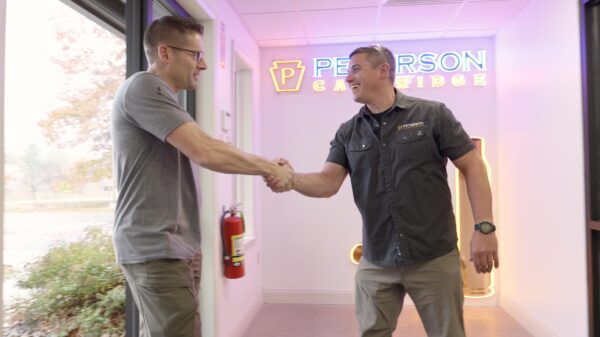
Their casings are among the most precise and consistent on the market, delivering discerning long-distance shooters and hunters sub-MOA accuracy. Their brass is especially popular in the ELR world. Taking a tour made it easy to see why!
How Brass is Made – Production
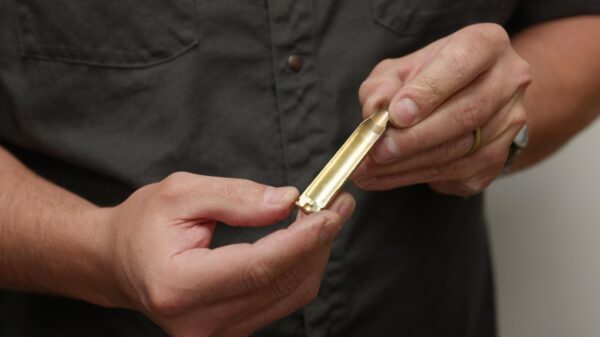
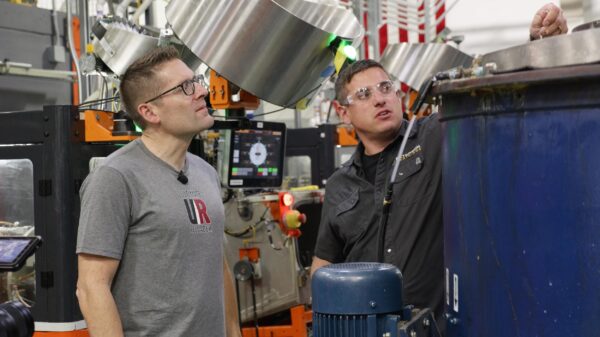
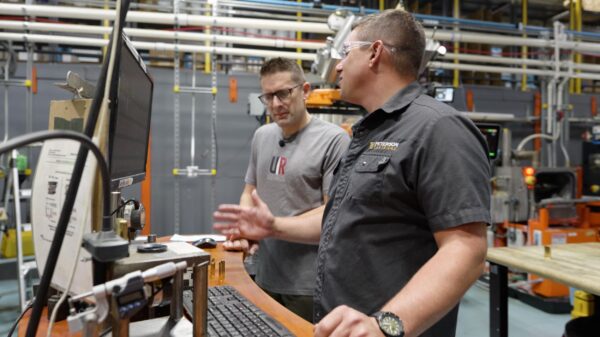
Company President Derek Peterson took the time to walk me through the process from start to finish— from cup to casing.
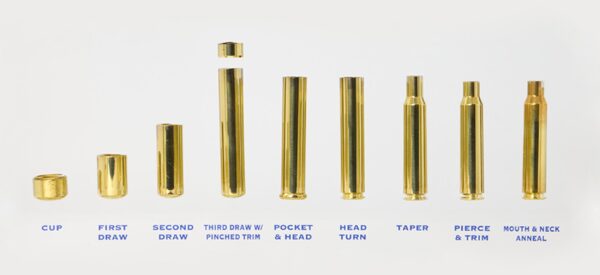
Every casing begins its life as a brass cup, sourced from both domestic and international suppliers.
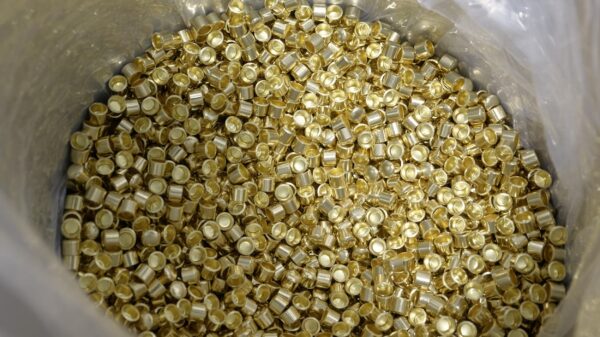
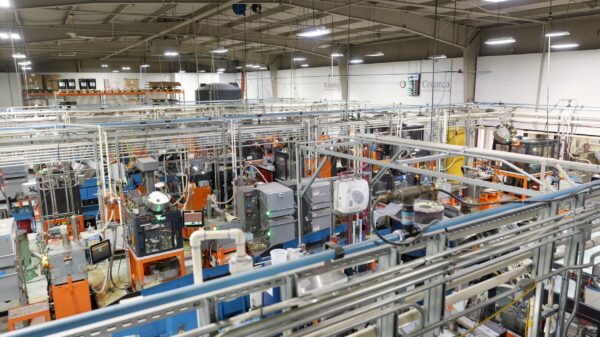
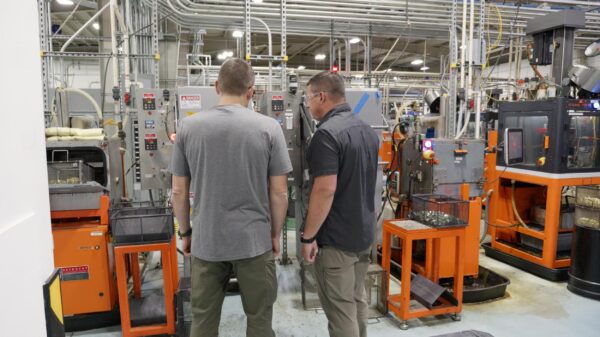
These cups undergo an inspection before being placed on one of three production lines, each containing over 20 machines!
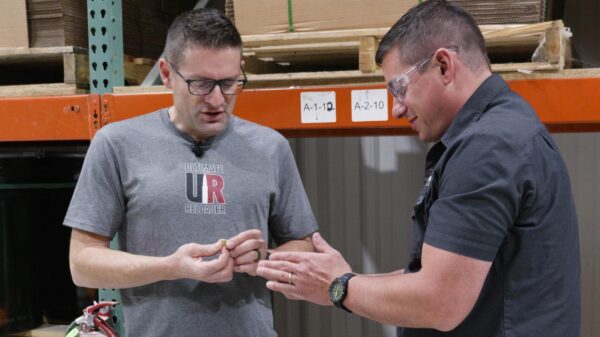
Derek gave us a tour of the smaller-caliber production line busy making 22 Creedmoor cases.
The cup enters the first machine for its first draw – elongating it into an open-ended tube.
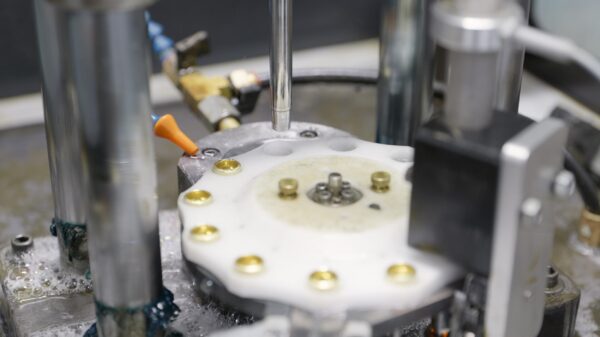
It takes several draws to fully elongate a case.
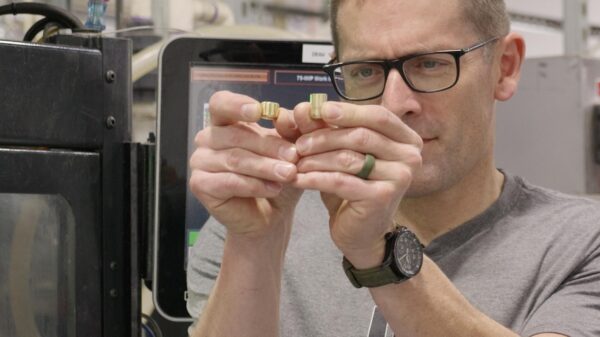
It cannot be done all at once without risking significant damage or problems. After the first draw, the elongated cups are washed to remove lubricant from the first draw, then annealed in an oven.
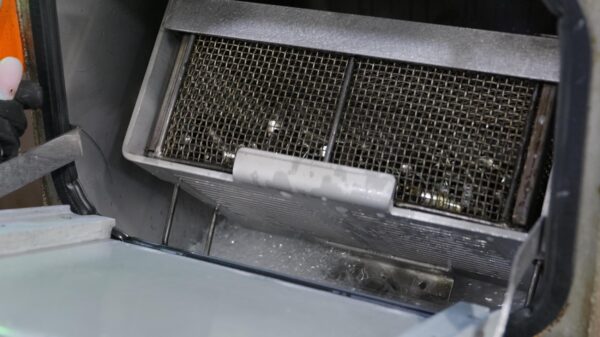
Brass work-hardens, so it takes annealing to soften it.
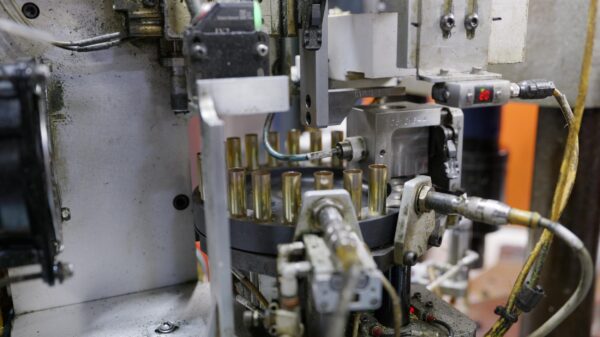
These freshly-annealed cases emerge with a sort of nickel finish and enter another wash to remove any oxides and staining from the oven.
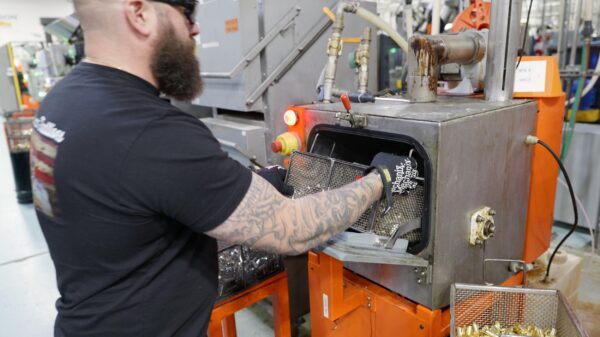
This returns them to the familiar shiny brass finish for draw two. As the tube goes through more draws, it gets longer and the walls get thinner.
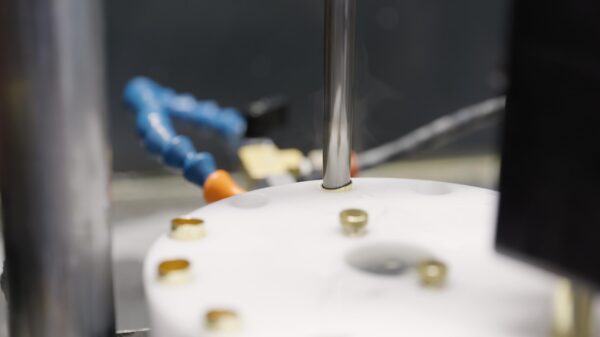
The further elongated tubes leave draw two for another round of washing, annealing, and washing before the final draw. In the third and final draw, the brass tubes are drawn to their total desired length and the excess pinched off.
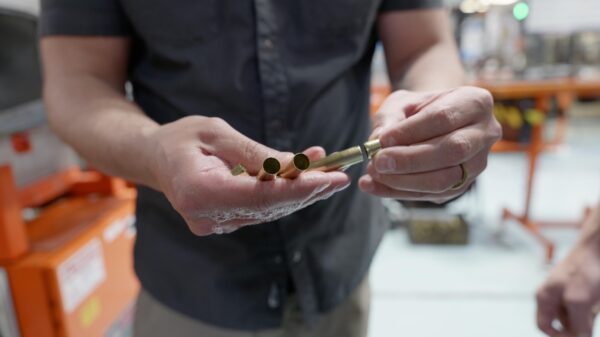
Now looking more like casings, these tubes are washed then have a lubricant dried onto them in preparation for heading and pocketing. The Peterson headstamp with caliber designation is stamped on and the primer pocket formed, but not yet pierced.
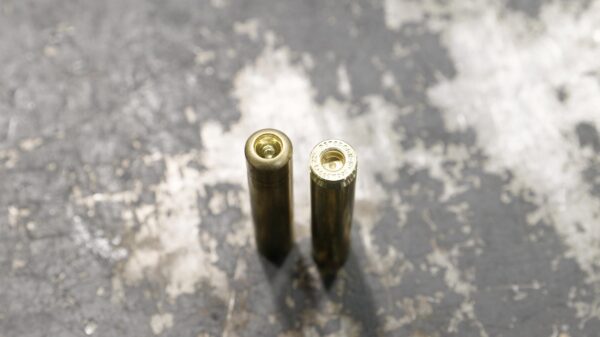
The casings are washed again, then have their extraction grooves cut (head turning).
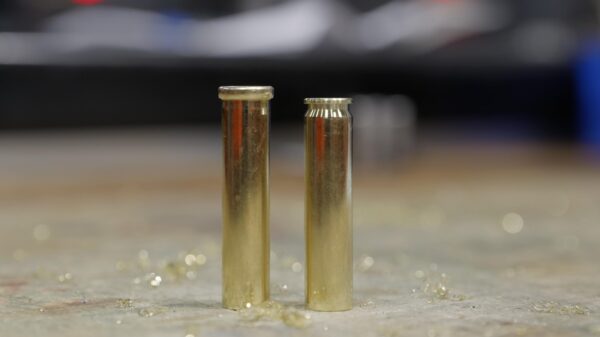
By this point, the pieces look a lot more familiar. Trimming the top of the casings allows them to better feed into the tapering machine.
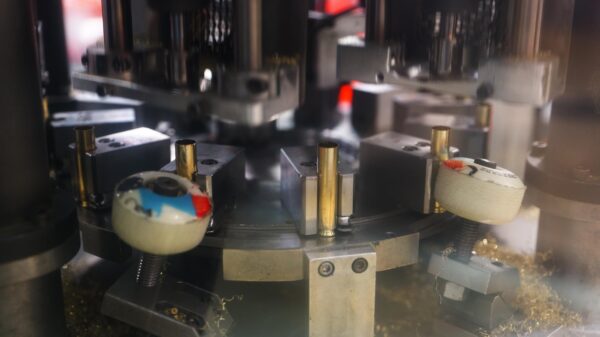
The tops of the brass tubes are induction-annealed to soften them, leaving the bottoms of the cases-to-be as hard as possible. The super-heated sections are cooled, lubricated, and tapered.
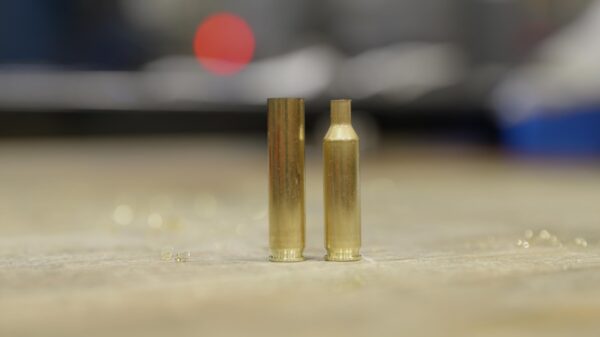
Different calibers require multiple tapering operations.
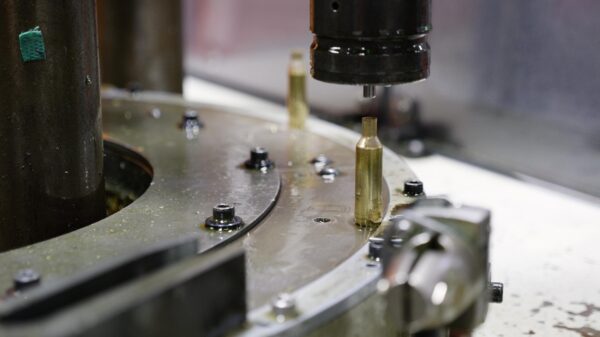
Once tapered, the cases are washed for the seventh time to remove lubricant then pierced and trimmed to length.
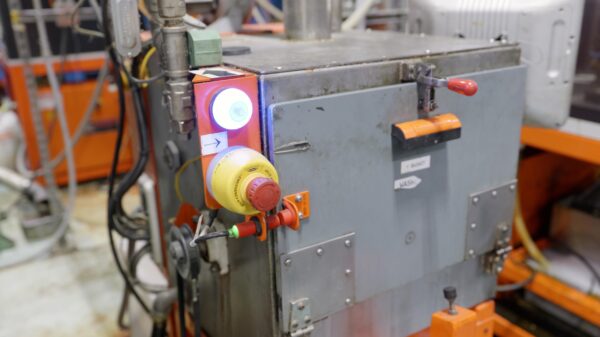
It’s important that the pierced flash holes are centered and burr-free.
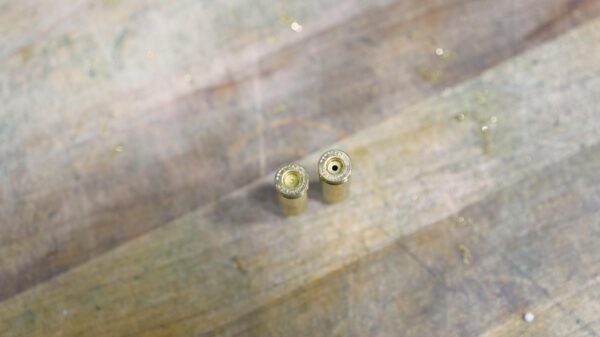
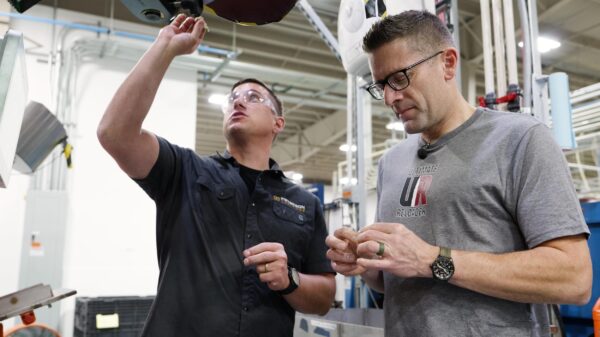
They then enter a massive tumbler filled with ceramic spheres that polish the cases to a mirror-finish.
Perhaps one of the most aesthetically-pleasing steps was watching the polished cases tumble down a sort of vibratory “sluice”, shaking out any stuck tumbling media.
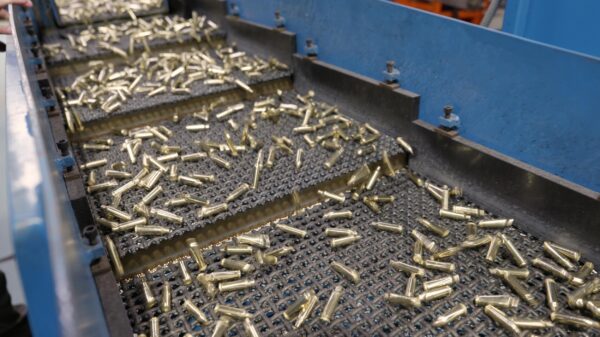
These extra-shiny almost-casings are washed for the eight and final time, before undergoing a final mouth and neck reannealing.
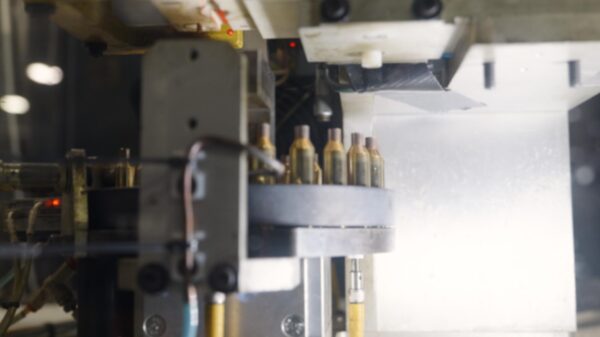
Derek explained that brass stores stress and tension and requires softening to prevent season cracking. This process leaves the trademark Peterson reanneal line on each case and ensures consistent neck tension.
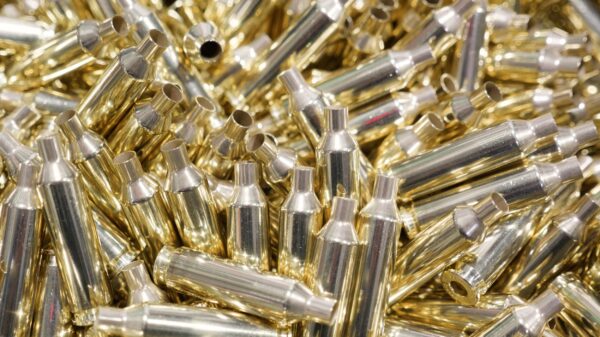
The final production step is adding anti-tarnish and Peterson’s proprietary EZ-seat coating. This special coating allows consistent, uniform seating of the bullet and primer upon first loading and is unique to Peterson Cartridge.
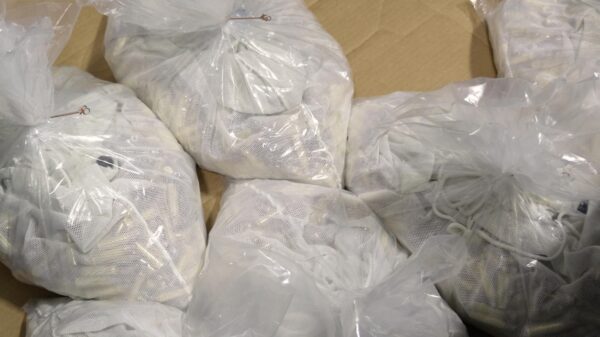
The finished casings are bagged and taken to Peterson’s separate inspection and packaging facility.
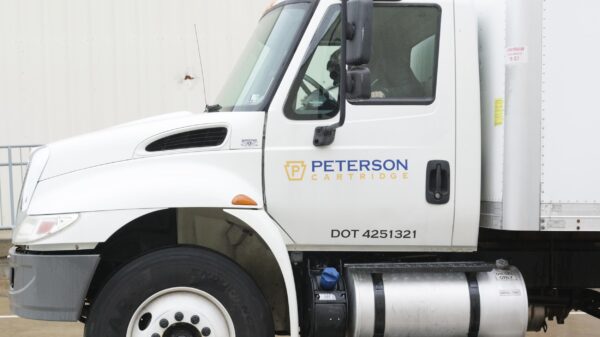
Laboratory Inspection
It’s important to recognize that Peterson’s inspection process begins during production with regular samples pulled and evaluated from each batch.

Some measurements are taken in the production area, but Peterson’s high-tech laboratory allows the collection of even more data.
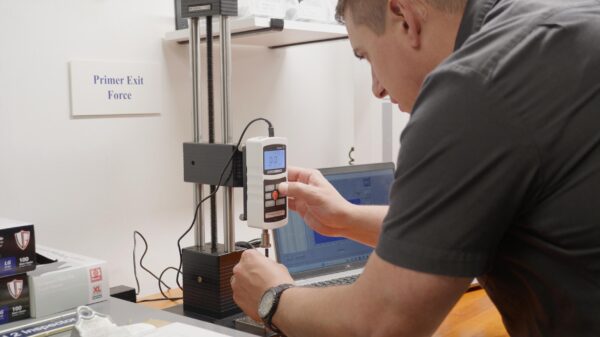
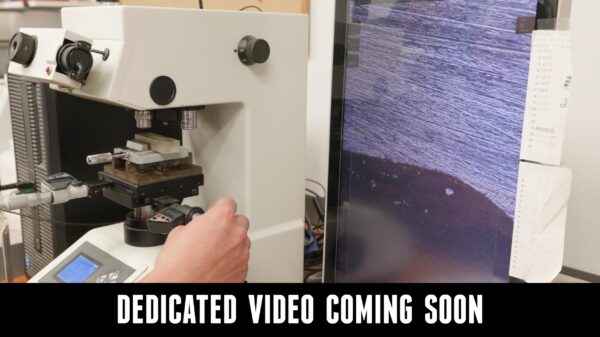
They also do first-article inspections whenever they are changing to a production run of a new caliber. (Stay tuned for a dedicated video on their laboratory!)
Inspection & Packaging
Every single case gets 100% dimensionally checked and visually inspected.
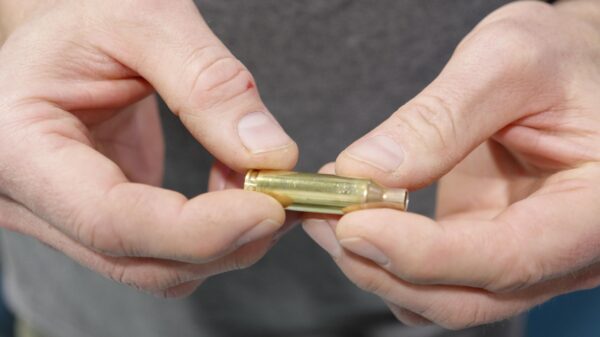
Finished cases from production start on a feeding table that collates and feeds them onto a conveyer belt.
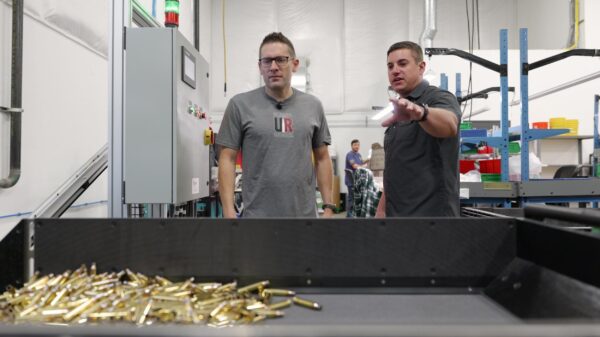
This wasn’t unlike a dedicated casing rollercoaster!
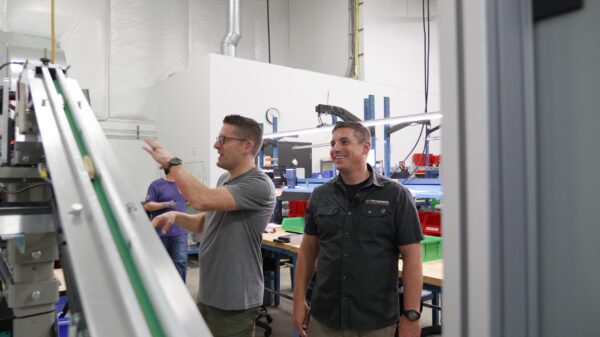
As the casings fly by, they go through a laser grid that measures six key dimensions in eight different locations down to 0.0001”.
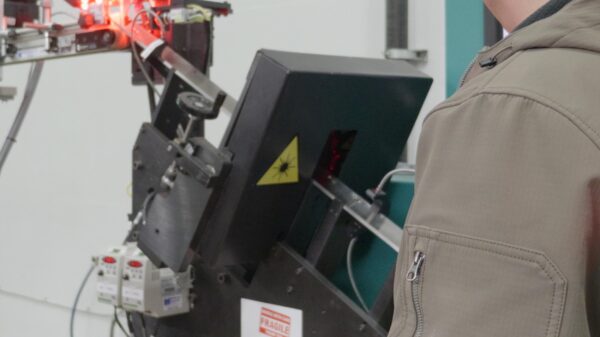
Casings that don’t pass are rerouted into a reject bin, which are later rerun for confirmation.
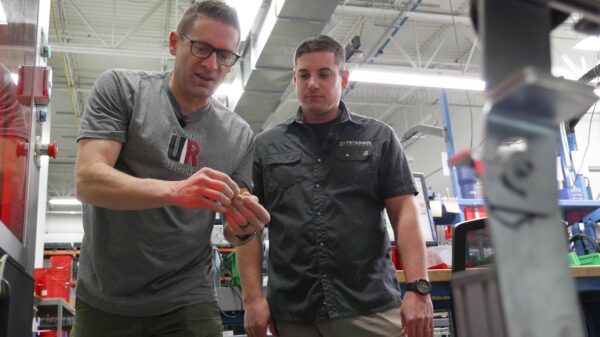
Any cases rejected twice are scrapped. After passing through the laser grid, the cases are fed into a machine that works as a digital human eye, conducting a number of simultaneous visual inspections.
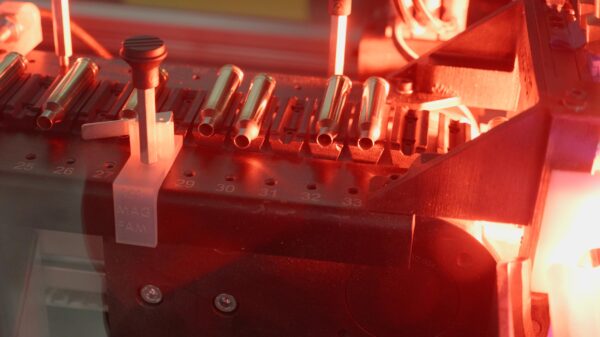
The first camera measures the extraction groove for the second time. The second identifies and verifies the headstamp. The third looks to be sure the mouth isn’t out of round, scans for debris, and measures neck wall thickness.
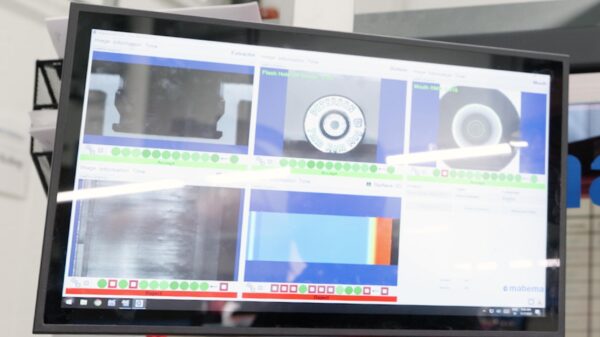
Two more cameras search for surface defects using videos and lasers. All of this information is captured and cases that don’t pass for one reason or another are separated by failure point.
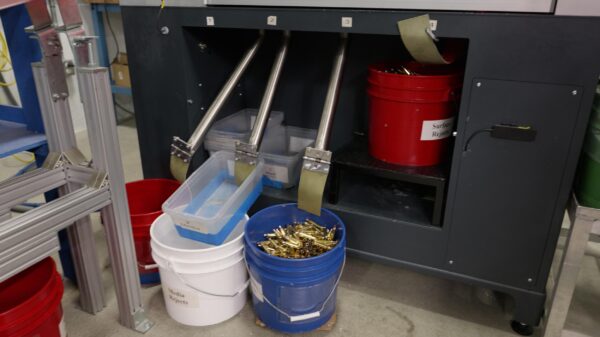
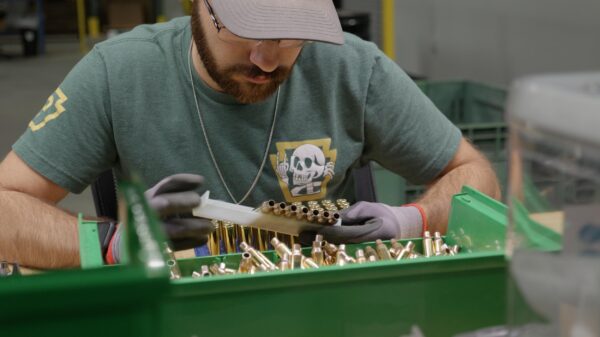
A team of human hand inspectors tend to each casing, verifying all defects the machine flags.
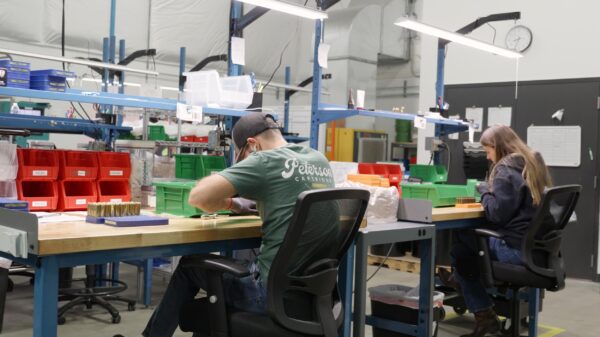
A highly-trained “Scrap Czar” has the final say if a case can be rejected.
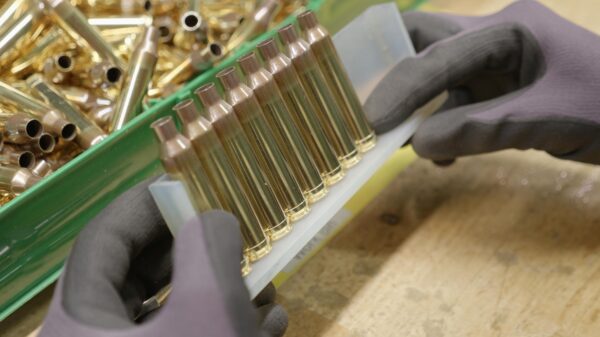
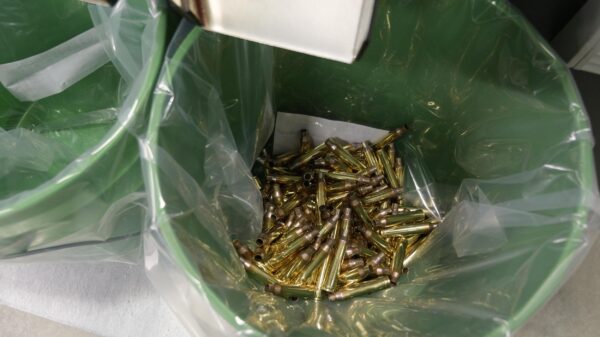
All cases that pass through all of the machines are counted as they fall into “good” buckets. They then receive a certificate of performance and are bagged with a desiccant packet.
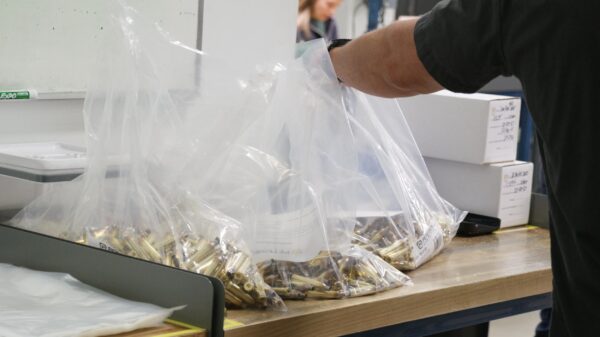
These bags are sold to larger batch customers or pulled from for retail packaging. All cases produced together remain together for even greater consistency, tagged with QC number.
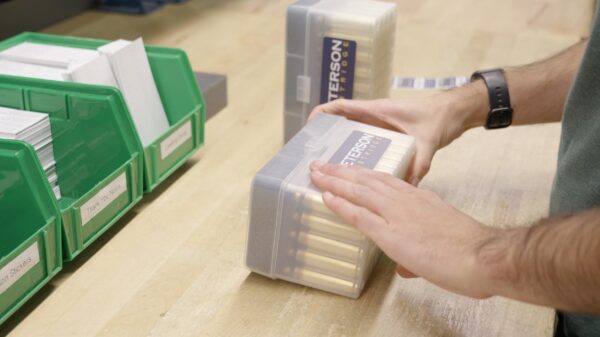
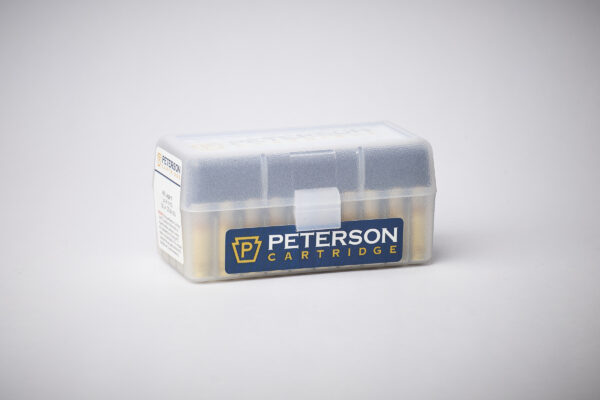
If you buy a box of Peterson brass, it arrives in a handsomely-labeled, sturdy ammo box. It takes a team to put these together!
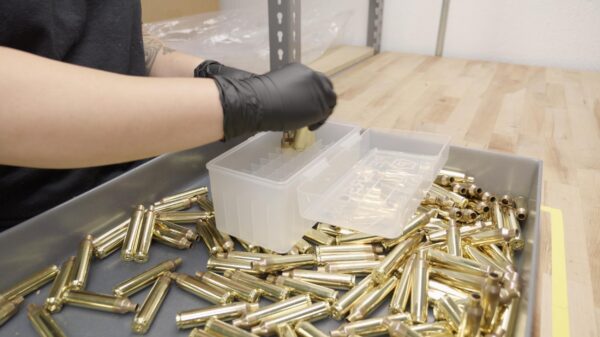
One person fills each box with another ensuring it is full with no scratches or dents that could have happened between final inspection and packaging.
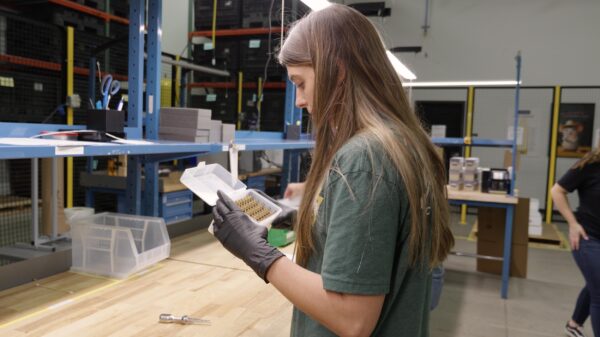
Another adds a sticker, loading card, thank you card, and foam to protect the casing mouths. The last step is to add the appropriate stickers.
The packaged casings wait in a warehouse for their final destination and are shipped to distributors all over the world.
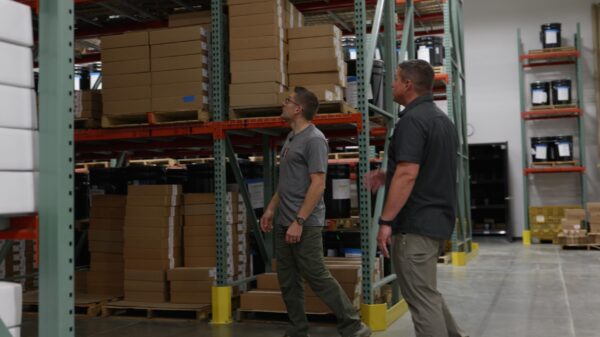
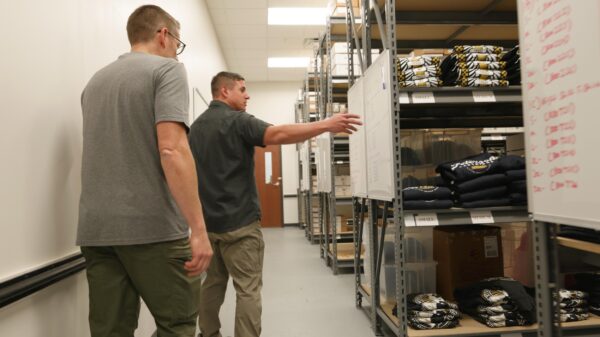
Some are earmarked for PetersonCartridge.com sales, and stored alongside Peterson swag.
Conclusion
Seeing how precision brass is made was absolutely mind-blowing.
The attention to detail and astounding number of checks speaks not only to a quality product but shows how much Peterson Cartridge cares.
They do everything in their power to give you the best product to support whatever your adventure is.
Get the Gear
Shop Peterson brass and swag directly from Peterson Cartridge!

You can also find Peterson brass from a number of different retailers including Creedmoor Sports and Midsouth Shooters Supply.
Don’t miss out on Ultimate Reloader updates, make sure you’re subscribed!
Thanks,
Gavin Gear
About the author