
How do you find and properly use load data? I’ll walk you through how to utilize Hodgdon’s Online Reloading Data Center in this video.
Disclaimer
Ultimate Reloader LLC / Making with Metal Disclaimer: (by reading this article and/or watching video content you accept these terms). The content on this website (including videos, articles, ammunition reloading data, technical articles, gunsmithing and other information) is for demonstration purposes only. Do not attempt any of the processes or procedures shown or described on this website. All gunsmithing procedures should be carried out by a qualified and licensed gunsmith at their own risk. Do not attempt to repair or modify any firearms based on information on this website. Ultimate Reloader, LLC and Making With Metal can not be held liable for property or personal damage due to viewers/readers of this website performing activities, procedures, techniques, or practices described in whole or part on this website. By accepting these terms, you agree that you alone are solely responsible for your own safety and property as it pertains to activities, procedures, techniques, or practices described in whole or part on this website.
What is Load Data?
Think of load data like a recipe. In order to make a round of ammunition, you need a case, powder, primer, and bullet.
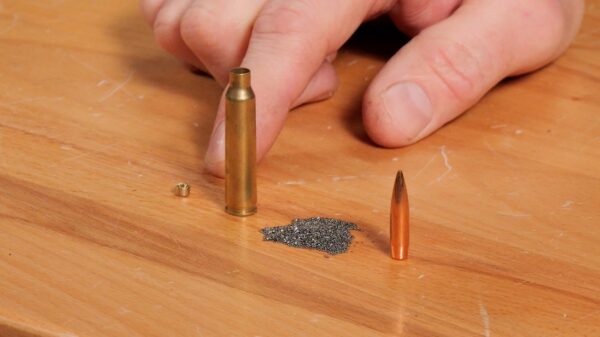
For the round to be safe to fire, these components need to be specifically combined as outlined by reputable sources of load data. Manufacturers of powder, bullets, and reloading equipment publish these resources which specify exact charge weights, powder type, bullet weights, and more. Keep in mind that the data inside is likely oriented towards whatever company is putting it out. For example, Hornady’s reloading manuals have the most data for Hornady bullets.
It’s VERY important to consult multiple reputable sources of load data — do NOT just use random sources from the internet! (Anecdotal evidence like the “What the Pros Use” series on AccurateShooter.com can provide good background information but should not be relied on exclusively.) One of my favorite resources, and the one I use the most often, is Hodgdon’s Online Reloading Data Center. Hodgdon’s user-friendly website allows you to filter by cartridge, bullet weight, manufacturer, and powder for rifle, pistol, shotgun, and muzzleloader.
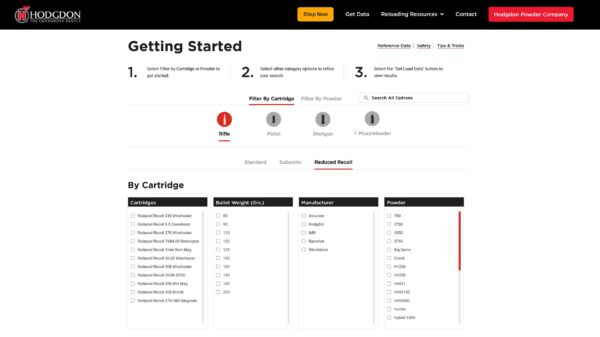
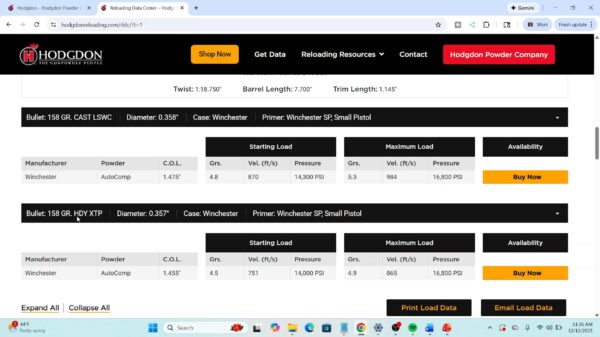
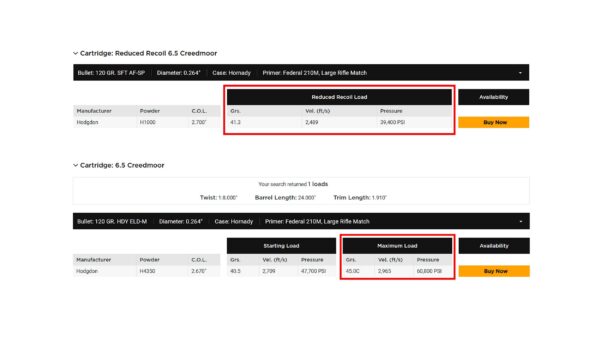
Once you make your selections, choose “Get Load Data.” Hodgdon includes all the specifics of the components and barrel used in testing including the bullet name and diameter, case brand, primer brand/type, barrel length, barrel twist rate, and case trim length used in testing.
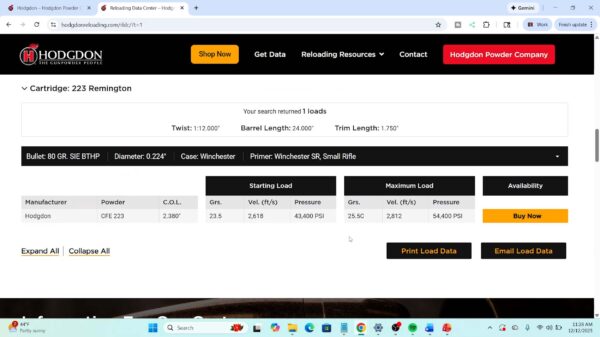
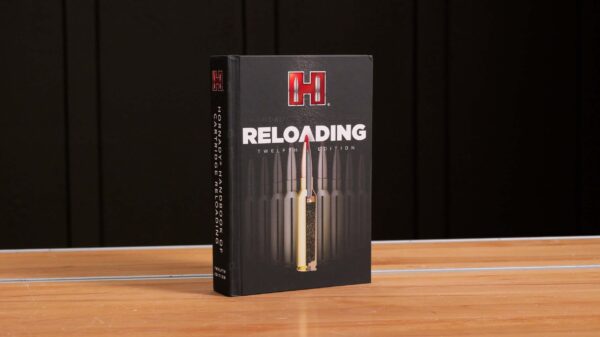
This is important when considering velocities as shorter barrels will generally yield slower velocities than longer barrels. Hodgdon tries to use the most standard barrel length and twist rate for each cartridge in their testing. You can print or email the results from this page as well as order powder! They also offer subsonic and reduced recoil data. Also common are traditional print books like Hornady’s recently-released 12th Edition Reloading Manual.
Component Choices
Each cartridge needs a primer of a specific size (small vs. large) and intensity (standard vs. magnum). In example, a 357 Magnum round requires a magnum small pistol primer while a 38 Special round utilizes a standard small pistol primer.
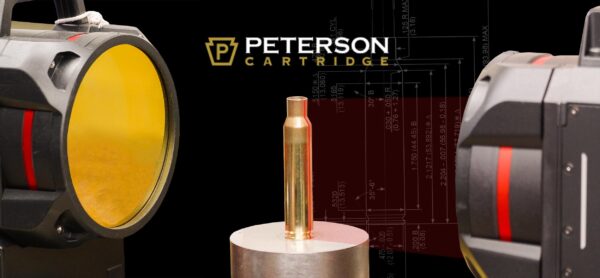
SAAMI sets case specifications for each cartridge, leaving the reloader’s choice of case to brand preference. Each casing brand has its own characteristics including internal volume, quality, and longevity. (Check out our full tour to see how Peterson Cartridge does it.)
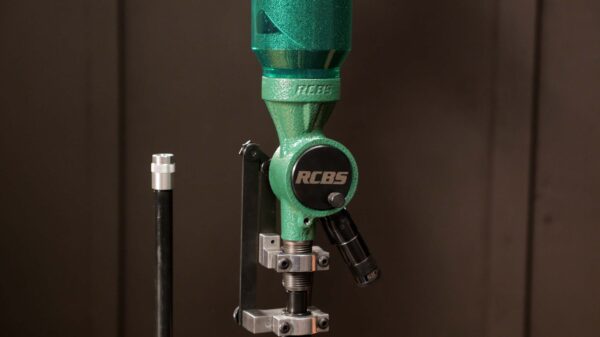
There are many considerations when it comes to powder selection. Powders are intended for different applications with different burn rates, granule shapes, and sizes. In example, ball powders meter better through a powder measure than stick powders, which makes them ideal for high-volume reloading. Once you select a powder, you have to find the optimal charge weight.
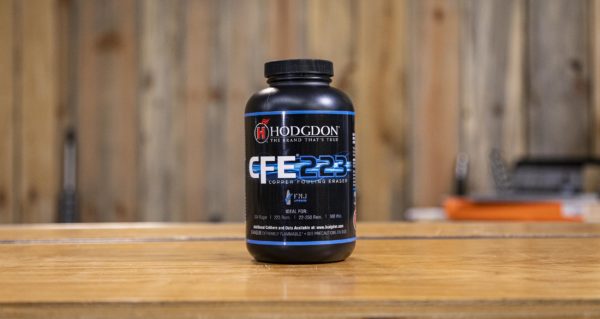
Hodgdon’s Reloading Data Center contains data for all Hodgdon brands including a starting charge weight and maximum charge weight accompanied by velocity and pressure statistics for each powder/bullet/cartridge combination. Do NOT exceed published maximum charge weights! A good general rule of thumb is to start 10% below the maximum charge weight if you are seeking safe, fast velocities. I decided to use data for 223 Remington with an 80 Grain Sierra Bullet and CFE 223 as an example. Considering the maximum charge weight of 25.5C grains, I would start at 22.95 grains. (C designates that this load is compressed—the bullet compresses some of the powder.)
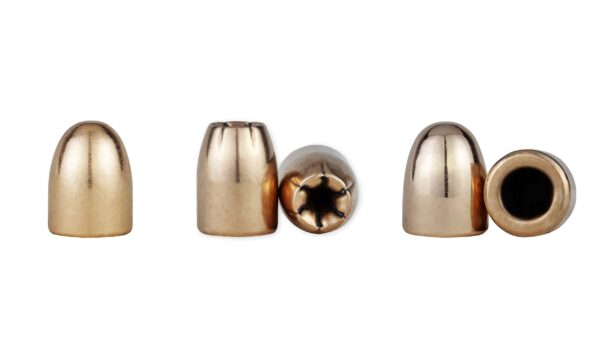
Just as there are a myriad of powders, there are even more bullet choices for rifle and pistol, varying in weight, shape, performance, and cost. Consider your use case and select a bullet weight and profile. If you are seeking to practice pistol, Berry’s affordable plated bullets may be a good option.
Hunting loads require bullets optimized for penetration and expansion, not just accuracy like target bullets. Ballistic coefficients and bullet consistency are also other important factors. Different firearms may also feed one style bullet better than another. Midsouth Shooters Supply offers sample packs of various bullets to help reloaders economically determine what bullet works for them without considerable investment.

From here reloaders can start down a rabbit hole of fine-tuning seating-depth and more. In short, select a primer (size/intensity), casing, bullet (weight and profile) and powder (type and charge).

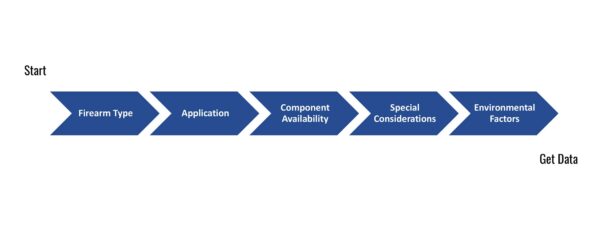
Load Data Considerations
Firearm Type
When I plan out a loading session, I always start with the firearm type. Are you loading for rifle, pistol, or shotgun? Note that if a firearm is very old, it may require special reduced loads.

Application
Next, what are you using the firearm for? Hunting, plinking, competition shooting, and self-defense are all very different applications with specific needs.

A third consideration is component availability. Can you find the powder/bullet/primer you desire to use? Is it affordable? You may have to be flexible depending upon your budget and component availability. Many loaders keep a reserve of powders they use most often.
Special Considerations
Who will be shooting? Reduced recoil loads may be best for smaller-statured shooters and subsonic loads are fun to shoot suppressed.
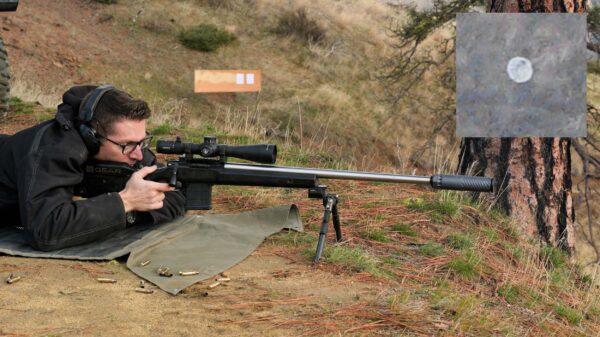
What is the intended distance and target size? Increased precision is needed to shoot a small target at distance compared to a large piece of steel 10 yards away. Ballistics and the ability to buck wind play a larger role when shooting at long ranges.
Environmental Factors
What temperature will you be shooting in? Loading ammunition at one temperature and shooting it in another can have very different results and lead to pressure problems.
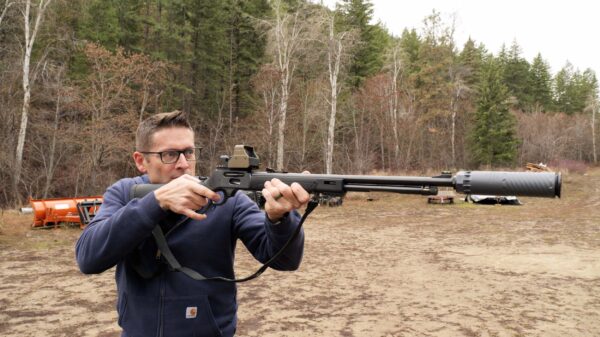
Some cartridges have both small and large primer case offerings. In these cases, large primers are preferred for cold-weather use.
Keep Good Records!
So how do you know if a load is “good?” Be sure to use a chronograph to determine average velocity and compare it to published velocities. Seek out low standard deviations and meet the velocity requirements of the bullet you are using for optimum performance. In the case of Hodgdon’s subsonic loads, the goal is a load that will stay subsonic (approx. 1,000 fps).
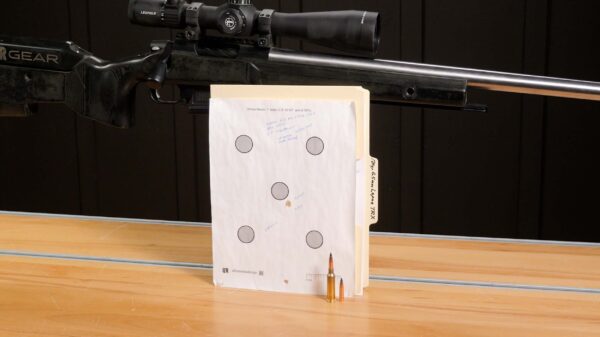
Precision is also important. I usually shoot groups of five at 100 yards with a rifle and at 25 yards with a pistol, working up in charge weights and recording group sizes to see what load performs best. Swapping out a powder, projectile, or muzzle device is another way to potentially improve precision and related statistics.

Remember to keep copious notes of the velocities (Average, SD, ES) and group sizes you observed with each load. Also record the environmental conditions as well as the firearm used. I like to save my targets, write directly on them, and save them in a dedicated folder. (This is in addition to the loading ledger I keep on my bench.) All of these steps allow me to fine-tune my loads and keep track of individual performance for future repeatability.
Conclusion
It’s important to always start with loading data from reputable sources and safely work up to a maximum load. Hodgdon’s Reloading Data Center provides an easy and intuitive interface to quickly find the data you desire.

There is much to explore and you can filter by the components you have on hand, want to try, or if you are planning to shoot subsonic or reduced loads.
Get the Gear
Hodgdon Online Reloading Data Center
Shop all Hodgdon powders directly from Hodgdon and at Midsouth Shooters Supply!
Hornady 12th Edition Reloading Handbook at Midsouth Shooters Supply
RCBS Reloading Equipment at Midsouth Shooters Supply
Athlon RangeCraft Velocity PRO Radar Chronograph at Midsouth Shooters Supply
Sample Packs at Midsouth Shooters Supply
Don’t miss out on Ultimate Reloader updates, make sure you’re subscribed!
Thanks,
Gavin Gear
About the author