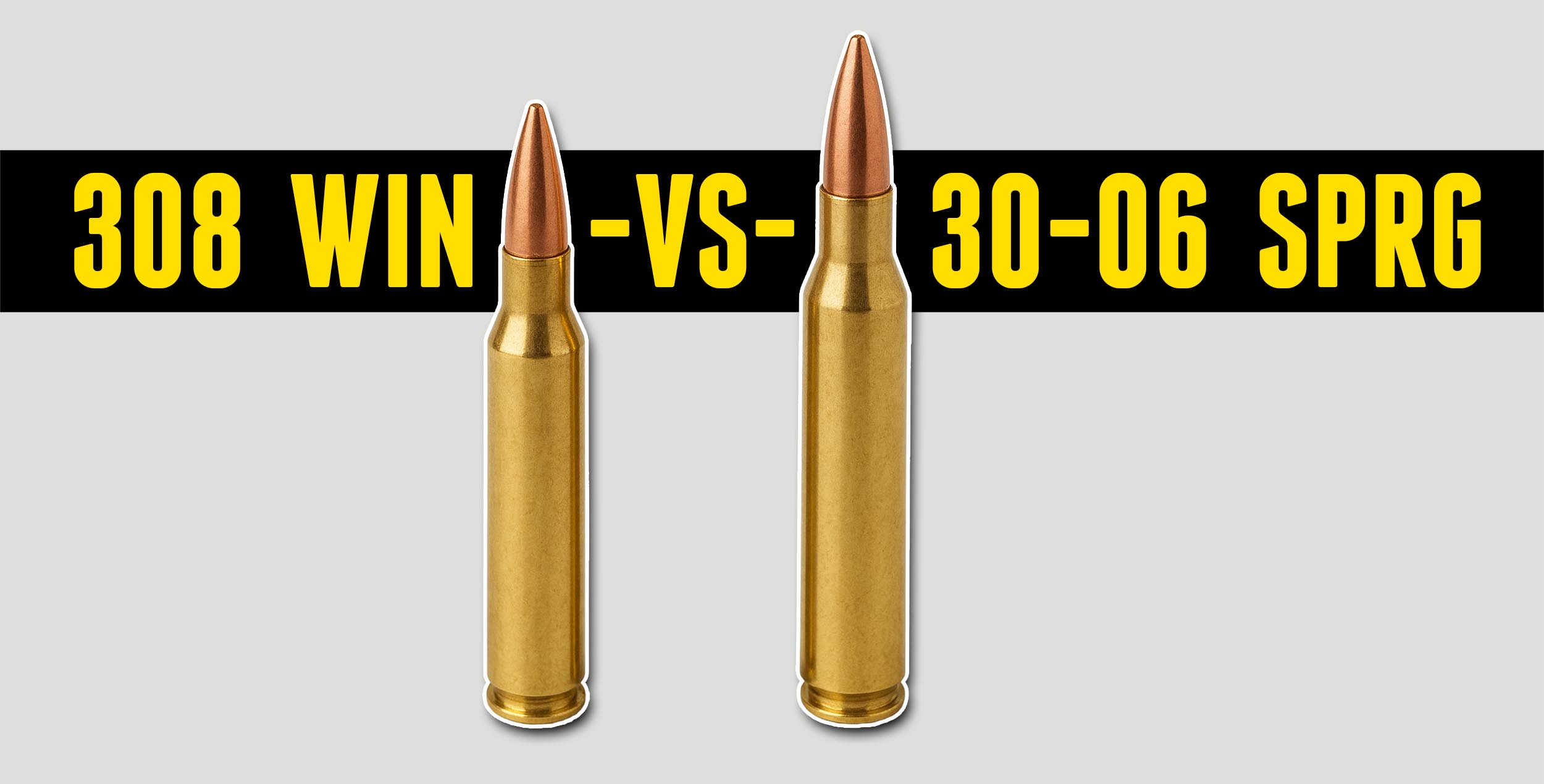
Which is better, .308 Winchester or .30-06? Let’s take a look at rifles, reloading equipment and ballistics!
Disclaimer
Ultimate Reloader LLC / Making with Metal Disclaimer: (by reading this article and/or watching video content you accept these terms). The content on this website (including videos, articles, ammunition reloading data, technical articles, gunsmithing and other information) is for demonstration purposes only. Do not attempt any of the processes or procedures shown or described on this website. All gunsmithing procedures should be carried out by a qualified and licensed gunsmith at their own risk. Do not attempt to repair or modify any firearms based on information on this website. Ultimate Reloader, LLC and Making With Metal can not be held liable for property or personal damage due to viewers/readers of this website performing activities, procedures, techniques, or practices described in whole or part on this website. By accepting these terms, you agree that you alone are solely responsible for your own safety and property as it pertains to activities, procedures, techniques, or practices described in whole or part on this website.
Overview
.308 and .30-06 are two of the most classic and ubiquitous cartridges — just ask Guy Miner — and for good reason.
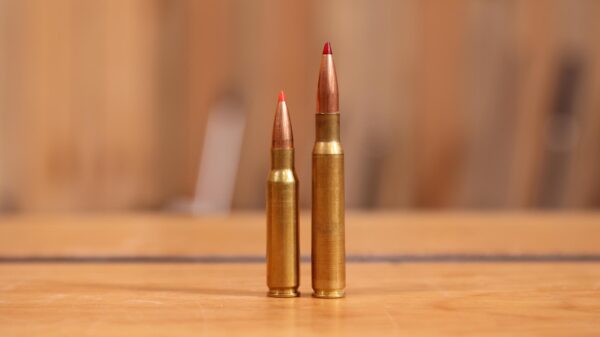
We’ve done a lot of work with both bottleneck cartridges here on the channel, including evaluating the .30-06 for Grizzly and loading subsonic for our .308 Shorty build.
The .30-06 Springfield was developed in 1906, 46 years before the .308 Winchester entered the scene in 1952.
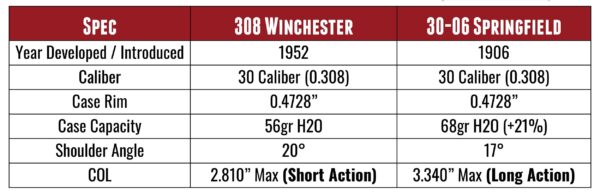
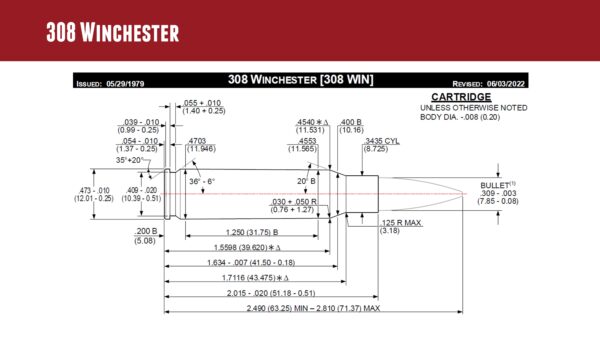
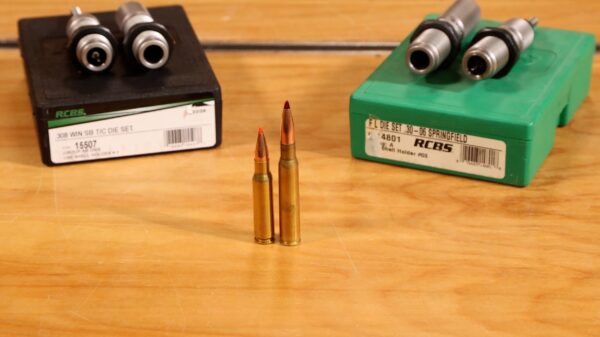
Both are .30 caliber (.308) with a 0.4728” case rim. The .30-06 has a 68 grain case capacity, 21% more than the 56 grains of water a .308 case holds. The .30-06 has a 17 degree shoulder angle and is long action with a maximum case overall length of 3.340”.

The .308 has a 20 degree shoulder angle with a maximum case overall length of 2.810”, making it a short action cartridge.
Reloading Equipment
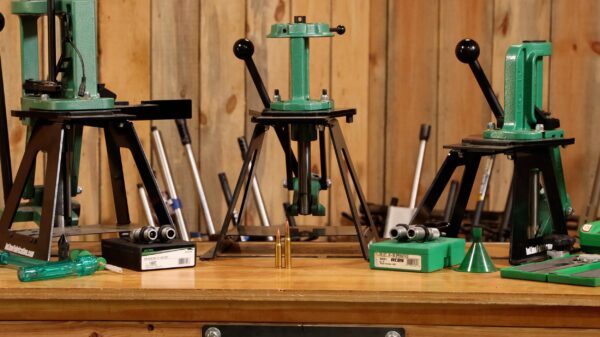
I wanted to showcase a variety of reloading equipment that will work for both .308 and .30-06. These cartridges share the same case rim, as do a variety of other cartridges including the Creedmoors, which means they take the same shellholder.
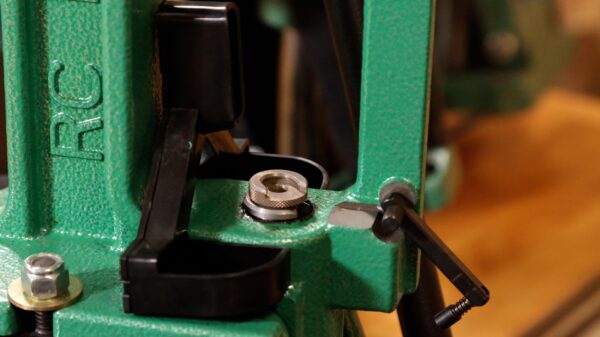
They also both take large rifle primers (some .308 cases have small primer pockets), require the same case preparation, and accept the same powder funnel. In most cases, they take the same bullets, though you should check your barrel twist rate to optimize performance.
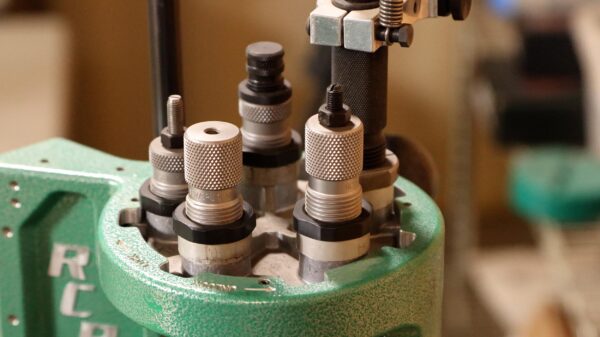
.30-06 and .308 require different dies, brass, and load data. To explore the full selection of RCBS dies and sets, check out our in-depth video.
While you can use some powders in both cartridges, this isn’t always the case. You also have to take press capacity (opening/clearance) into consideration as they have two different cartridge overall lengths.
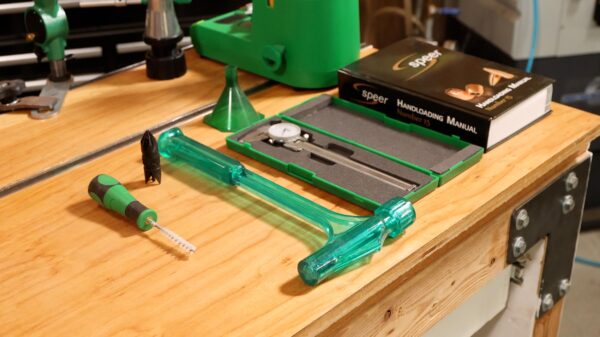
Overall, the process of loading .308 and .30-06 isn’t much different from loading any other bottleneck rifle cartridge. Depending upon your set-up and desired volume, you may choose to load on a single-stage press, turret press, or progressive.
Reloading Data and Components
I consulted Justin, a ballistician at Hodgdon Powder, to compile a comprehensive list of powders for .308 Win and .30-06. Red dots indicate powders compatible with both cartridges. (Check out Hodgdon’s Online Reloading Data Center for full load data.) Grey tiles indicate subsonic loads. Colored cells indicate powders that Hodgdon has the most data for.
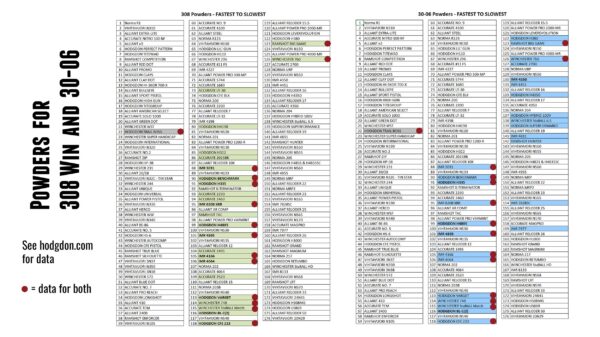
.308 and .30-06 have been around for so long that there is a considerable amount of data available for a variety of shooting scenarios from hunting to target shooting. There is also a wide selection of bullets. I always like to start load development with bullet selection. This makes it easier to select a powder with a burn rate that suits your bullet weight.
How much time you spend on load development depends on your purposes and preferences. For example, if you are hunting at close range, you do not need as accurate a load as for long-range target shooting.
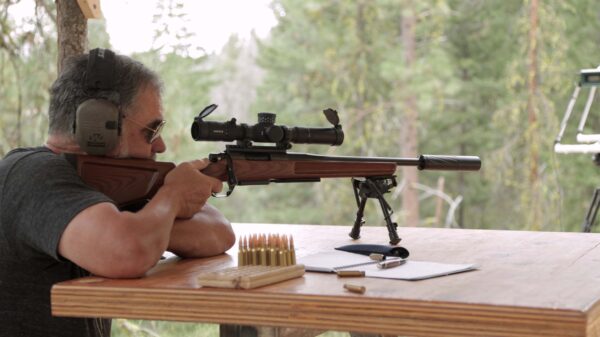 Reviewing Hodgdon’s data revealed that the bullet weight range for both .30-06 and .308 is from 125 grains to 215 grains.
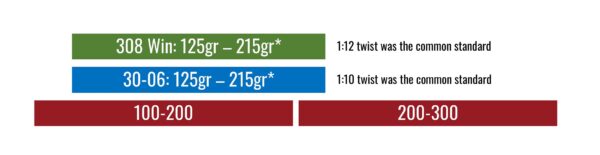
.308 Win barrels are generally 1:12 twist while .30-06 barrels are usually 1:10. Be sure to check the twist rate on your rifle to ensure the bullet will stabilize!
Ballistics
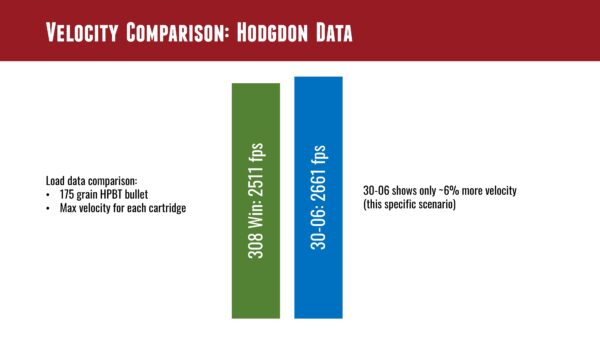
While velocity depends on a number of variables, I compared Hodgdon’s fastest loads for both .308 Winchester and .30-06 with a 175 grain HPBT bullet.

.30-06 only showed approximately 6% greater velocity over .308 Win in this specific scenario. This is very interesting as the .30-06 has 21% greater case capacity than the .308.
I also ran ballistics in Hornady’s 4DOF app for the same weight bullet to compare bullet drop between the cartridges.
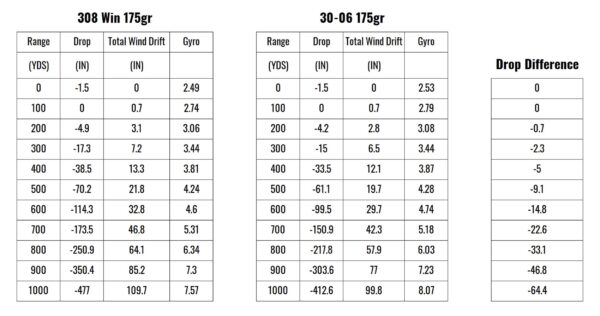
By 1,000 yards, the .308 dropped 64.4 inches more than the .30-06 at the same distance.
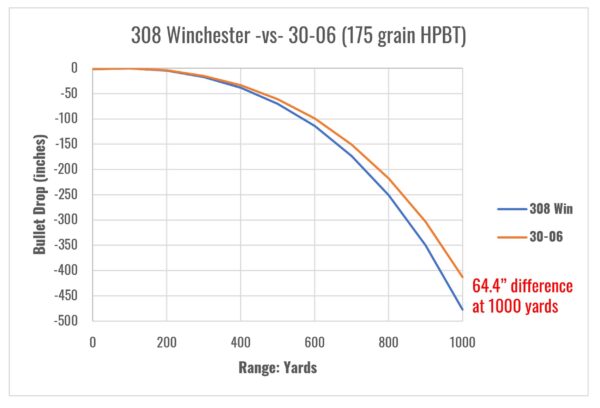
This may seem like a lot, but with accurate data and a load with a low standard deviation, it is easy to dial for.
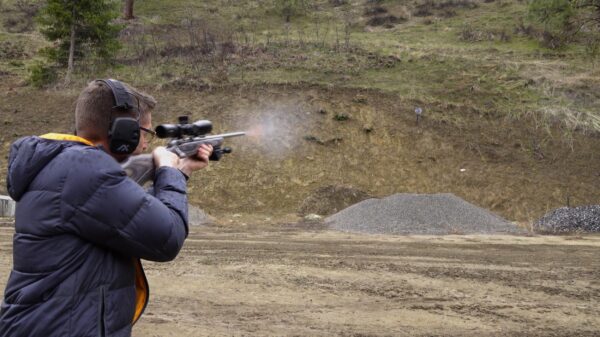
Whatever load you may choose, be sure to test it in your rifle in both the warmest and coldest temperatures you plan to shoot it in. Be on the lookout for pressure signs and always reference manufacturer load data.
.308 High Pressure Experiment – Do NOT Try This at Home!
Last year, I worked with Alpha Munitions and Bruce Thom from BAT Machine to see exactly how far we could push a .308 Winchester. The goal was to push the .308 Winchester to pressures and velocities far above what the cartridge was designed for and shoot close to a mile.
This started with a strong BAT action, thick barrel, and extremely strong Alpha Munitions OCD cases. This experiment would not have been possible with any other brass. Alpha’s .308 cases had small rifle primer pockets, which are actually more pressure tolerant than large rifle primers.
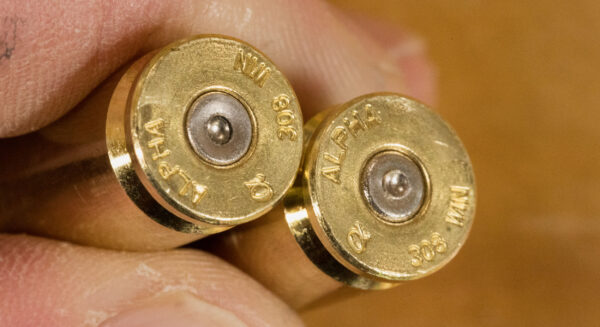
I personally use small rifle primers in all scenarios up to magnum cartridges, but prefer large rifle primers for hunting in cold temperatures. Large rifle primers have more ignition energy than small primers for reliable ignition in colder temperatures.
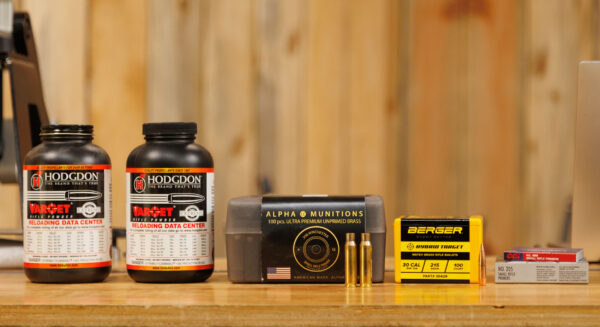
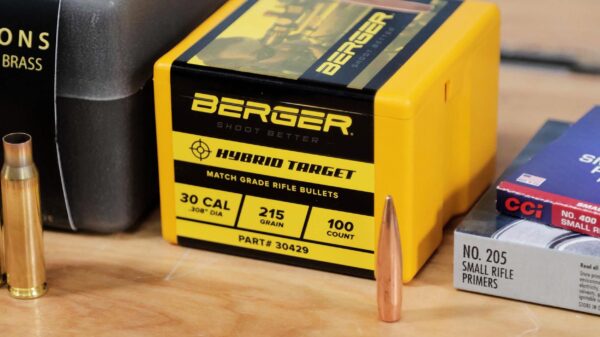
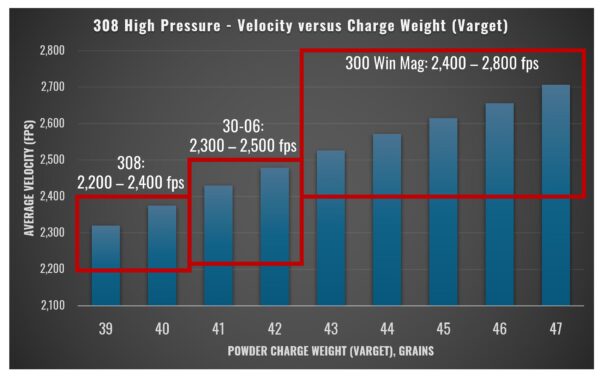
With a Berger 215 Grain Hybrid Target Bullet, Varget, and Alpha Munitions cases, we were able to reach 2,700 fps, slowly working up the charge weight.
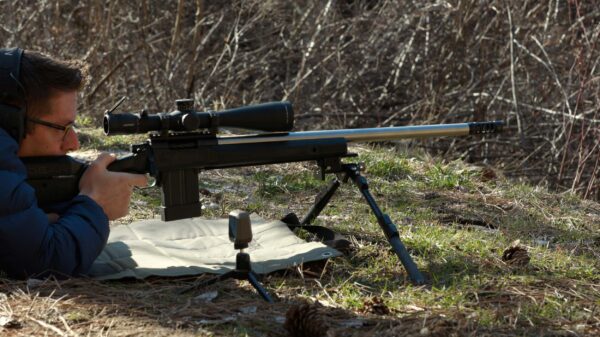
For comparison, .308 usually has a velocity of 2,200 fps to 2,400 fps and .30-06 generally runs 2,300 fps to 2,500 fps. We were able to run a .308 at .300 Win Mag levels!
Once again, do NOT try this.

Conclusion
.308 and .30-06 are more similar than they are different. Both are great options with a myriad of options for rifles, gear, components, and ammunition.
Action length may be your deciding factor in choosing between them, especially if you already have a short action or long action on hand.
We all know Guy Miner’s preference, what is yours?
Get the Gear

RCBS Dies at Midsouth Shooters Supply
RCBS Rock Chucker Supreme Press at Midsouth Shooters Supply
RCBS Turret Press at Midsouth Shooters Supply
RCBS ChargeMaster Link at Midsouth Shooters Supply
RCBS Quick Change Powder Measure at Midsouth Shooters Supply
RCBS Powder Trickler at Midsouth Shooters Supply
RCBS Case Preparation Kit at Midsouth Shooters Supply
RCBS Power Pull Kinetic Bullet Puller at Midsouth Shooters Supply
Hodgdon Varget at Midsouth Shooters Supply
Berger .30 Cal 215 Grain Hybrid Target Bullets at Creedmoor Sports and Midsouth Shooters Supply
Don’t miss out on Ultimate Reloader updates, make sure you’re subscribed!
Thanks,
Gavin Gear
















Another good video-thnx.
UR is my go-to channel that I trust for accurate and reliable information on reloading. I have some old 30-06 brass from my father-in-law. I have a RCBS drum case tumbler. I was wondering if you have videos on the best approach to clean this old brass. Can a drum tumbler use dry media with good results? I realize that your videos are probably sponsored by the manufacturers, but I really don’t care as I love watching the proper use of all the toys and gadgets available and your productions are so professional.