
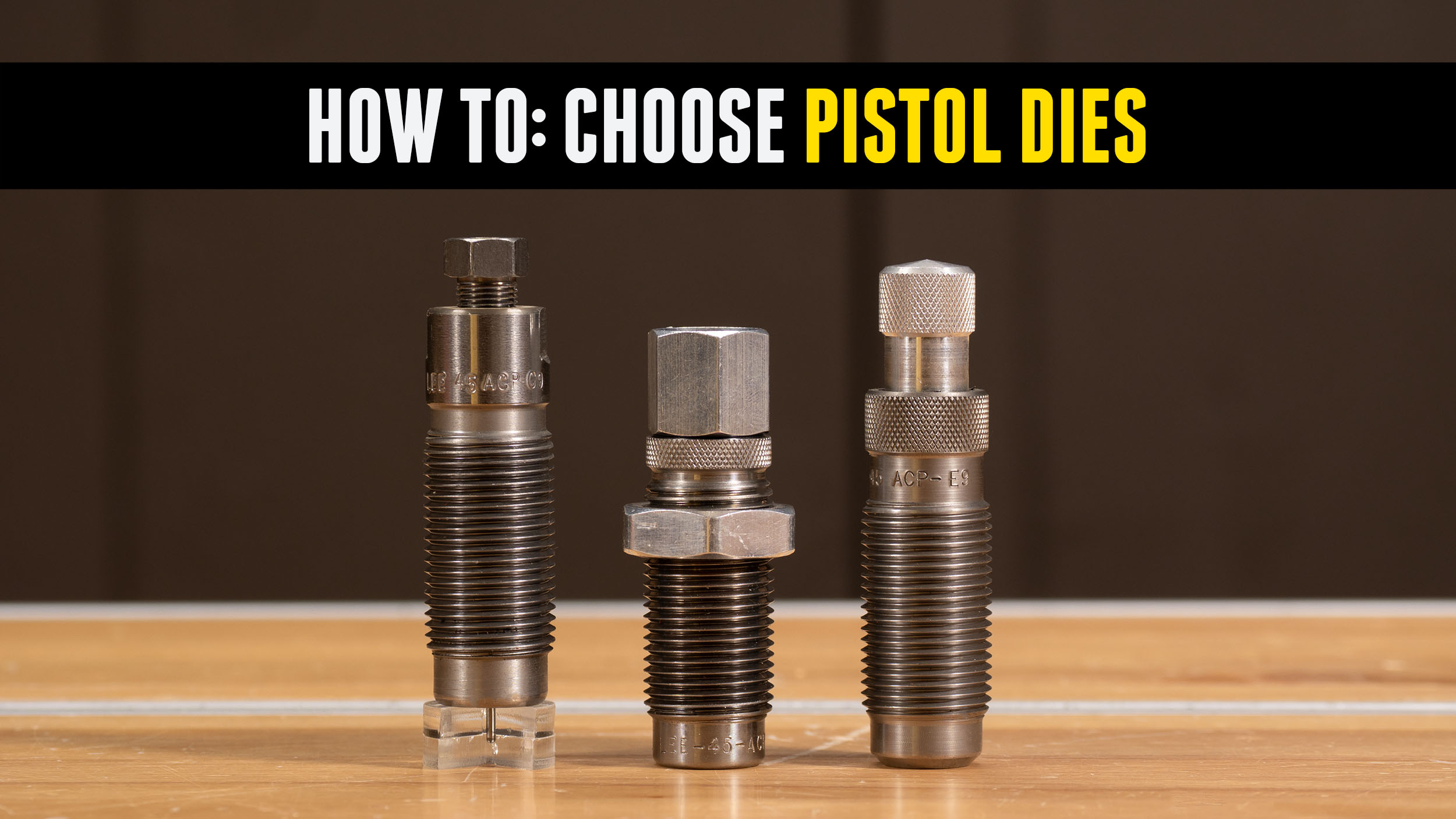
My reloading journey started with loading 30-30 rifle ammunition. When it came time to start reloading pistol ammunition at Ultimate Reloader, I realized there were a few things I needed to keep in mind when choosing dies. Here is everything I wish I knew when I started!
Disclaimer
Ultimate Reloader LLC / Making with Metal Disclaimer: (by reading this article and/or watching video content you accept these terms). The content on this website (including videos, articles, ammunition reloading data, technical articles, gunsmithing and other information) is for demonstration purposes only. Do not attempt any of the processes or procedures shown or described on this website. All gunsmithing procedures should be carried out by a qualified and licensed gunsmith at their own risk. Do not attempt to repair or modify any firearms based on information on this website. Ultimate Reloader, LLC and Making With Metal can not be held liable for property or personal damage due to viewers/readers of this website performing activities, procedures, techniques, or practices described in whole or part on this website. By accepting these terms, you agree that you alone are solely responsible for your own safety and property as it pertains to activities, procedures, techniques, or practices described in whole or part on this website.
Considerations
My pistol reloading journey started with a Dillon Precision progressive press. This is not necessarily typical, and I was grateful to be able to ask Gavin questions as I learned a new process and new machine.
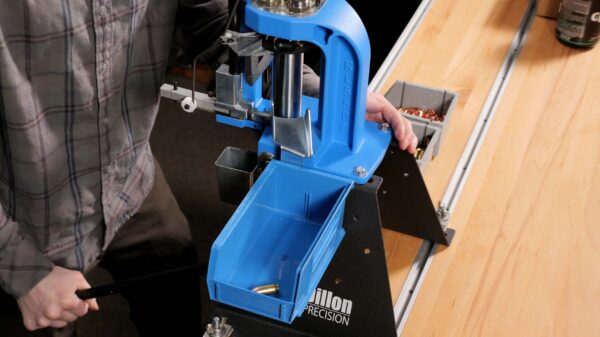
The first thing to consider when choosing pistol dies is whether you are loading on a single-stage press or turret press or on a progressive. Carbide dies are a must-have when loading on a progressive press. Most dies use standard ⅞”-14 die threadings, but be aware of your press specifications. In example, the Dillon Square Deal B uses proprietary dies.

How much will you be loading? This can be a factor in how much you decide to spend on dies. I prefer to buy-once, cry-once and take a price-to-performance mentality. I will pay more for something that offers greater performance, but there is a point of diminishing returns. If properly maintained, good dies will last a lifetime. You do not have to have extremely expensive dies to make good ammunition, and you can always upgrade in the future.
Pistol dies typically come in sets and range in price. Midsouth Shooters Supply has a wide variety of dies and sets to choose from.
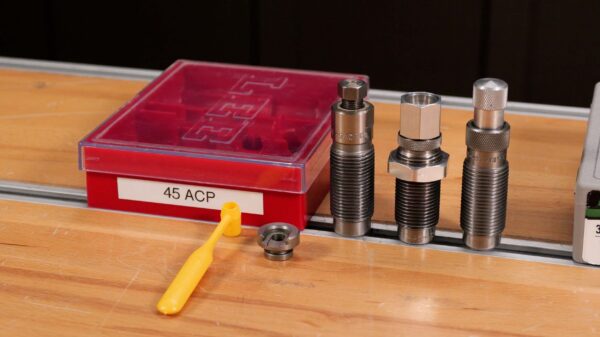
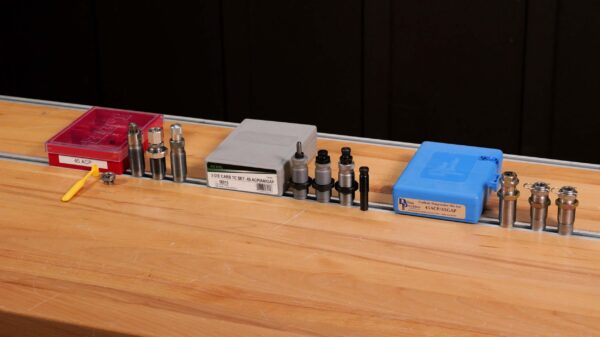
Three-die pistol sets generally include a sizing/de-capping die, expanding die, and seating/crimp die, all three of which are needed for reloading pistol ammunition. Four-die sets include a separate crimp die, which can be convenient, but isn’t necessary. What set you buy depends largely on features and your brand preference. Lee dies are known for their affordability. I started with Lee 30-30 dies, and they still serve me well years later.
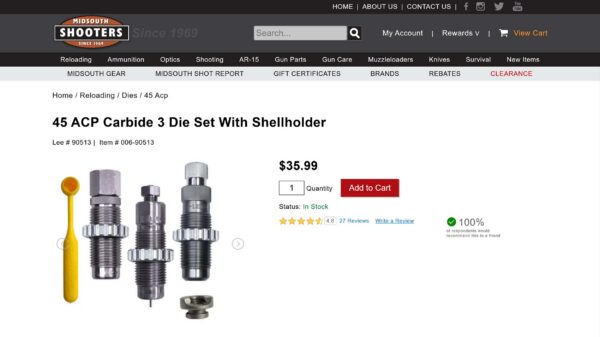
Lee’s 45 ACP carbide 3-die set comes with a shell holder and powder scoop.
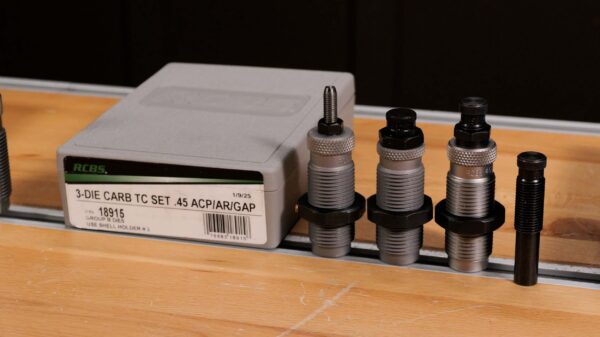
RCBS dies are made in America and have a great price-to-performance ratio. We showed how these dies are made and previously walked through all of RCBS’s pistol die options.
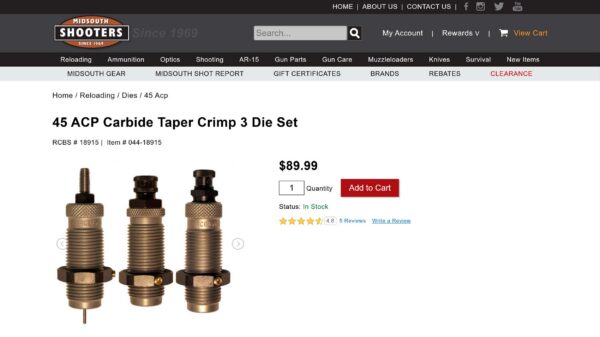
I personally think these have a better fit and finish and are more robust than the Lee dies. RCBS dies also have locking rings to preserve settings.
Dillon Precision dies are designed for high-volume reloading on progressive presses.
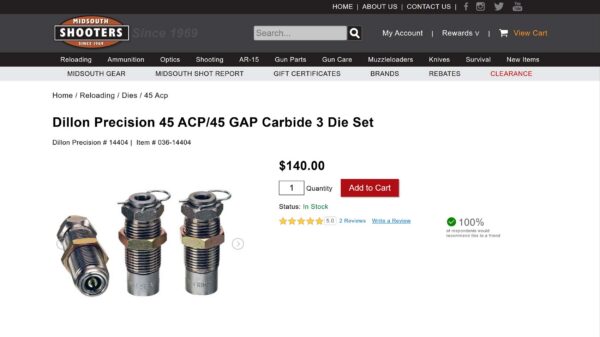
They are very easy to maintain and include a separate crimp die. A flippable seating plug offers convenient switches between round-nose and hollow-point/flat-point bullets.
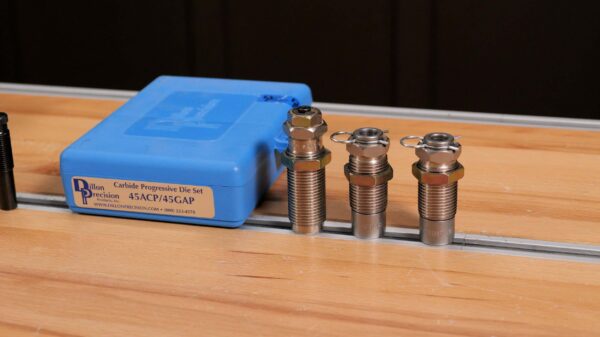
Dillon’s carbide 3-die sets do not include an expander. This is because other tools in the Dillon ecosystem perform this function. The Dillon powder measure simultaneously charges and expands the case. Dillon’s BL setup also has a separate die that will expand the case. Be sure to consider your full set-up and ecosystem as you select dies.
Carbide vs. Standard Dies
Many pistol dies are carbide, which have greater longevity and wear resistance than standard dies. They do not require lubrication for straight-wall cases and are optimized for high-volume loading. This comes at a greater cost than standard dies, which are more affordable and require cases to be lubricated.
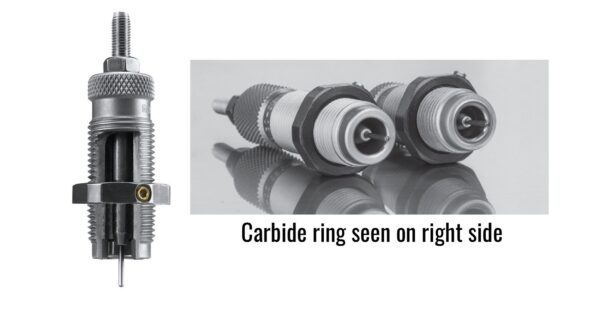
Personally, I still lube pistol cases when loading on a progressive press with carbide dies, even though it isn’t necessary. I do this because lubricating cases helps smooth the press cycle and overall operation. This does add an extra step, as depending upon the type of lube you are using, you may have to clean it off the cases before loading them.
Pistol Die Types
Nearly all pistol dies use standard ⅞”-14 die threading.
To load pistol ammunition you need a sizing/de-priming die, expanding die, and seating die. Most seating dies also act as a crimp die, though dedicated crimp dies are available for roll crimps (revolvers) and taper crimps (autoloaders). Using a separate crimping die allows greater control over the crimp.
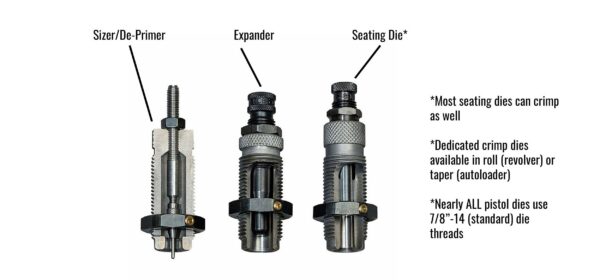
Seating dies come with two different seating stems— one flat and one rounded. Be sure to match the seating stem to the profile of the bullets you are using.
Conclusion
Whichever dies you choose, be sure to properly maintain them. Cleaning and lubricating them will keep them in good working order and they can last a lifetime. I also recommend having a separate crimp die as it can expedite your process and allow fine-tuning. Hopefully some of the things I learned will help you choose the best pistol die set for your needs.
Get the Gear
Midsouth Shooters Supply offers a wide variety of dies and reloading equipment!
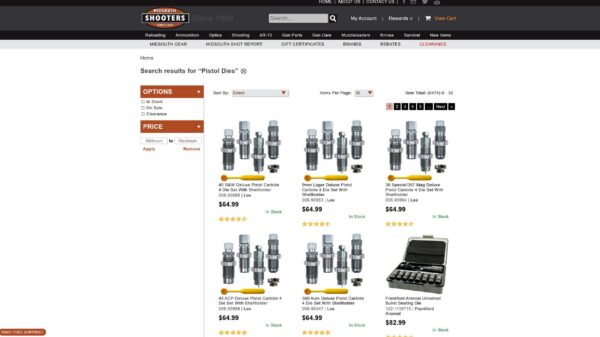
Lee 45 ACP Carbide 3-Die Set with Shellholder at Midsouth Shooters Supply
RCBS 45 ACP Carbide Taper Crimp 3-Die Set at Midsouth Shooters Supply
Dillon Precision 45 ACP Carbide 3-Die Set at Midsouth Shooters Supply
Don’t miss out on Ultimate Reloader updates, make sure you’re subscribed!
Thanks,
Kyle Shields
About the author