

10mm semi-auto is expensive to shoot, but reloaders can save money with budget loads! In this video, we go over the 10mm Auto, common bullet weights, the best offerings from Berry’s Manufacturing, load data, economics, and more. Check it out!
Disclaimer
Ultimate Reloader LLC / Making with Metal Disclaimer: (by reading this article and/or watching video content you accept these terms). The content on this website (including videos, articles, ammunition reloading data, technical articles, gunsmithing and other information) is for demonstration purposes only. Do not attempt any of the processes or procedures shown or described on this website. All gunsmithing procedures should be carried out by a qualified and licensed gunsmith at their own risk. Do not attempt to repair or modify any firearms based on information on this website. Ultimate Reloader, LLC and Making With Metal can not be held liable for property or personal damage due to viewers/readers of this website performing activities, procedures, techniques, or practices described in whole or part on this website. By accepting these terms, you agree that you alone are solely responsible for your own safety and property as it pertains to activities, procedures, techniques, or practices described in whole or part on this website.
Cartridge Background
Guy Miner previously detailed the history of the 10mm Auto and put it head-to-head against 45 ACP.
In simplest terms, the 10mm Auto is a longer and more powerful 40 S&W with a large pistol primer.
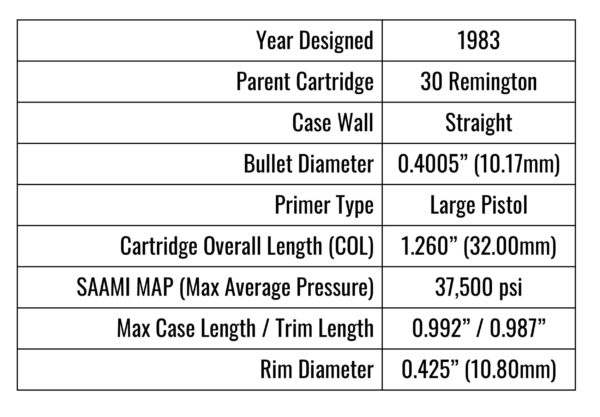
It has a 1.260” cartridge overall length, 0.992” max case length, 0.425” rim diameter, and accepts a 0.4005” bullet (10.17mm). SAAMI specifies a maximum average pressure of 37,500 psi.
Bullet Weights and Profiles
Factory ammunition costs add up quickly, especially for calibers like 10mm Auto. This video kicks off our Best Bang for your Series, showcasing proven loads with plated bullets for even more savings!

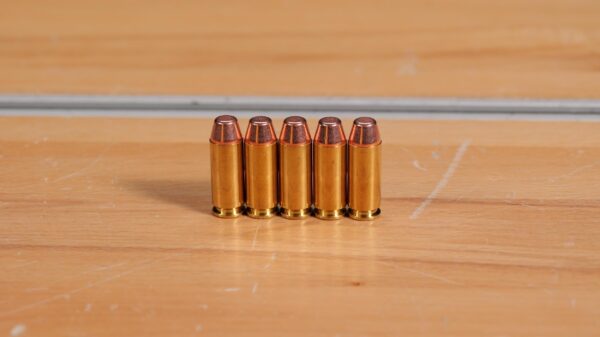
Berry’s Manufacturing produces three different bullet weights for the 10mm: 180-Grain, 200-Grain, and 220-Grain. I used average velocities for each bullet weight from a standard GLOCK to calculate the power factor for each for an easy comparison.
Power Factor = (Bullet Weight in Grains x Velocity in fps)/1000
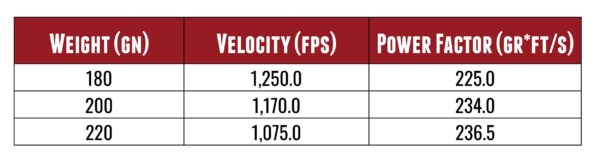
I have previously tested both the Berry’s 200-Grain and 220-Grain Flat Point Thick Plate bullets and with such close power factors, I decided to use them both again.
Powders
The 10mm is pretty particular with powders. Using Hodgdon’s burn rate chart, the 10mm range spans from HP-38 to Accurate No. 9 (not highlighted).

Some of the most popular powders included Hodgdon’s CFE Pistol, Longshot, and Autocomp.
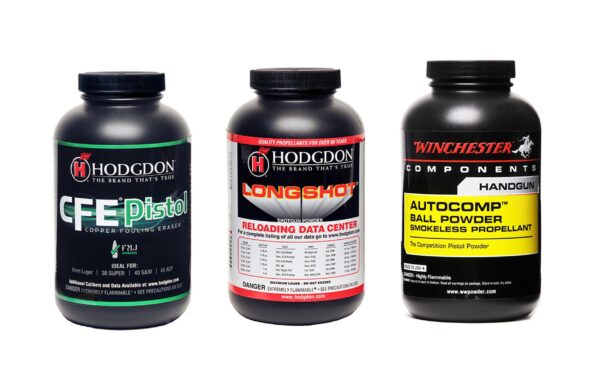
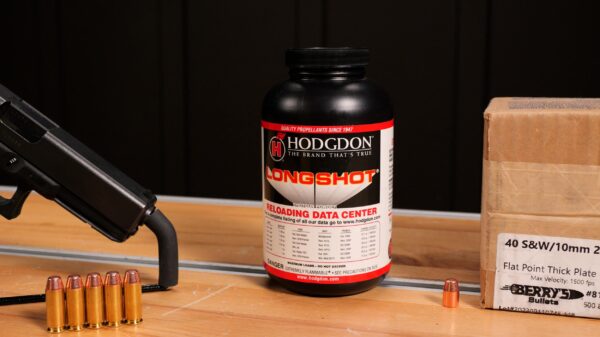
I decided to load Longshot as it is affordable, readily available, and I already had some good data for it from Hodgdon’s Online Reloading Data Center.
Reloading and Chronograph Results
DISCLAIMER: Reloading data is provided for informational purposes only and should not be used. ALWAYS consult multiple reputable sources of OEM load data.
I used two different charge weights of Longshot for both Berry’s 200-Grain and 220-Grain Flat Point Thick Plate bullets.
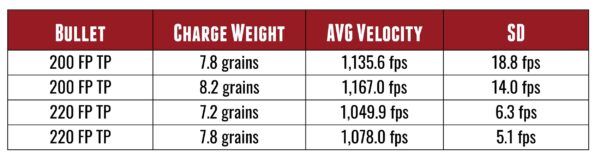
I loaded 7.8-grain and 8.2-grain charges under the 200-Grain bullet, achieving average velocities of 1,135.6 fps and 1,167.0 fps respectively. The 7.8-grain load had a standard deviation of 18.8 fps while the 8.2-grain load had a 14.0 fps SD.

Standard deviations were more than cut in half with both of the 220-Grain loads.

7.2 grains of Longshot yielded a 1,049.9 fps average velocity and 6.3 fps SD. 7.8 grains of Longshot had a slightly higher average velocity of 1,078.0 fps and lower SD of 5.1 fps.
Shooting
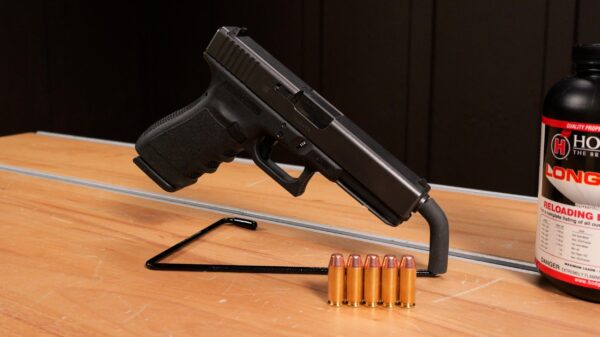
My 10mm is a GLOCK 20 with the same size frame and slide as the 45 ACP GLOCK 21. GLOCK pistols are known for their reliability and affordability, which has made them incredibly popular.
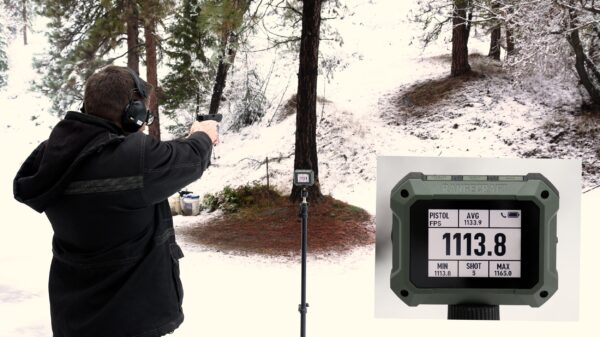
I enjoy plinking with pistols and happily shot steel targets while collecting velocities with Athlon’s RangeCraft Velocity PRO Radar Chronograph. As a side note, this chronograph is incredibly versatile – we have used it for airguns, pistols, rifles, and ELR guns!
Economics
I used the Ultimate Reloader Reloading Costs Calculator (free to use!) to calculate the price of a round of 10mm ammunition using Berry’s bullets in both new and fired brass. (The 200-Grain FP-TP and 220-Grain FP-TP bullets cost approximately the same per bullet.)
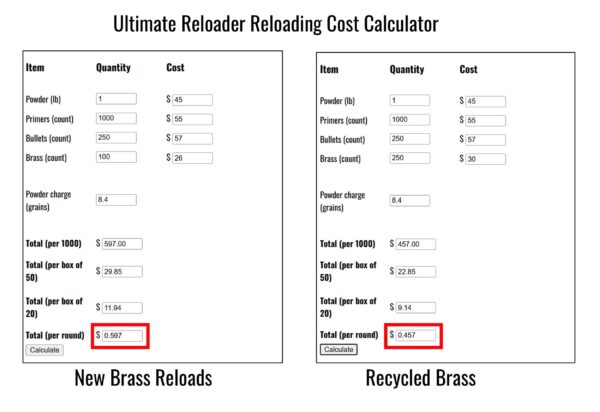
I compared these to the cost of a single round of low-end loaded factory ammunition (not match-grade). Loading Berry’s and Longshot in new brass cost approximately $0.60 per round compared to $0.46 per round with recycled brass. Both of these offered over a 50% savings over $1.25 per round factory ammunition!
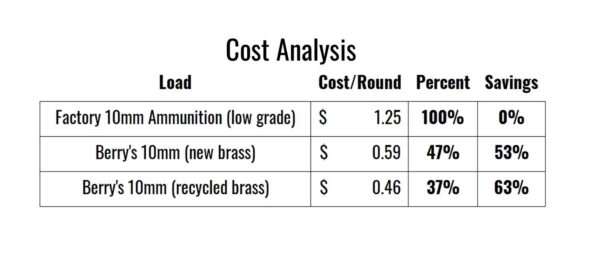
Reloaders will save even more reloading certain speciality or niche cartridges — including 10mm Auto and subsonic 300 Blackout — than popular calibers like 9mm.
Conclusion
I was very impressed by the chronograph results of the 220-Grain load and the significant savings using plated bullets provided. Though I focused on economical plinking ammunition in this video, Berry’s also offers hollow-point bullets for self-defense ammunition. Remember to use our free calculator to see how much you can save by altering your load!
Get the Gear
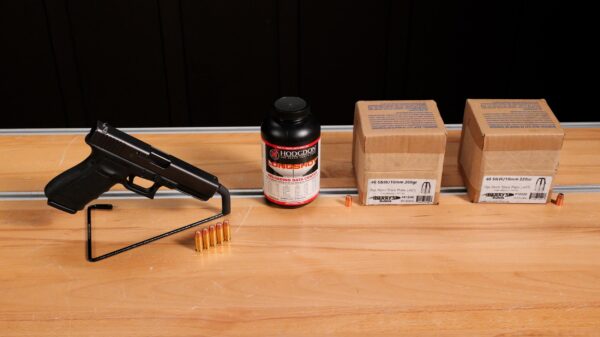
Full Line of Berry’s 10mm Bullets
Berry’s 10mm 200-Grain Flat Point Thick Plate Bullets
Berry’s 10mm 220-Grain Flat Point Thick Plate Bullets
Hodgdon Longshot at Midsouth Shooters Supply
Athlon RangeCraft Velocity PRO Radar Chronograph at Midsouth Shooters Supply
Don’t miss out on Ultimate Reloader updates, make sure you’re subscribed!
Thanks,
Gavin Gear
About the author


































I really enjoyed this article and as usual the thoroughness of your processes. If I was new to reloading this cartridge I could not go wrong by following your exact instructions. I’m not saying I’ve got a better way, but just commenting on what I’m currently using (any critique will be received with full acceptance).
I’m shooting a Glock model 40. I tried other models and always felt that the shorter barrels did not utilize the potential of this cartridge. I’m using S&B brass, CCI300 primers, Blue Bullets 200gr RNFP with Taper Crimp @1.25oal, Blue Dot charge of 10.0gr. My last results averaged 1228fps with an SD of 11.4. This is such an easy cartridge to load. I shoot softer loads most often but I wanted to make this one more stout. Thanks for the great reloading tips and other articles.