
Shooting 357 Magnum is a ton of fun. If you play your cards right, you can load your own and save some money! In this video, we continue our “Bang for the Buck” series, and take a look at Berry’s 357 Magnum Flat-Point Thick-Plate Bullets. We’ll go over two different bullets, load for both a revolver and a lever gun, and test performance.
Disclaimer
Ultimate Reloader LLC / Making with Metal Disclaimer: (by reading this article and/or watching video content you accept these terms). The content on this website (including videos, articles, ammunition reloading data, technical articles, gunsmithing and other information) is for demonstration purposes only. Do not attempt any of the processes or procedures shown or described on this website. All gunsmithing procedures should be carried out by a qualified and licensed gunsmith at their own risk. Do not attempt to repair or modify any firearms based on information on this website. Ultimate Reloader, LLC and Making With Metal can not be held liable for property or personal damage due to viewers/readers of this website performing activities, procedures, techniques, or practices described in whole or part on this website. By accepting these terms, you agree that you alone are solely responsible for your own safety and property as it pertains to activities, procedures, techniques, or practices described in whole or part on this website.
Cartridge Background
One of our top videos discusses just how fun and versatile the 357 Magnum cartridge is.
A 357 Magnum revolver can fire 38 Special loads and handle mild target loads as well as heavy self-defense cartridges.
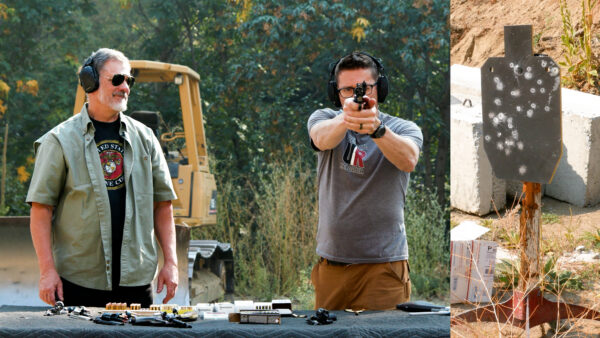
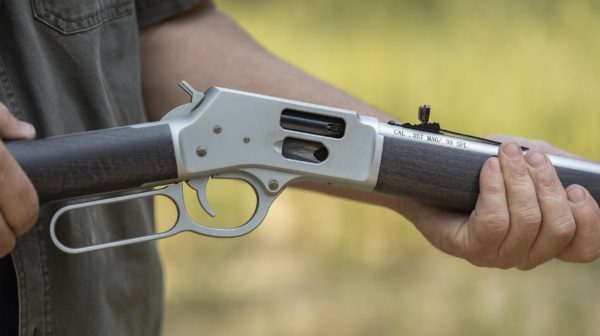
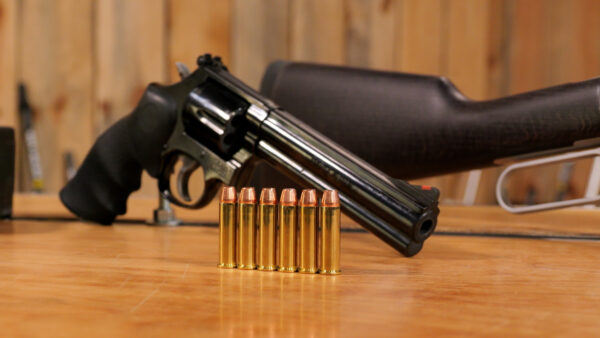
There exists an abundance of sizes and models of 357 Magnum revolvers to fit every need. It’s also fun to pair revolver ammunition with a lever action like the Henry All-Weather Lever-Action rifle.
Components
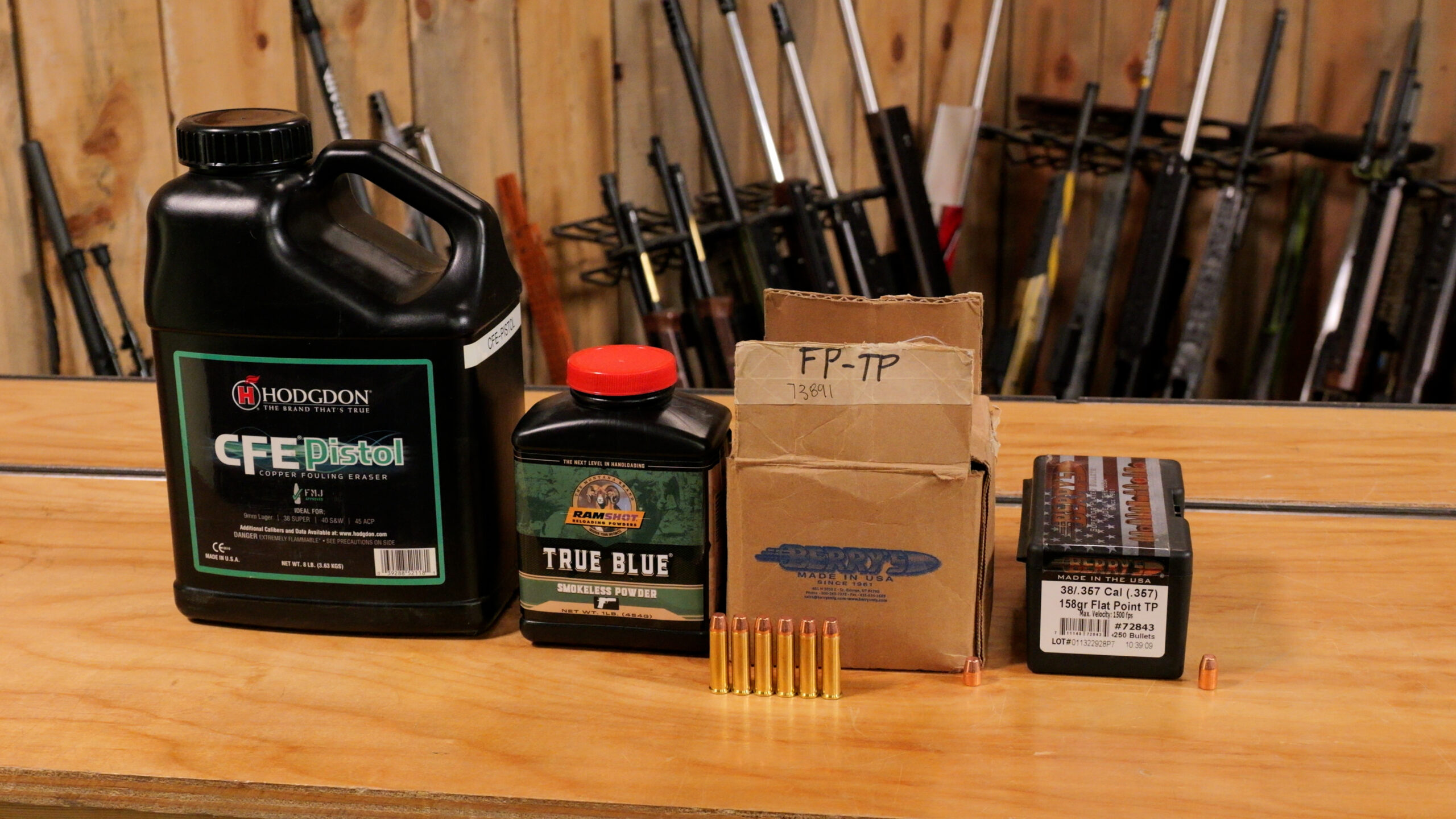
I purposely selected Berry’s Flat-Point Thick-Plate bullets for this story. The flat point prevents primer ignition when moving through a lever-action magazine tube, while the thick plating allows for higher velocities.
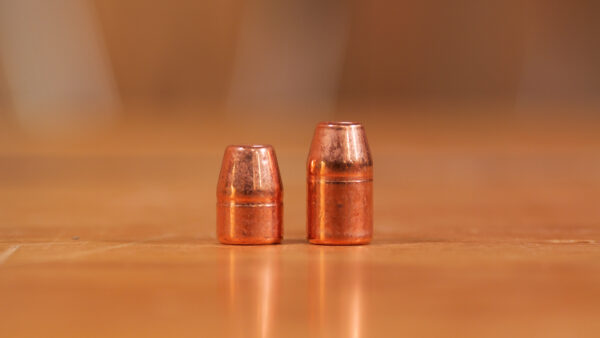
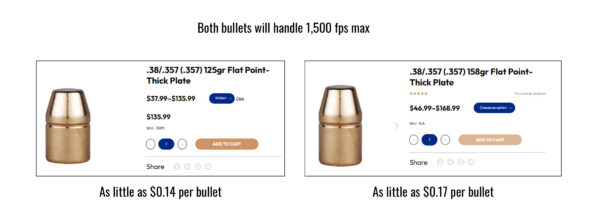
Both the Berry’s 125-Grain Flat-Point Thick-Plate and 158-Grain Flat-Point Thick-Plate bullets can handle velocities up to 1,500 fps, more than a traditional plated bullet.
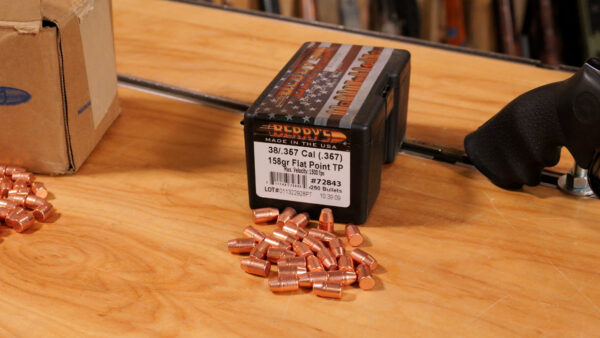
Guy Miner has worked with both of these bullets before – check out his results!
Berry’s 357 125-Grain Flat-Point Thick-Plate Bullets
Berry’s 357 158-Grain Flat-Point Thick-Plate Bullets
The bullet cannelure provides an easy seating die reference as well as room for a roll crimp to aid feeding.
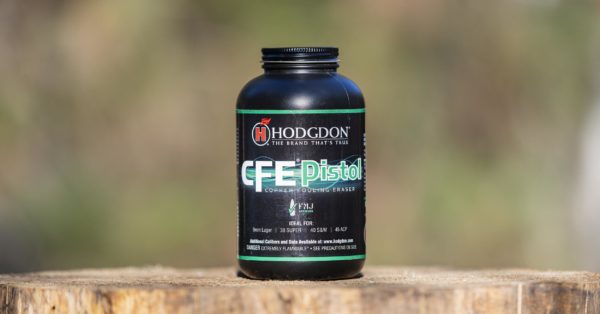
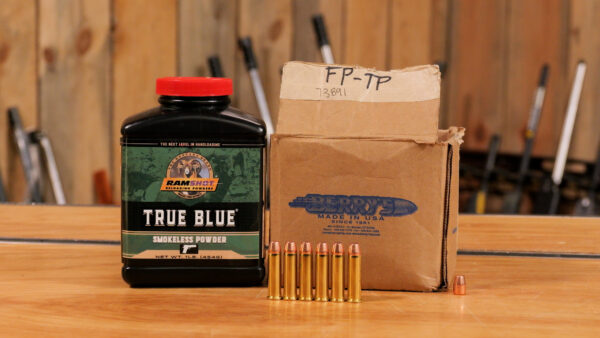
I decided to use two different powders: CFE Pistol and Ramshot True Blue, pulling data from Hodgdon’s Online Reloading Data Center.
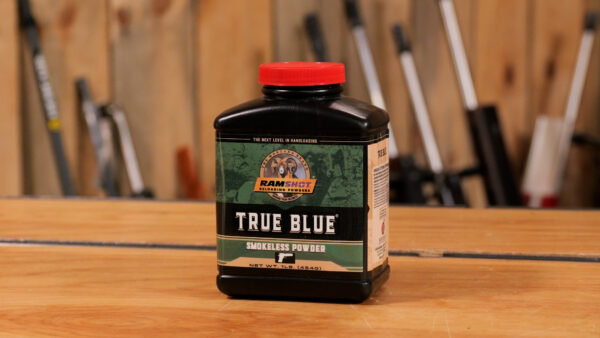
I regularly use CFE Pistol, but was curious to try Ramshot True Blue as it is an economical and versatile powder I’d never used before.
Load Data and Chronograph Results
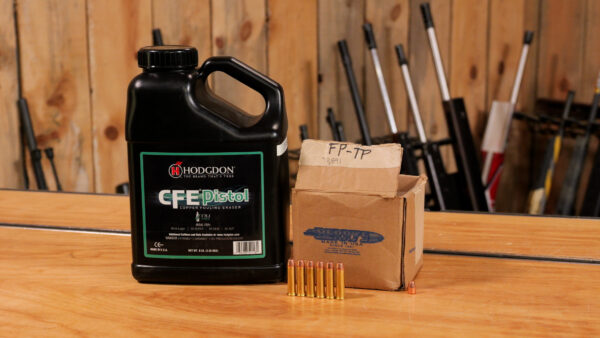
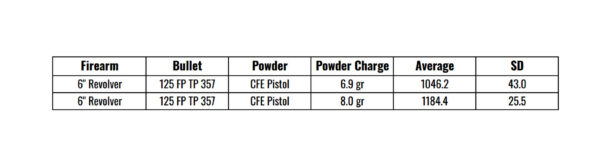
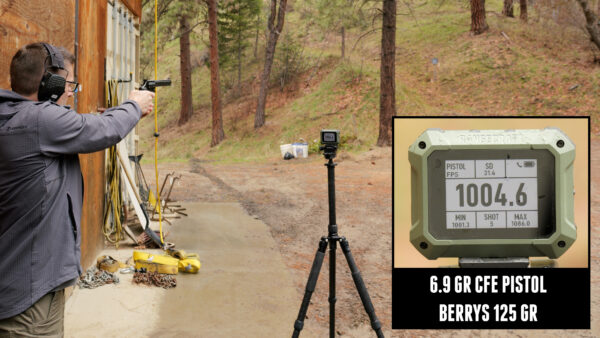
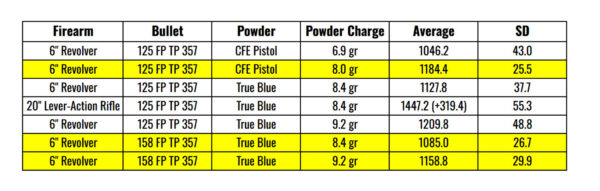
I loaded two different charge weights of CFE Pistol— 6.9 grains and 8.0 grains—with Berry’s 125-grain FP-TP projectile.
The 8.0-grain load had a higher average velocity of 1184.4 fps and lower standard deviation (25.5 fps) than the 6.9-grain load.
Our results for both charge weights were lower than what Hodgdon’s Online Reloading Data Center had specified. This is common when we are not using the same length barrel as the test data did.
I also loaded two different charge weights of True Blue with the 125-grain FP-TP.
I fired the 8.4-grain load through both the 6” revolver and 20” lever-action, noting an average velocity increase of 319.4 fps.
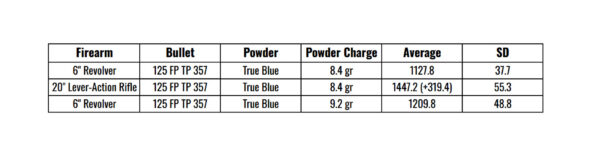
This load averaged 1447.2 fps through the 20” rifle, still below the 1,500 fps maximum velocity for these bullets.
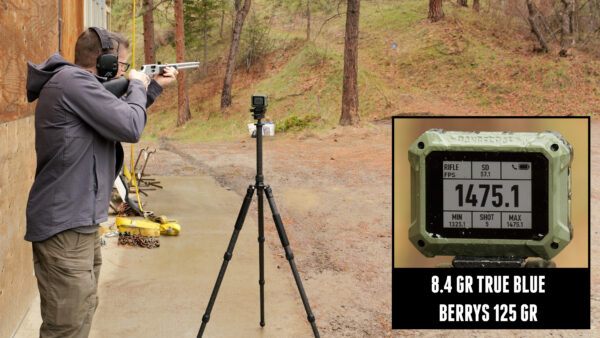
The 55.3 fps SD through the rifle didn’t indicate ideal burn, but would likely not have a noticeable effect at close range.
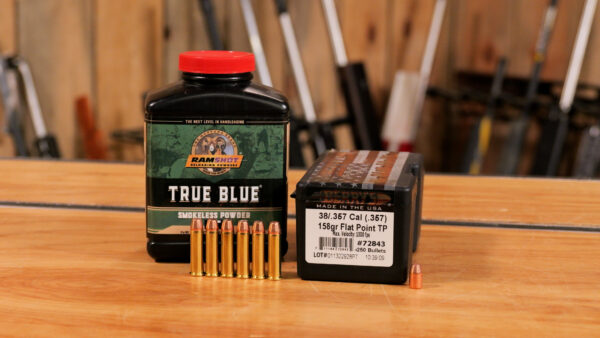
I stuck with True Blue for the 158-grain bullets, loading the same charge weights I had with the 125’s—8.4 grains and 9.2 grains.
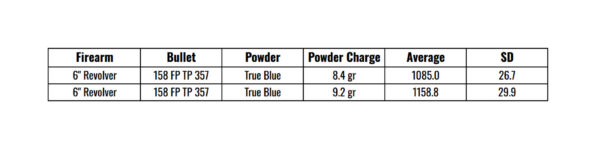
After testing a number of loads, I determined that CFE Pistol worked best with the 125-grain bullet and True Blue paired well with the 158-grain bullet. (Part of this is personal preference as testing was limited.) All loads used Federal 200 small magnum pistol primers and new brass.
If my goal was to prioritize a load that would perform through both my 6” revolver and 20” rifle, I would have selected 6.9 grains of CFE Pistol with the Berry’s 125 FP-TP. I highlighted my ideal revolver-specific loads in the chart below.
Economics
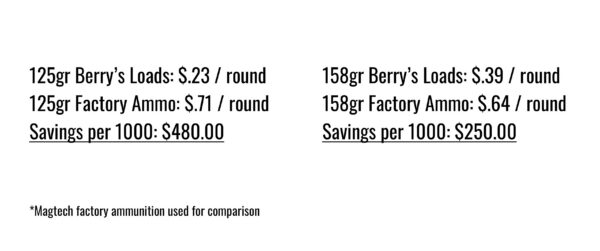
The Berry’s 38/357 125-Grain FP-TP bullets are available for as little as $0.14 per bullet and the 158-grain variant can be found for as little as $0.17 per bullet. While I used new brass that I had on hand, all calculations assume the use of fired brass for optimum savings.
I compared my loads to Magtech factory ammunition to calculate savings per 1,000 rounds.
Conclusion
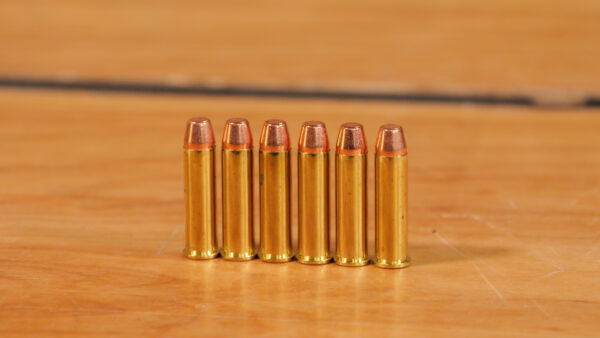
I really enjoy shooting 357 Magnum and was happy with how both CFE Pistol and True Blue performed with the Berry’s FP-TP bullets.
Factory ammunition and component pricing will vary, but even with some variation, my reloads offered savings over factory. Also remember that reloading allows you greater control over your performance, which can help you meet certain goals!
Get the Gear
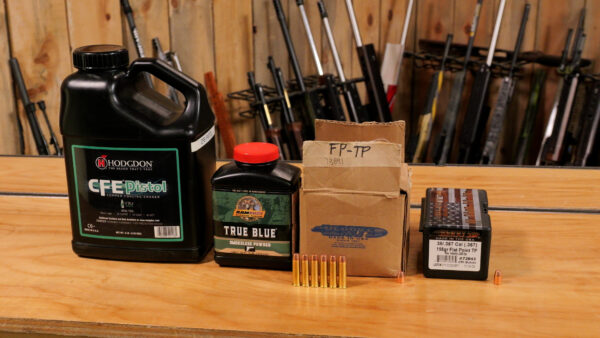
Hodgdon CFE Pistol at Hodgdon and Midsouth Shooters Supply
Ramshot True Blue at Hodgdon and Midsouth Shooters Supply
Berry’s .38/.357 125-Grain Flat-Point Thick-Plate Bullets
Berry’s .38/.357 158-Grain Flat-Point Thick-Plate Bullets
Primers at Midsouth Shooters Supply
Brass at Midsouth Shooters Supply
Athlon RangeCraft Velocity PRO Radar Chronograph at Midsouth Shooters Supply
Don’t miss out on Ultimate Reloader updates, make sure you’re subscribed!
Thanks,
Gavin Gear
About the author