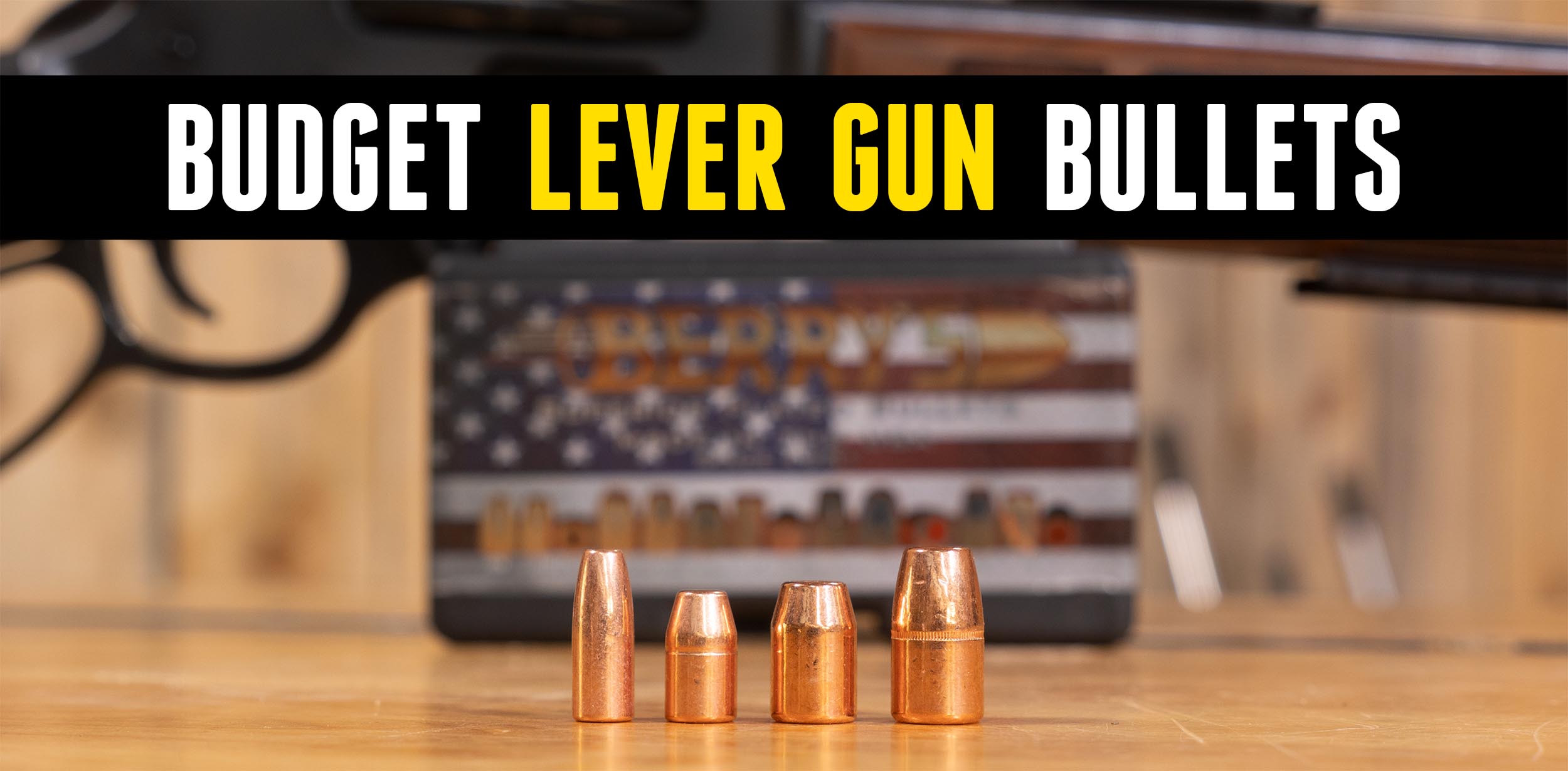
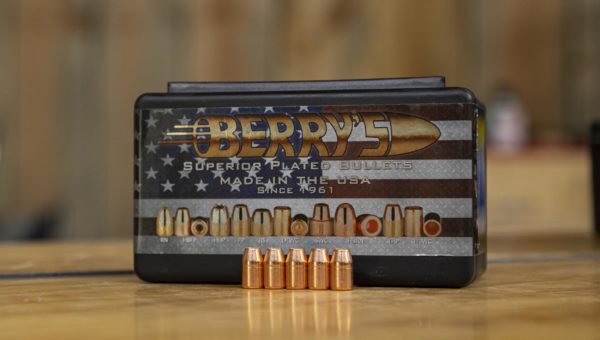
There’s a tendency to think of Berry’s plated bullets as only handgun bullets. This is not the case at all — they produce a number of bullets for popular lever action rifles. Here at Ultimate Reloader we’ve used them in the .30-30, .357 Magnum, and .45-70 lever actions with great success.
Disclaimer
Ultimate Reloader LLC / Making with Metal Disclaimer: (by reading this article and/or watching video content you accept these terms). The content on this website (including videos, articles, ammunition reloading data, technical articles, gunsmithing and other information) is for demonstration purposes only. Do not attempt any of the processes or procedures shown or described on this website. All gunsmithing procedures should be carried out by a qualified and licensed gunsmith at their own risk. Do not attempt to repair or modify any firearms based on information on this website. Ultimate Reloader, LLC and Making With Metal can not be held liable for property or personal damage due to viewers/readers of this website performing activities, procedures, techniques, or practices described in whole or part on this website. By accepting these terms, you agree that you alone are solely responsible for your own safety and property as it pertains to activities, procedures, techniques, or practices described in whole or part on this website.
Overview
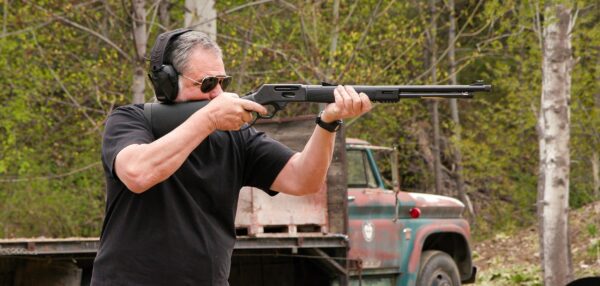
Lever action rifles are very popular here in the USA and for good reason. Not only are they effective hunting rifles, but they’re just an awful lot of fun to shoot. There’s something uniquely American about a traditional lever action with a tubular magazine. I learned to shoot using a rimfire Marlin lever action when I was a kid, and have enjoyed using lever actions ever since. Traditionally, Winchester and Marlin produced most of the popular lever action rifles, but in recent decades other makers such as Henry, Smith & Wesson, Rossi, Pedersoli, Big Horn Armory and more have been building great lever action rifles.

The beauty of pairing a lever action with a revolver chambered for the same cartridge has long been an excellent, practical option. Today, this is most often seen with .357 and .44 Magnum carbines and revolvers but other combinations are certainly possible. (Consider BHA’s famous Model 89 rifle coupled with a .500 S&W X-frame revolver…)
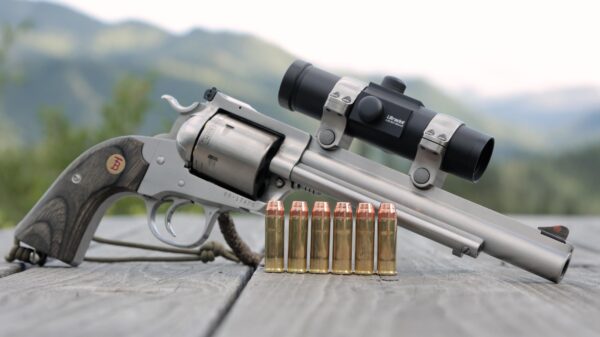
Shooting competitions allow enthusiasts to test their skills while paying homage to the American west. Cowboy action shooting demands the use of a lever action and often features lively stages and costumes. Lever action silhouette is another fun and interesting competition combining precision offhand shooting with reactive steel targets. Whether it’s through some form of competition or informal target practice, levergun shooters tend to go through a lot of ammunition. As handloaders, we can significantly cut the costs of our ammo by choosing to load affordable but high-quality Berry’s plated bullets.
The Lineup
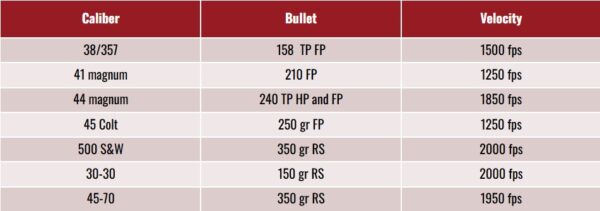
Berry’s “Round Shoulder” Bullets are particularly well-suited for lever gun use. These are available for the .30-30, .45-70, and .500 S&W. Berry’s Round Shoulder bullets are designed both to withstand the muzzle velocity typical of a lever action rifle and smoothly feed from the magazine into the lever gun chamber.
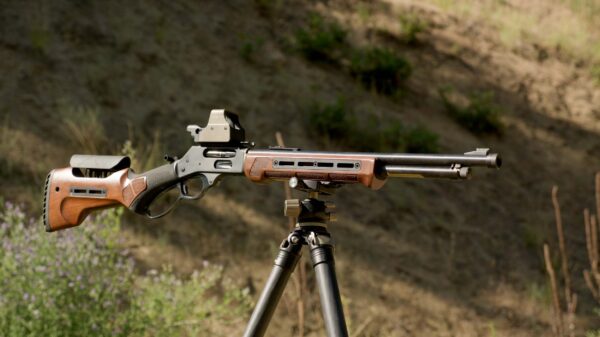
Berry’s also offers plated solutions for .357, .41, .44 and .45 Colt rifles and revolvers. These bullets are designed for revolver use but feed dependably in lever action carbines when loaded to the correct length.
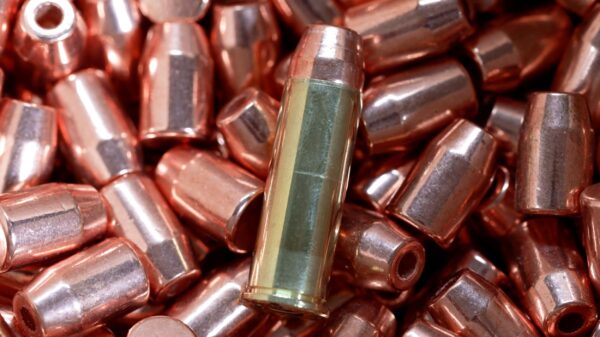
Some have Berry’s standard plating and are rated to handle 1250 fps muzzle velocity. Others have their “thick plate” with increased strength and durability to handle higher muzzle velocities.
Our various testing sessions have revealed that one can expect approximately a 400 fps increase in velocity when firing the same .357 Magnum ammo from a 20” lever action rifle compared to firing it from a 6” revolver. It’s not just the barrel length allowing for a more complete burn; it’s the lack of a barrel-cylinder gap in the rifle that contributes to the velocity increase. That velocity increase is important to consider when selecting a Berry’s plated bullet for dual use in revolvers and rifles. It’s easy to generate more velocity than the bullets are rated to handle. This can lead to poor bullet performance, possibly stripping away the copper plating and exposing the soft lead core to the rifle bore.
Loading Tips
When loading Berry’s plated bullets for use in a lever action rifle there are some things to consider.
Firstly, check the velocity rating of the bullet. This is available both on the packaging and on Berry’s informative web site under the “loading tips” for each bullet. It’s up to the handloader to not exceed maximum velocities.
Many revolver cartridges are large enough to easily accept a double charge of popular fast-burning pistol powders. Shooting a double-charged cartridge can be catastrophic! I avoid this by loading my revolver cartridges in batches of 50 or 100, checking them all to ensure they are all charged equally, with no double-charges present.
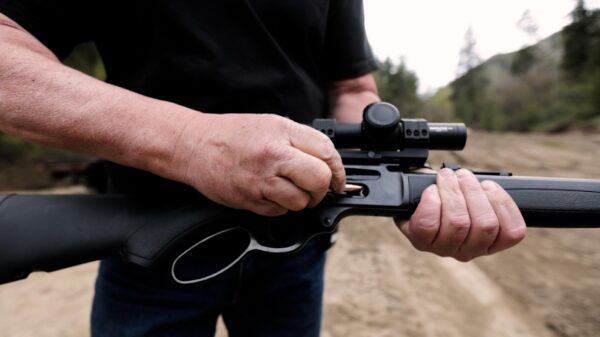
Lever action rifles are sensitive to overall cartridge length. If cartridges are too long or too short, they may not feed well through the action and into the chamber. One of the things I like most about using a lever action is how quickly they can be cycled and subsequent shots placed on target. This ability is enhanced by loading to the proper length. Berry’s also includes their recommended cartridge length in their online reloading tips. (See the appropriate bullet product page.)
Some of their bullets have a cannelure or crimp groove. Seat the bullet so that the crimp groove and the case mouth are together and you’ll achieve the proper cartridge length. Cartridges for traditional lever action rifles must be crimped to prevent bullet set-back in the tubular magazine during recoil.

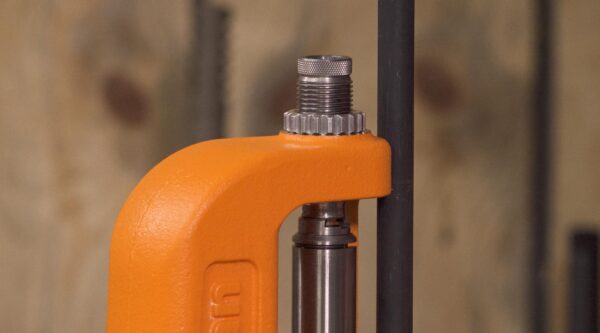
I prefer to crimp the cartridge case in a fourth and final step after seating the bullet. Either a roll crimp or a taper crimp can be used on Berry’s plated bullets. Be sure to not over-crimp! Over-crimping can damage copper plating, exposing the lead beneath. This can lead to poor bullet performance and contribute to leading the bore of your rifle.
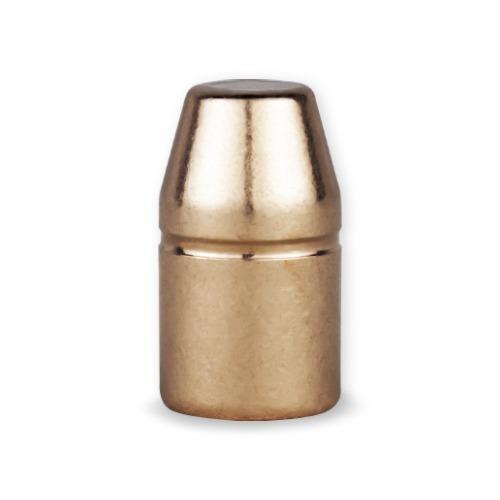
If a crimp ring or cannelure is available, I prefer to roll crimp right into that groove. If there’s no crimp ring, the case mouth can still be crimped into the side of the bullet — just don’t get over enthusiastic and over-crimp. A taper crimp, like is used on most straight-walled, semi-auto pistol cases (such as the 9mm and .45 ACP), can also work on revolver cartridges like the .357 and .44 Magnums.
.30-30 Winchester
Here at Ultimate Reloader, we’ve loaded the Berry’s 150 Grain .308 bullet to both subsonic and supersonic velocities in .30-30 Winchester. This Round Shoulder plated bullet is rated to handle up to 2,000 fps muzzle velocity. I used Trail Boss in our subsonic story, but more readily available powders like Titegroup can certainly be used.
I also loaded them myself to just over 1700 fps with Accurate 5744. Sadly that excellent powder has also become difficult to source. Sending a 150 grain bullet at 1,700 fps from a lever action rifle is just plain fun! It’s also plenty accurate to smack steel at 100 yards and beyond.
.357 Magnum
.357 Magnum lever actions are just about as fun as a gun can get! Most have a magazine capacity of 10 rounds or so. Recoil is mild, particularly when velocity is held down to accommodate the plated bullets. We found that we inadvertently exceeded Berry’s 1,500 fps “speed limit” with our 158 grain .357 Magnum loads. Our .38 Special loads stayed subsonic at about 900 fps and produced very little recoil or noise, even from a non-suppressed rifle.
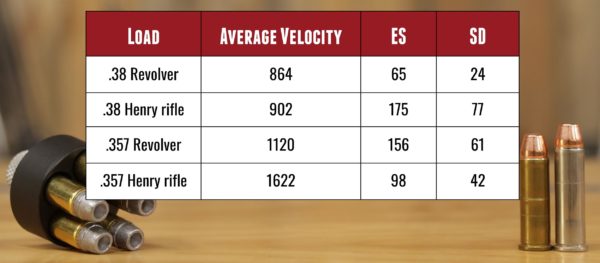
Although our loads averaged 1622 fps from the 20” Henry, we encountered no problems. Still, it’s best to heed Berry’s warning and stay under 1500 fps muzzle velocity. That makes for a fun, very mild load to use at the range.
.45-70
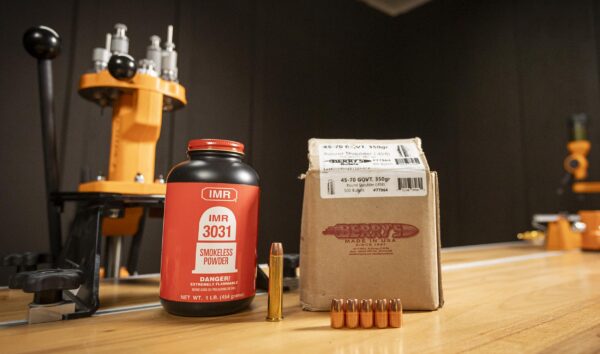
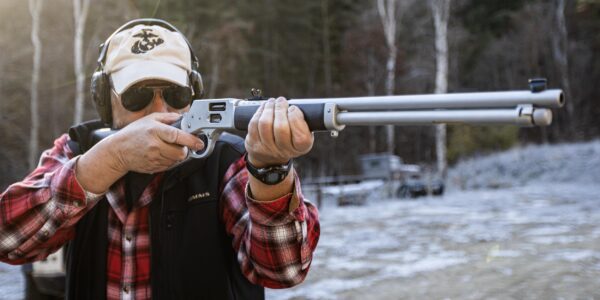
When it came to the .45-70, I was particularly interested in Berry’s 350 grain plated round shoulder bullet because I hunt with 350 grain jacketed soft point bullets. Keeping the 1950 fps speed limit in mind, I loaded to three different levels using IMR 3031, a favorite .45-70 powder.
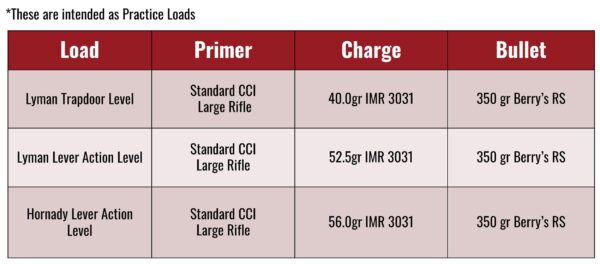
The “Trapdoor”-level loads are named for the famous single-shot Trapdoor Springfield rifle. Those rifles are very old and were never intended for high pressure loads. If you have a vintage rifle, please stick with these mild loads. Bonus: I also find them the most fun to shoot! There’s less muzzle blast and far less recoil when pushing a 350 Grain Berry’s Bullet downrange at about 1400 fps compared to 1800 fps or faster. The vast majority of the .45-70 loads I build and shoot are Trapdoor level loads though I shoot them in a strong Marlin 1895.
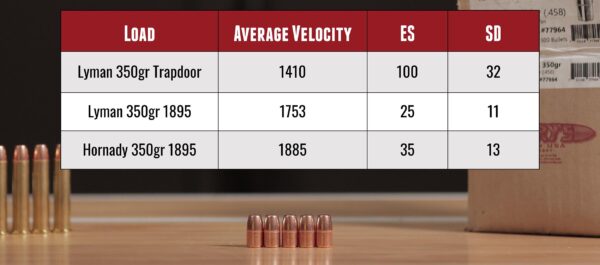
For hunting or bear defense loads, I’ll load soft-nose hunting bullets to the 1700 fps to 1900 fps level in my Marlin. Berry’s Bullets can handle that velocity range just fine for practice ammo that shares the approximate ballistics, trajectory, and recoil of my hunting and bear defense loads.
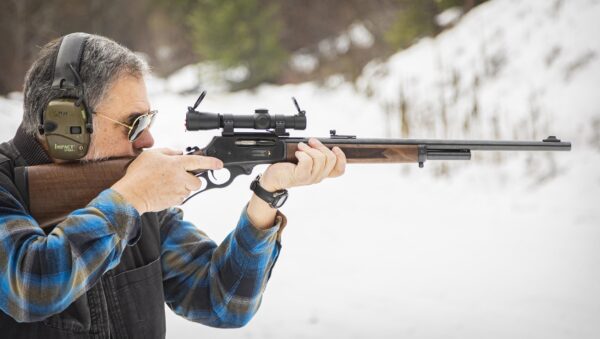
I find that as velocity approaches 1900 fps, the recoil of my .45-70 just isn’t all that fun after a few shots. Many shooters find that recoil becomes a problem before reaching maximum loads with relatively lightweight .45-70 lever action rifles. It’s worth remembering that Berry’s designed their plated bullets for target practice, not for hunting.
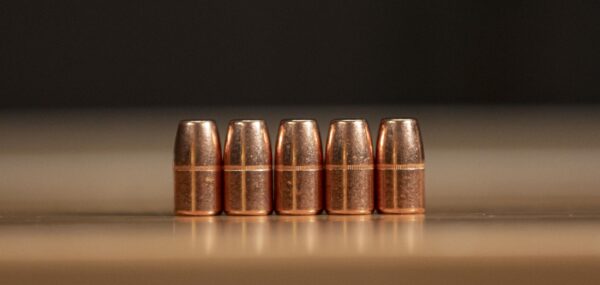
Each of those loads shot well, with the 1753 fps level load providing the tightest extreme spread and standard deviation figures. These loads were fired from both the shop Henry X Model and my personal Marlin 1895. The chronograph data shown is from our 19.8” barreled Henry rifle.
Cost Comparison
Shooters who expend a lot of ammunition in competition or even with informal target practice or plinking appreciate lower-cost loading components. Choosing Berry’s plated bullets for high-volume shooting reduces the cost of shooting by a considerable amount. The bigger, more expensive bullets such as the 350 grain bullets for the .45-70 and the .500 S&W provide an especially significant cost savings!
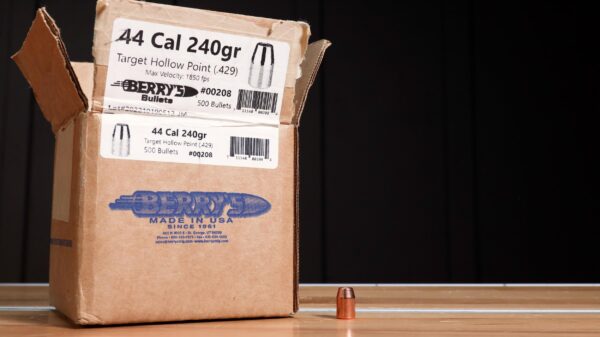
The chart below compares the cost of 500 or 1000 Berry’s bullets with prices for typical jacketed bullets of the same weight. We used prices from the Berry’s website, but these bullets can often be found at discounted prices from retailers like Midsouth Shooters Supply.
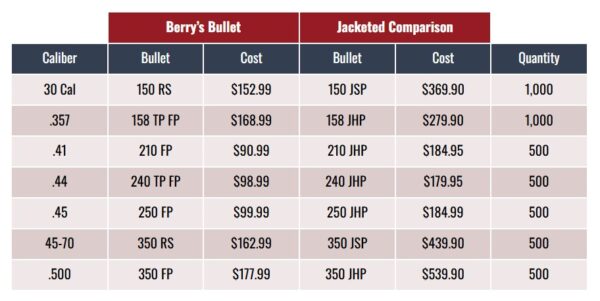
Levergun fans who choose to shoot a .357 Magnum get the advantage of some of the least expensive components as well as enjoying the least recoil. The cost of 158 grain .357 caliber Berry’s Bullets is considerably less than the cost of 350 grain bullets for the .45-70.
Suggested Loads
Rifles with 16” or longer barrels develop considerably more velocity than do revolvers with their shorter barrels and barrel-cylinder gap. When loading Berry’s plated bullets for use in both revolvers and rifles, it’s important to load so that the bullet does not exceed the maximum recommended velocity. You may also choose to use one of the higher velocity offerings from Berry’s that are rated for 1500, 1850, 1950 or even 2000 fps.
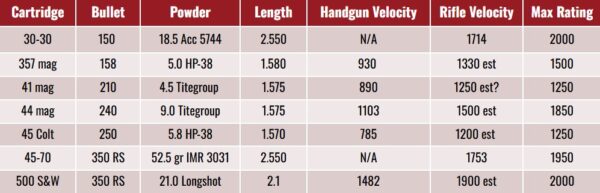
The first time I loaded Berry’s 158 grain thick plated bullets for a .357 revolver, I tried them in a 20” rifle and was surprised to see a full 400 fps increase in muzzle velocity! This load exceeded the rated maximum for that bullet. Our rifle bore suffered no ill effects from this warmer load, but it’s recommended to keep the loads below the maximum velocity rating.
Conclusion

Berry’s plated bullets are a quality alternative to cast or jacketed bullets. The bullets in this story are well-suited for use in lever action rifles. They’re easy to load, and easy on the budget. Since they’re economical, handloaders can afford to shoot more often, and shooting leverguns is just plain fun! Whether for competition or informal plinking/target practice, these plated bullets from Berry’s are a great option.
Get The Gear

Berry’s .45-70 .458 Diameter 350 Grain Round Shoulder Bullets at Midsouth Shooters Supply
Berry’s .30-30 Win 30 Cal .308 Diameter 150 Grain Round Shoulder Bullets at Midsouth Shooters Supply
Berry’s .50 Caliber .500 Diameter 300gr Round Shoulder Bullets at Midsouth Shooters Supply
Berry’s 158 Grain 38 Special Bullets
Berry’s 210 Grain .41 Cal Flat Head Bullets
Berry’s .44 Magnum 240 Grain Copper Plated Bullets
Berry’s .44 Magnum 240 Grain Hollow Point Bullets
Berry’s .45 Long Colt Superior Plated Bullets
Don’t miss out on Ultimate Reloader updates, make sure you’re subscribed!
Thanks,
Guy Miner