
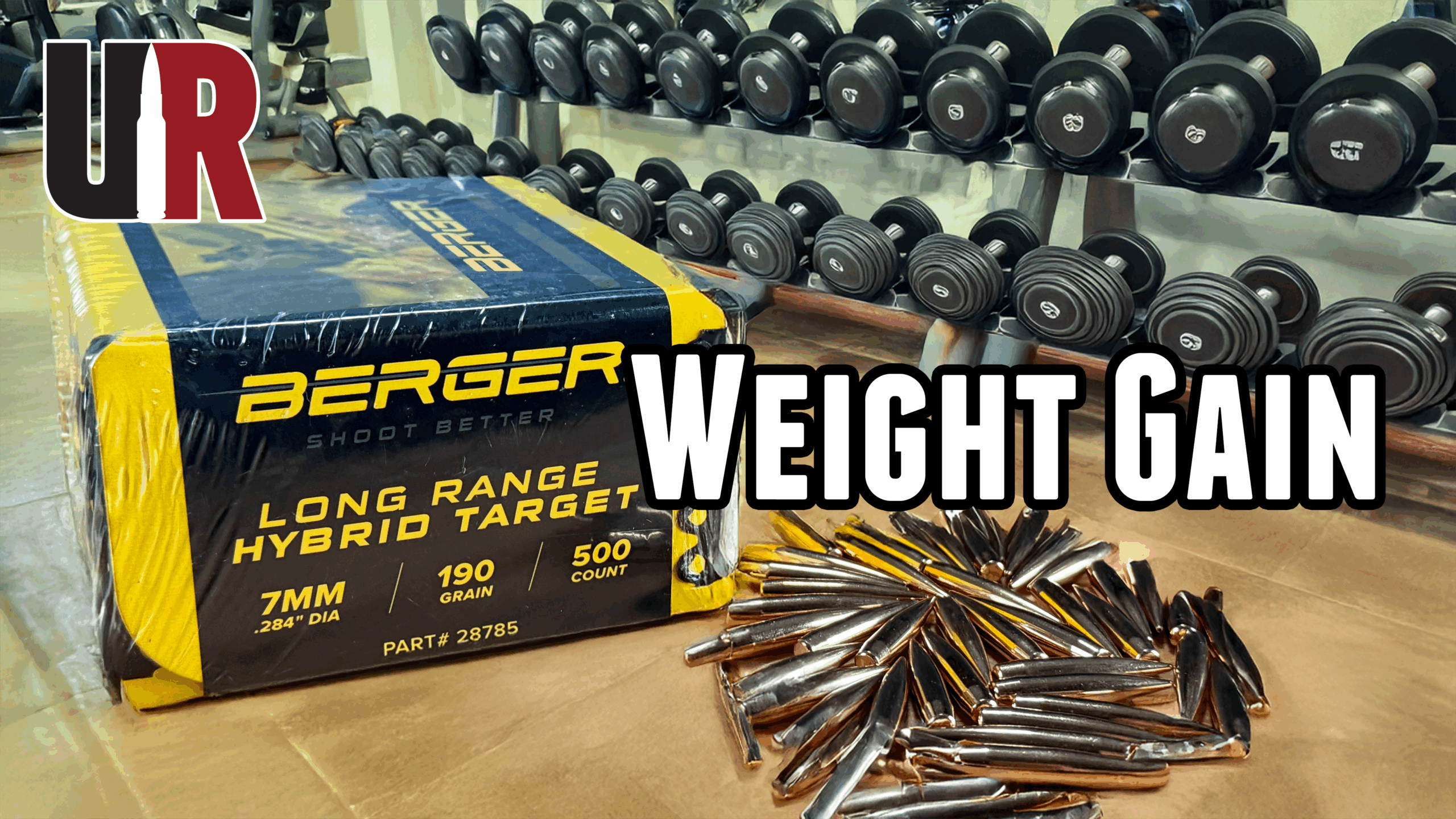
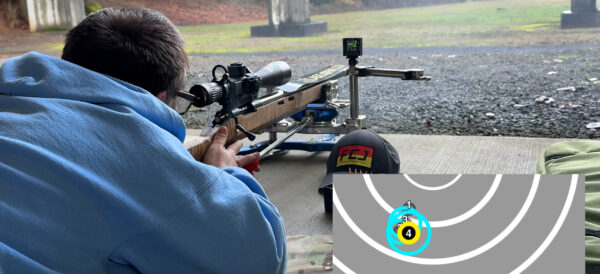
I have been competing with Berger 7mm 180-Grain Hybrids for some time. These have long been the gold standard and won many F-Class matches. Berger recently took this performer and added an edge and some weight, introducing the 7mm 190-Grain Long Range Hybrid Target Bullet! Watch and read on to learn more about this new bullet and see it in action.
Disclaimer
Ultimate Reloader LLC / Making with Metal Disclaimer: (by reading this article and/or watching video content you accept these terms). The content on this website (including videos, articles, ammunition reloading data, technical articles, gunsmithing and other information) is for demonstration purposes only. Do not attempt any of the processes or procedures shown or described on this website. All gunsmithing procedures should be carried out by a qualified and licensed gunsmith at their own risk. Do not attempt to repair or modify any firearms based on information on this website. Ultimate Reloader, LLC and Making With Metal can not be held liable for property or personal damage due to viewers/readers of this website performing activities, procedures, techniques, or practices described in whole or part on this website. By accepting these terms, you agree that you alone are solely responsible for your own safety and property as it pertains to activities, procedures, techniques, or practices described in whole or part on this website.
About the Berger 7mm 190-Grain LR Hybrid Target Bullet
Berger’s 7mm 190-Grain LR Hybrid Target bullet was designed for F-Class competitors seeking a heavier bullet for magnum cartridges like the 7 PRCW.
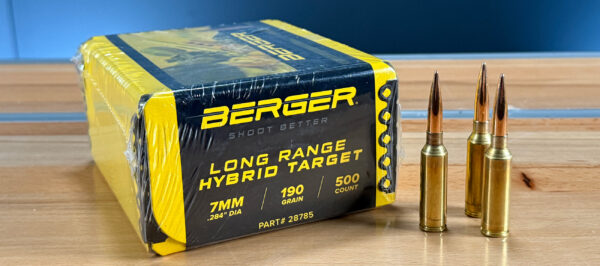
Berger incorporated competitor feedback into this projectile, using their Meplat Reduction Technology (MRT) to ensure properly-pointed, ready-to-reload bullets. This saves competitors valuable time at the reloading bench!
From Berger Bullets:

The 7mm 190 Grain LRHT boasts a high BC, jump-tolerant hybrid ogive profile that is Doppler Radar verified with less than 1% BC variation. A high Ballistic Coefficient is important for competitive shooting, but shot-to-shot consistency is the most critical aspect when engaging targets out to 1,000 yards and beyond.
Utilizing advanced and proprietary manufacturing processes, Berger’s innovative Meplat Reduction Technology (MRT) applies controlled pressure along the nose of each LRHT Rifle Bullet, producing a homogeneous and repeatable profile for the industry’s most consistent Ballistic Coefficients (BC).
The 7mm 190 Grain LRHT’s are ideal for F-Open competitive shooters and are tailored to cartridges such as 284 Winchester, 7mm WSM, 7mm SAUM, and 7mm Remington Magnum among others. The 190 Grain LRHT is complementary to the industry-leading Berger 184gr F-Open Target with an identical stability factor and improved ballistics when launched from 1:9″ twist barrels.
Berger 7mm Bullets Compared
I took the time to compare the specifications of Berger’s 7mm 180-Grain Hybrid Target Bullet, 7mm 184-Grain Hybrid Target Bullet, and the new 190-Grain Long Range Hybrid Target.
The 180-Grain has the lowest G7 BC of the three at 0.349. (G7 is the better BC choice for boattail bullets.) The 190-Grain LR Hybrid has a G7 BC of 0.384 with a G7 Form Factor of 0.878. The G7 Form Factor indicates the drag of the bullet compared to the G7 standard. A lower form factor means lower drag. Form factors below 1.0 are reserved for bullets with high BCs for their weight that will perform better at long ranges.
To see what these differences would be on target, I ran some numbers on a ballistic calculator for the 180-Grain and 190-Grain bullets, keeping all other variables the same.
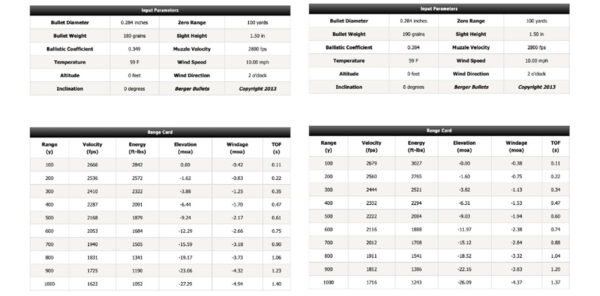
At 1,000 yards, the 180-grain bullets had an estimated velocity of 2200 fps. The 190-grain bullets are predicted to carry approximately 90 fps more at the same distance, despite their heavier weight. The 190’s also have less drop at 1000 yards than their lighter counterpart and buck the wind better!
Range Results
My first step was to load the new 190-grain bullets over a range of powder charges. Referencing reliable load data, I decided on charge weights of N555 between 55.5 grains and 56.1. I fired three rounds each of three different charge weights at 600 yards to see what had the best results.
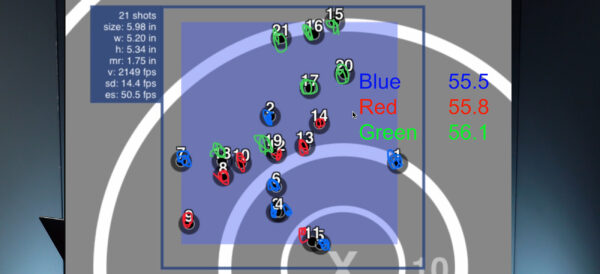
All 21 shots landed in one MOA at 600 yards, but separating the shots by charge weight revealed some more information. The 55.5-grain and 55.8-grain groups overlapped, indicating a stable area to do more testing in. Unfortunately, I only had limited time at 600 yards and had to move to the 300-yard line to test a new charge weight in the middle of this node— 55.66 grains.
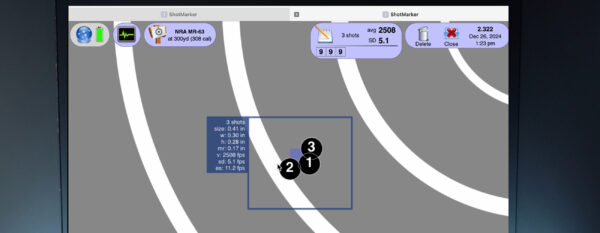
Five shot groups at 300 yards consistently measured between just under one third minute and just over half minute. At this point, it was time to experiment with seating depth to try to make the groups even smaller. I varied seating depth in 0.006” increments, looking for the tightest groups both vertically and horizontally. I did note some horizontal stringing, but it didn’t concern me due to the 10-20 mph wind and rain I was shooting in.
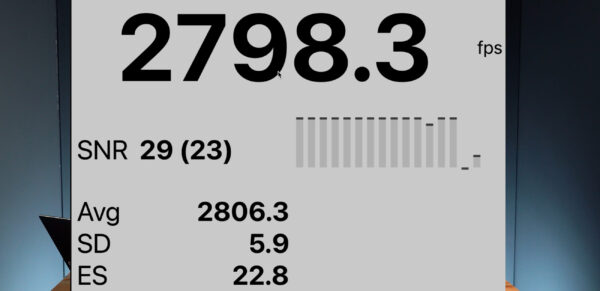
I fired 50 different loads, obtaining an overall average velocity of 2,806.3 fps with a 5.9 fps SD and 22.8 fps extreme spread. These are great numbers, ones I would accept for a 20-shot string!
Conclusion
Switching to a new competition bullet isn’t something decided from a few rounds, but the Berger 190’s definitely have potential. The overall statistics gave me great confidence, showing stability even with varying charge weights and seating depths. The effectiveness of Berger’s Meplat Reduction Technology is especially evident when examining the 190-grain bullet tips compared to the 180s. I look forward to seeing what these can do in further testing and on the range!
Get the Gear
Berger 7mm 190-Grain Long Range Hybrid Target Bullets at Creedmoor Sports
Vihtavuori N555 at Midsouth Shooters Supply
Lapua Cases at Creedmoor Sports
Don’t miss out on Ultimate Reloader updates, make sure you’re subscribed!
Thanks,
John Masek
About the author