
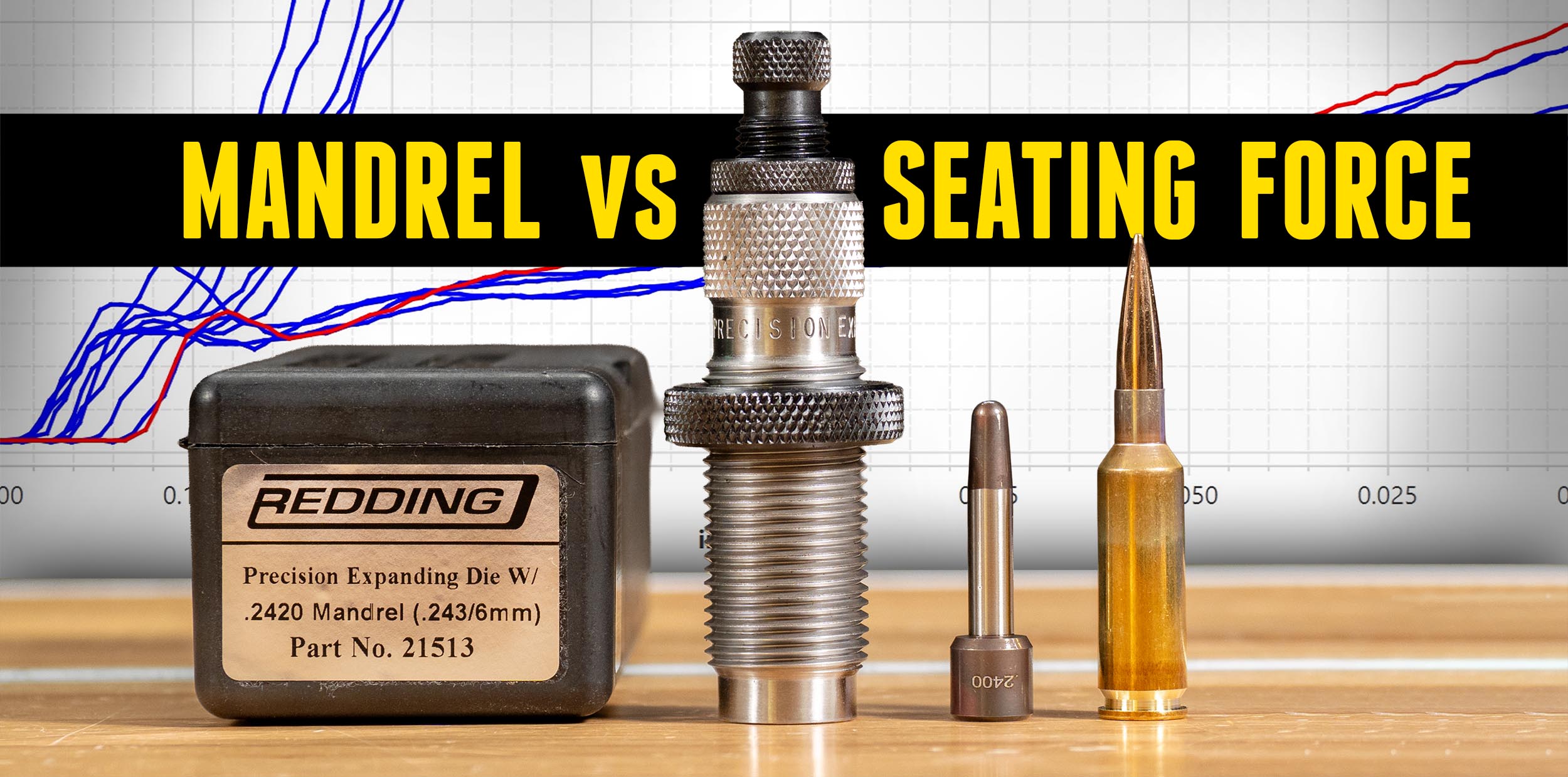
Neck tension is a critical aspect of precision rifle cartridge reloading. Why does this matter? What effect does Redding’s precision mandrel have on virgin brass? Read and watch on to see what we found!
Disclaimer
Ultimate Reloader LLC / Making with Metal Disclaimer: (by reading this article and/or watching video content you accept these terms). The content on this website (including videos, articles, ammunition reloading data, technical articles, gunsmithing and other information) is for demonstration purposes only. Do not attempt any of the processes or procedures shown or described on this website. All gunsmithing procedures should be carried out by a qualified and licensed gunsmith at their own risk. Do not attempt to repair or modify any firearms based on information on this website. Ultimate Reloader, LLC and Making With Metal can not be held liable for property or personal damage due to viewers/readers of this website performing activities, procedures, techniques, or practices described in whole or part on this website. By accepting these terms, you agree that you alone are solely responsible for your own safety and property as it pertains to activities, procedures, techniques, or practices described in whole or part on this website.
Why Does Neck Tension Matter?
Firstly, the interference fit of the bullet and case neck affects standard deviation, extreme spread, and in some cases, group size. The brass case neck needs to be slightly smaller than the outside diameter of the bullet to keep it in place. It is also very important for the value of this interference fit—the difference between the case neck diameter and bullet outside diameter—to be consistent.
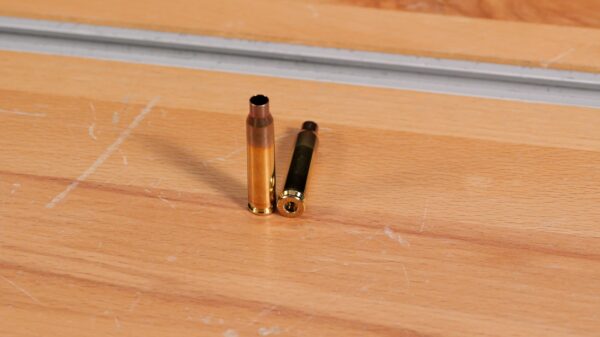
Brass varies, and factory brass often has undersized necks. Undersized necks can result in excessive neck tension and a ring or indented crimp line in the case where the seating plug contacts the bullet. This alters the BC of the bullet and adds another variable, reducing the ballistic effectiveness of the round.
About Redding Precision Expanding Die with Mandrel
Traditional sizing dies contain expander balls, but each can have different dynamics and different effects. My preferred way to control neck tension is by using mandrel dies.
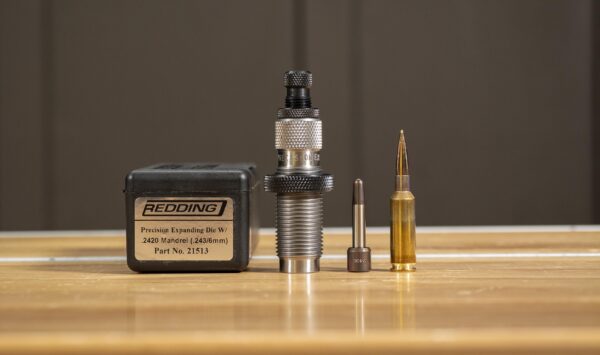
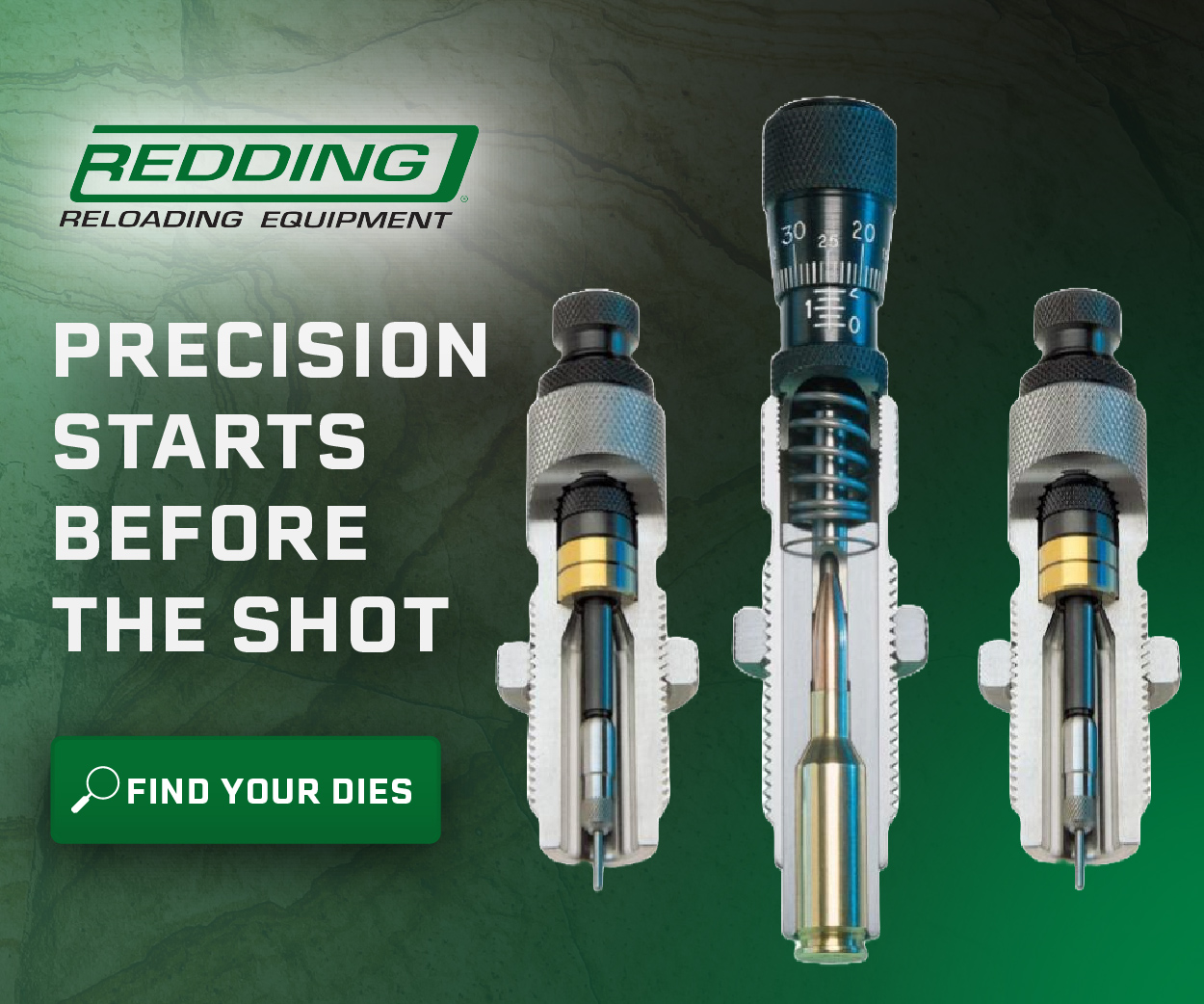
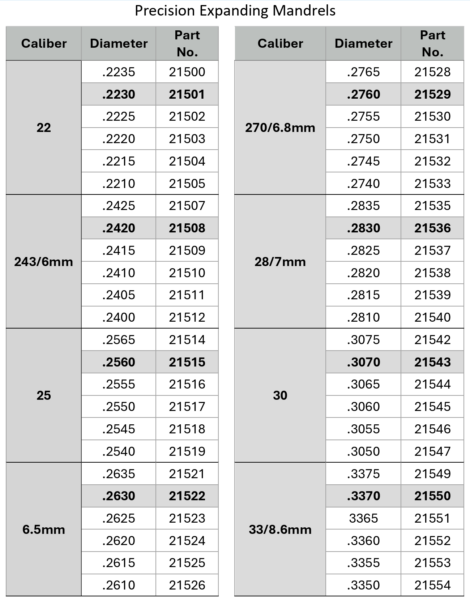
Redding recently released their precision expanding die and series of mandrels. Mandrels are available in half thou increments from 0.0005” under bullet diameter to 0.003” under bullet diameter.
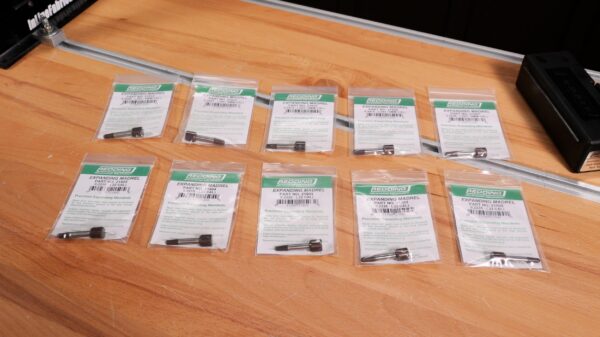
Using 243 as an example, mandrels start at .2425” and go to .240”.
From Redding Reloading Equipment:
The Precision Expanding Die offers the handloader unparalleled control over the I.D. of their case necks (neck tension).
Precision Expanding Dies are machined on CNC Lathes and heat-treated to ensure dimensional integrity and durability for a lifetime of use. The unique angled alignment surfaces of the Die Body and Mandrel ensure perfect alignment when assembled and secured with the threaded retention plug and lock ring.
Precision Expander Mandrels are machined from high-quality tool steel which is then hardened and precision-ground to their final diameter (size marked on head). They are available in .0005” diameter increments ranging from .0005” thru .0030 below nominal bullet diameter so that neck tension can be fine-tuned to suit the handloader’s preference.
The Precision Expanding Die is factory-assembled with one mandrel that is .0010” below nominal bullet diameter per caliber (22-338). Other Precision Mandrel Sizes are available separately.
Redding has a range of mandrels available for eight different calibers: 22, 243/6mm, 25, 6.5mm, 270/6.8mm, 28/7mm, 30, and 33/8.6mm.
Set-Up
I have two precision expanding dies to test – 22 caliber and 6mm. Each die body comes in a hard plastic case with a single mandrel (0.001” under nominal bullet diameter).
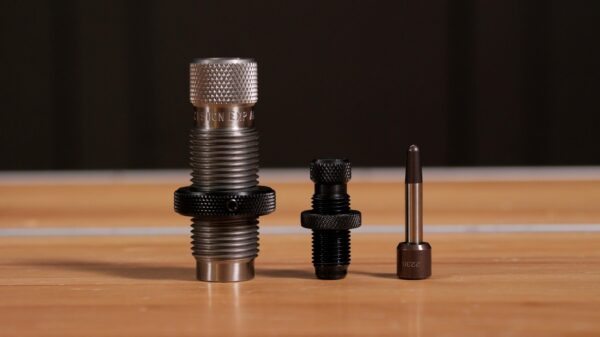
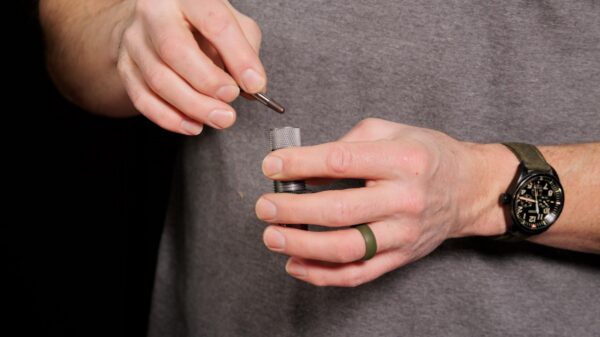
The mandrel slips down into the body. Tighten the plug until it contacts the mandrel and holds it firmly in place.
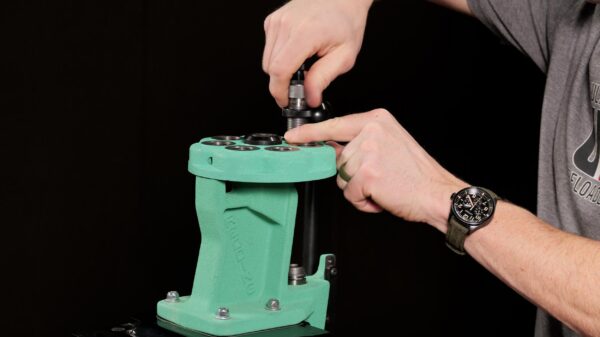
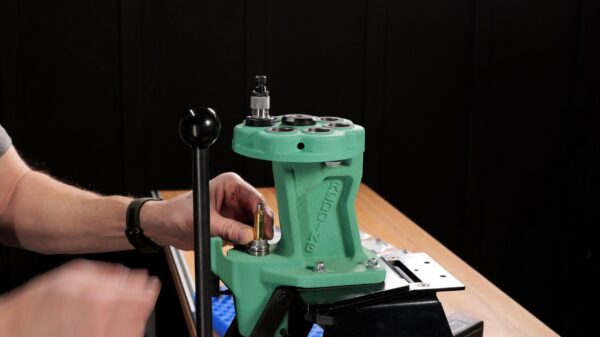
I decided to load on my Redding T-7 press. I started by screwing the die into the press with the ram raised until the die contacted the shoulder, then secured it with a lock ring.
Test
I began with the 6mm die and new Lapua 6 GT brass. I selected Lapua brass for this test as they come with undersized necks. I verified this with the 0.240” mandrel, which was a slip fit in the cases out of the box. I want this closer to 0.001” under bullet diameter, not 0.003”.
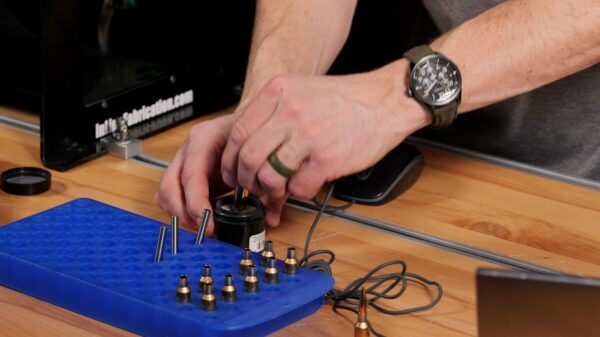
Before mandreling any brass, I applied Imperial graphite lube to the necks. I ran five cases through the mandrel die, which was nice and smooth, and separated them in a loading block from five Lapua cases I did nothing to.
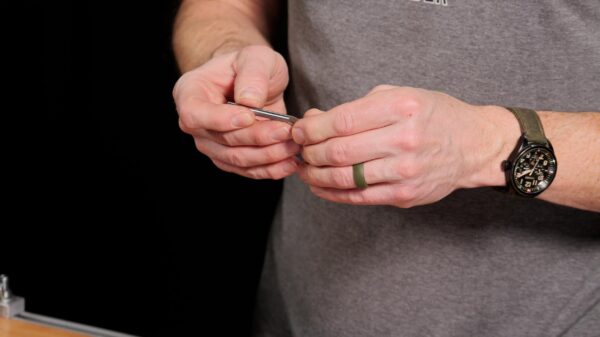
Next, I used pin gauges to verify the neck diameters. The non-mandreled brass measured approximately 0.240” while the mandreled brass came in just under 0.242”.
To compare the mandreled and non-mandreled cases, I set up the AMP press from Annealing Made Perfect to generate profiles for bullet seating force compared to distance.
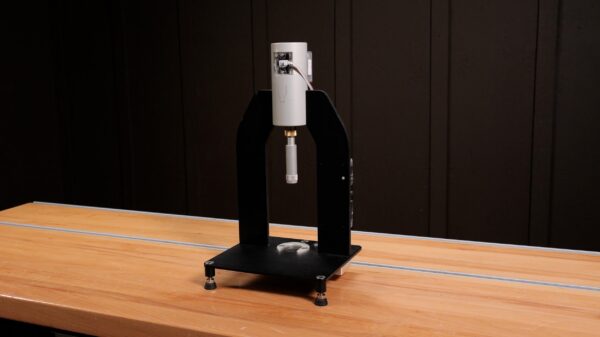
I applied dry lube to the case necks of the non-mandreled brass so that all cases had lube on them. I then seated a Berger 6mm 109-grain long range hybrid target bullet in each case, starting with the five non-mandreled cases and proceeding to the mandreled cases. The profiles for the non-mandreled cases were very inconsistent and in great contrast with the graphs of the mandreled brass.
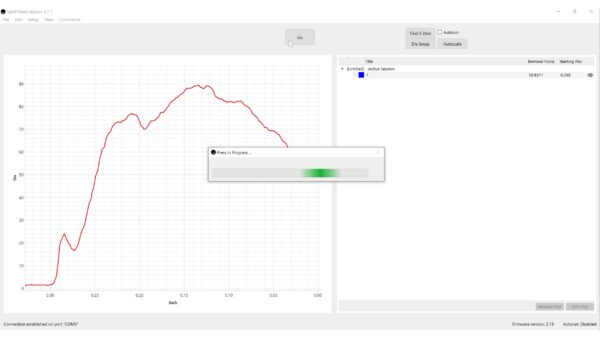
The mandreled brass profiles revealed seating took much less force with smoother lines and very consistent results!
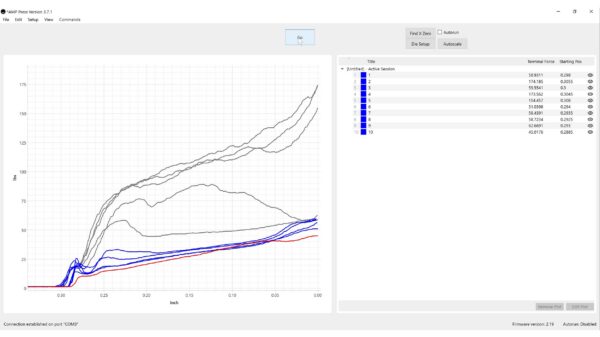
This means that using a mandrel results in much more consistent necks which should tighten up velocity extreme spread and standard deviation.
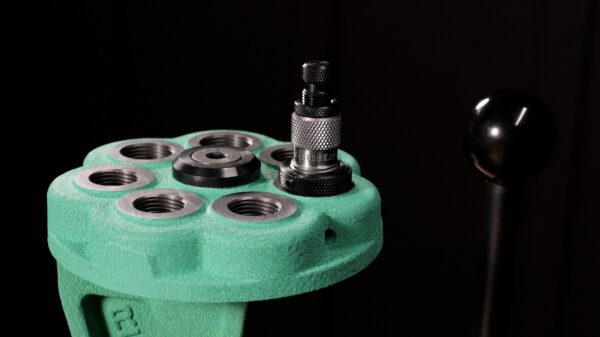
I conducted this exact same test for 223 using virgin Lapua cases and the appropriate Redding precision expanding die.
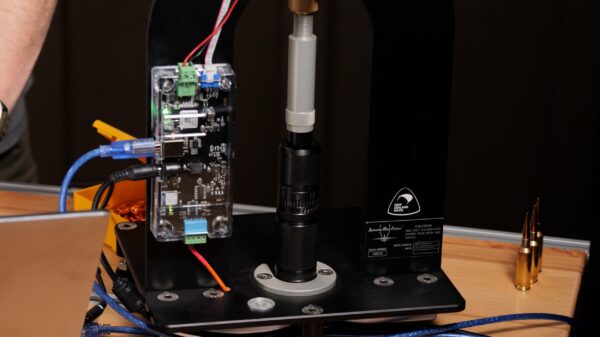
The non-mandreled 223 brass had much more consistent results than the non-mandreled 6mm GT cases, but the lines were still very rough.
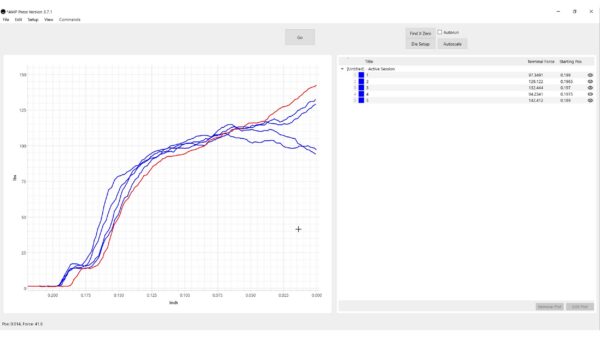
As expected, the mandreled brass cases required much less force and revealed much smoother profiles.
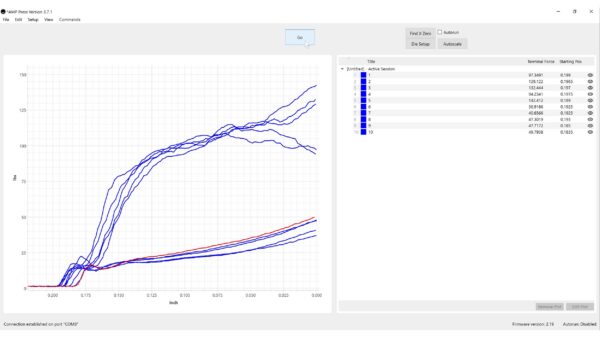
All of the graphs show a linear pattern – this is because the surface area between the bullet and neck is increasing linearly as the seating plug is driven down.
Conclusion
I believe this data presents a great case for mandreling case necks.
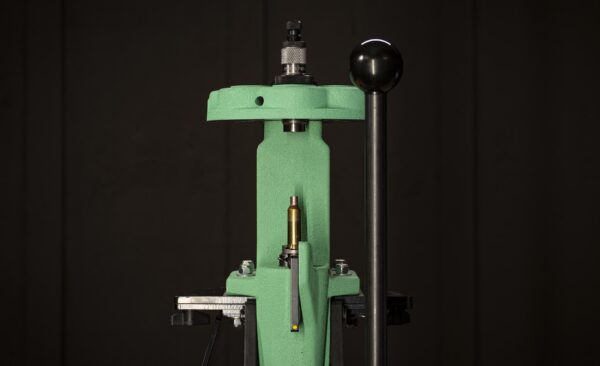
Both the 6mm GT and 223 cases all mandreled extremely smoothly on the T-7 press and the drastic AMP press results revealed much smoother, lower seating forces. This will prevent case markings and tighten velocity statistics!
Get the Gear
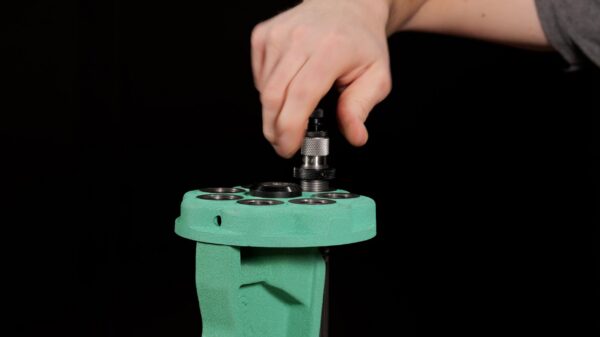
Redding T-7 Press at Midsouth Shooters Supply
Berger 6mm 109-Grain Long Range Hybrid Target Bullets at Creedmoor Sports
Lapua Brass at Creedmoor Sports
Don’t miss out on Ultimate Reloader updates, make sure you’re subscribed!
Thanks,
Gavin Gear
About the author