
9mm is one of those cartridges that goes FAST. For many, it’s that “just for fun” cartridge as well as the most ubiquitous caliber in many collections. As with anything, proficiency and improvement comes with practice, but practice comes at a cost. I worked up a budget load with Berry’s 9mm 124-Grain HBFP-TP and Berry’s 9mm 147-Grain RN bullets, collected chronograph data, did some shooting, and crunched some numbers. Watch and read on to see what I found!
Disclaimer
Ultimate Reloader LLC / Making with Metal Disclaimer: (by reading this article and/or watching video content you accept these terms). The content on this website (including videos, articles, ammunition reloading data, technical articles, gunsmithing and other information) is for demonstration purposes only. Do not attempt any of the processes or procedures shown or described on this website. All gunsmithing procedures should be carried out by a qualified and licensed gunsmith at their own risk. Do not attempt to repair or modify any firearms based on information on this website. Ultimate Reloader, LLC and Making With Metal can not be held liable for property or personal damage due to viewers/readers of this website performing activities, procedures, techniques, or practices described in whole or part on this website. By accepting these terms, you agree that you alone are solely responsible for your own safety and property as it pertains to activities, procedures, techniques, or practices described in whole or part on this website.
Cartridge Background and Reloading Considerations
The modern popularity of 9mm makes it hard to fathom that the cartridge dates back to 1902, drawing from the 7.65×21 Parabellum. (Guy Miner included more background on his story comparing the 9mm and 380 ACP.)

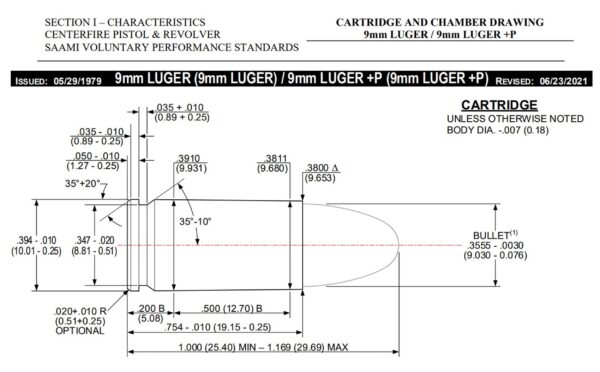
This straight-wall case accepts a 0.355” diameter bullet, a small pistol primer, and has a SAAMI maximum average pressure of 35,000 psi.
Take great care NOT to double-charge any cases. The powder you choose may prevent this, but is still an important consideration, as double-charged cases are EXTREMELY dangerous. The uses for 9mm vary from plinking to competition and self-defense. Remember that you can emulate the ballistics of a carry load with a less-expensive bullet for practice.
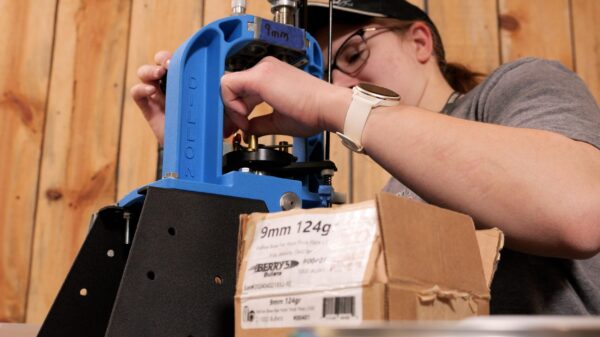
Be sure to use the appropriate seating plug — round nose or flat — depending upon your chosen bullet profile. Plated bullets have velocity restrictions, so be sure not to exceed those. If you desire a subsonic load, look for a low extreme spread to minimize the risk of a shot breaking the sound barrier. An unexpected supersonic round can cause hearing damage.
Bullet Weights and Profiles
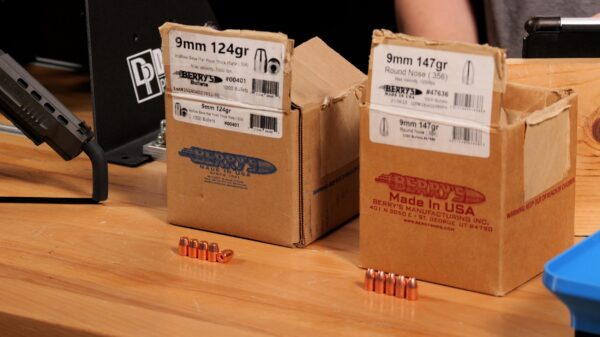
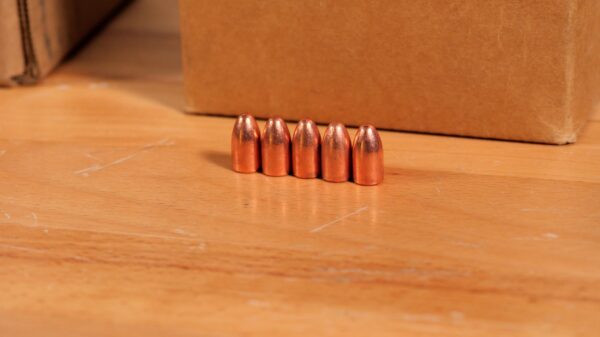
There are a variety of 9mm bullet weights and profiles. For this comparison, I decided to load Berry’s 9mm 124-Gr. HBFP-TP Bullets and 147-Gr. RN Bullets. We’ve previously shot the 147-grain bullet suppressed and loaded the 124-grain Hollow Base Flat Point-Thick Plate in 357 SIG.
Powders
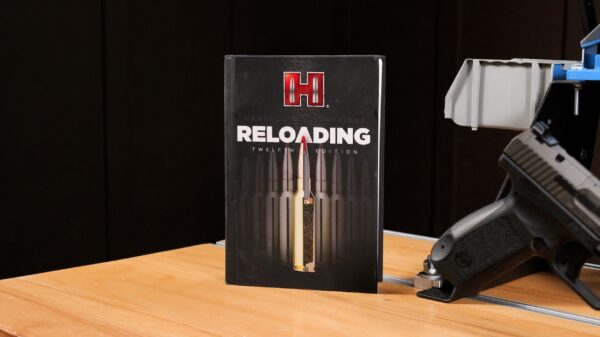
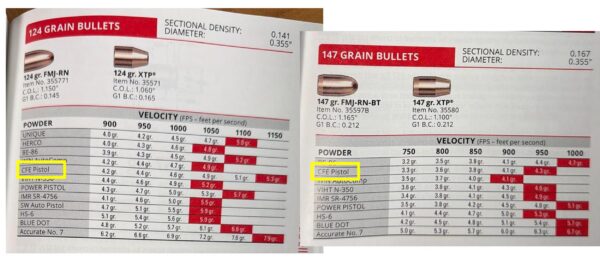
I consulted both Hodgdon’s Online Reloading Data Center and Hornady’s 12th Edition Reloading Handbook to develop a list of optimal powders.
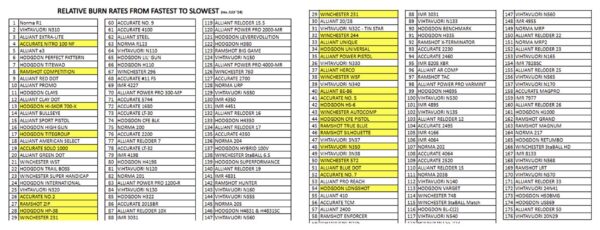
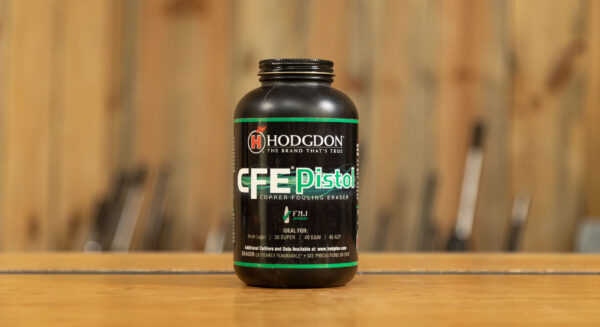
I selected the most affordable powder on this list that would work for both bullet weights we had on hand: CFE Pistol.
Reloading and Chronograph Results
Plated bullets have velocity restrictions. Berry’s thick-plate options can handle higher velocities than their traditional bullets, so my maximum velocity with the 124-grain HBFP-TP was 1500 fps, 250 fps more than the 147-grain round nose limit. I wasn’t concerned about reaching these velocities, with the loads I decided to use, but it is still something to keep in mind.
I decided to load 5.1 grains of CFE Pistol under the 124-grain bullet, and 4.1 grains under the 147-grain bullet. While Hornady’s manual only included Hornady bullets, I expected velocities to be relatively equivalent with the same profile/grain weight. Hornady specified a 1100 fps velocity with the 124-grain bullet and a 900 fps velocity with the 147-grain projectile.
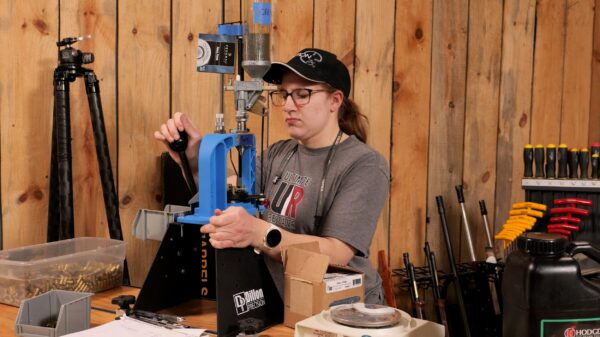
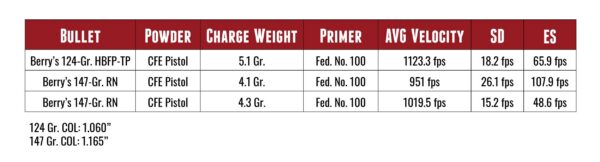
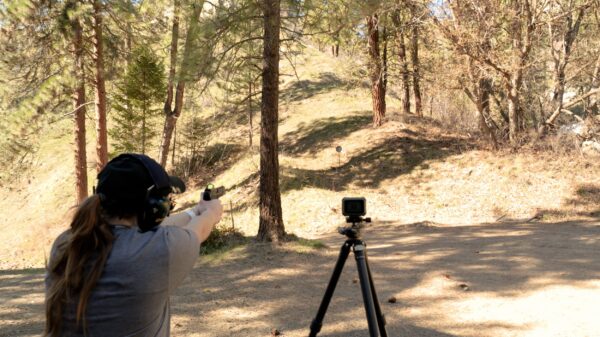
I started with the 124-grain bullets, loading to a cartridge overall length of 1.060” on the Dillon RL550-C with Dillon carbide dies. Fired from the Canik TP9SFx, this load had an average velocity of 1123.3 fps, SD of 18.2 fps, and ES of 65.9 fps.
Happy with these results, I loaded a quantity of this load before moving on to the 147-grain bullets.
I reduced the charge weight to 4.1 grains of CFE Pistol and loaded a small number to a 1.165” COL for testing. Ten shots had an average velocity of 951 fps, SD of 26.1 fps and ES of 107.9 fps. We were not comfortable with such a large extreme spread and a subsonic velocity, so we upped the charge weight to 4.3 grains and tested again. This time the average velocity was 1019.5 fps, SD was 15.2 fps, and ES was 48.6 fps, an over 50% reduction in extreme spread.
I used Federal No. 100 small pistol primers and processed range pickup brass Kyle Shields had previously processed for all loads. I always check my ammunition with a case gauge as you don’t want to get to the range or a match just to find out it won’t chamber. I personally use an Armanov 10-round ammo checker for 223, and was eager to try the 100-round 9mm ammo-checker at Ultimate Reloader.
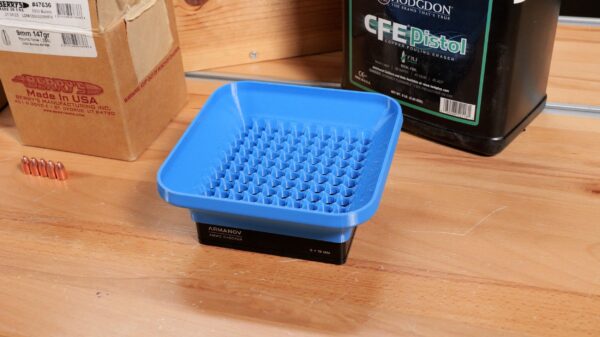
Working remotely means I don’t get to use the same cool tools the rest of the team has access to in Washington. I was very impressed with the packaging and quality of the ammo checker along with the speed I was able to achieve using the quick loader.
Shooting and Ransom Rest Results
Though this is not a bullseye load and this is not a bullseye gun, I still wanted to conduct an accuracy test using a Ransom Rest. A Ransom Rest is a precision pistol-testing fixture that accepts grip inserts for various handguns that allow the user to secure and fire the handgun without introducing human error.
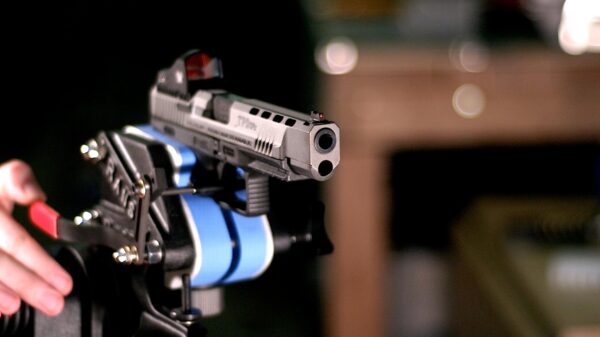
Cold and windy conditions were less than ideal, but we set-up the Canik TP9SFx in the Ransom Rest at 25 yards and began shooting. Typically, a gun needs 10-15 shots to settle into the rest. The first shot on paper was low, with the following six (124-grain load) measuring 2.31”.
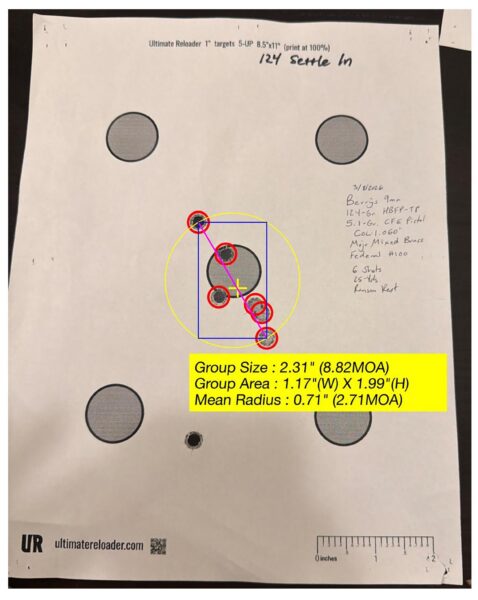
I followed this with a number of five-shot groups for each load, achieving the following results:
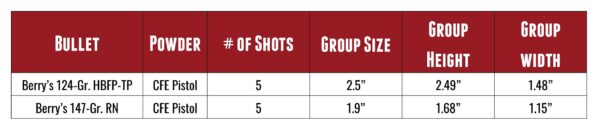
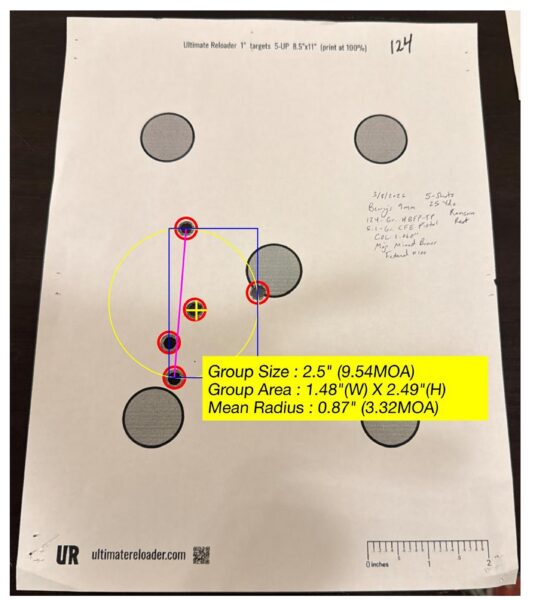
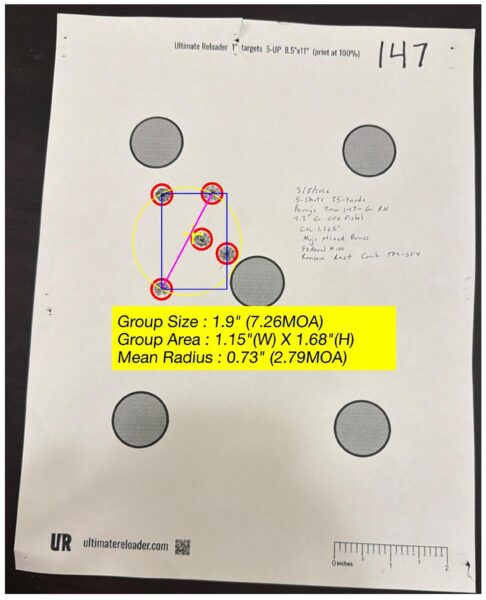
Most people aren’t shooting at 25 yards, so I did some math to convert the groups to a 10-yard equivalent.

I was very happy with these results for a budget load out of an affordable gun.
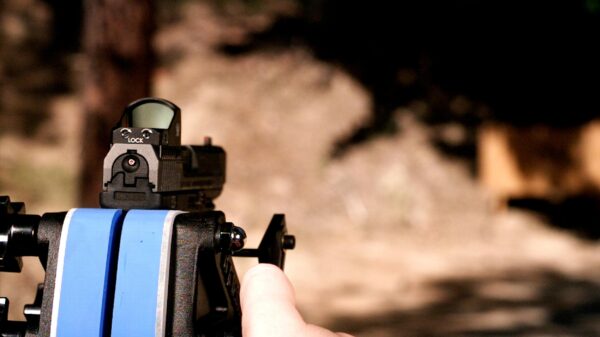
Guy Miner previously tested a very similar load — 5.0 grains of CFE Pistol with a Berry’s 124-Grain Hollow-Base Thick-Plate Round Nose bullet — in the same Canik TP9SFx with the Ransom Rest. (I accidentally said he used the 124-grain Hollow-Base Thick-Plate Flat-Point in the video.)
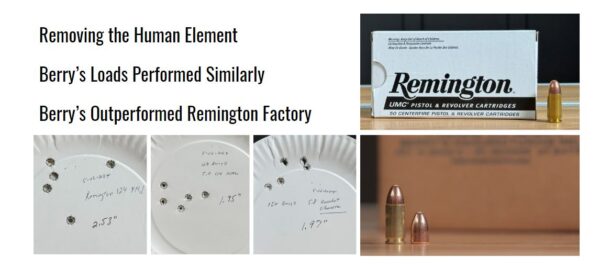
He tested at 15 yards, finding that two Berry’s loads outperformed Remington factory ammunition. This supports the idea that even if you are only saving a little money, or close to breaking even compared to buying factory ammunition, you may not be comparing equivalent performance.
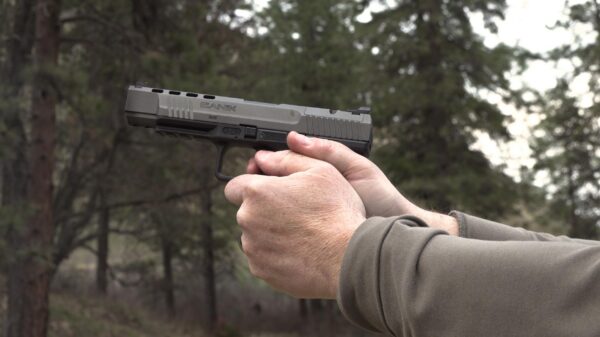
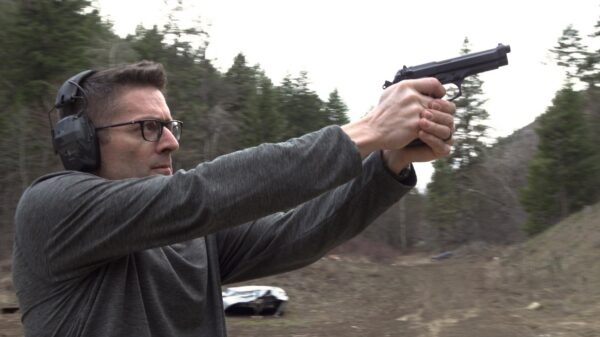
Gavin, F-Class John, and I also shot some steel in the industrial yard, just for fun. We used the Canik TP9SFx, Canik Rival-S, and a Beretta 92.
Gavin decided to try a left-handed pistol shot on steel at 30 yards, just to see if he could. He missed, but I wanted to try.
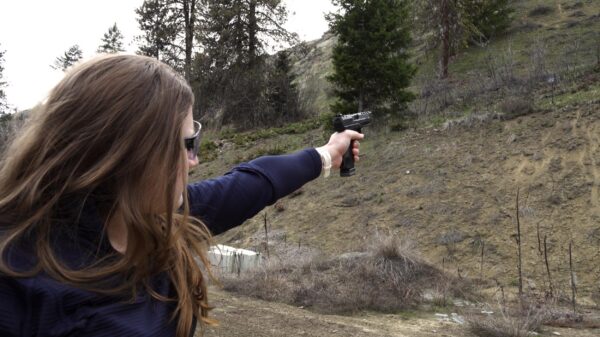
To my great surprise I hit the steel even though I am right-handed! Fundamentals are fundamentals, and sometimes you pay more attention when you are doing something uncomfortable.
Economics
I used the Ultimate Reloader cost calculator to see exactly how the cost of my loads compared to factory ammunition. Using new brass, my 124-grain load came out to $0.46 a round, $0.26 with used brass. The lowest cost 9mm 124-grain factory ammunition I could find at Midsouth came out to $0.23, but Blazer, my preferred brand of budget pistol ammunition, came in at $0.34 a round.
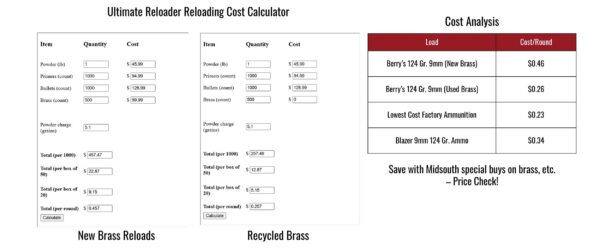
Keep in mind that sales on components reduces reloading costs, and Midsouth often offers special buys. (At the time of this video, primer specials brought the cost of my load with new brass to $0.32 — two cents under the cost of my preferred brand of factory ammunition.) Also realize that the lowest-priced factory ammunition does not necessarily offer the same performance reloads can, as you lose the ability to fine-tune your recipe.
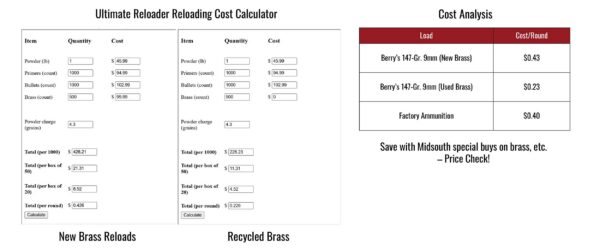
Reloading the 147-grain bullets offered an even greater cost savings. The cost to load fired brass came at $0.23 per round compared to $0.40 factory rounds.
Conclusion
I was very happy with the performance of these Berry’s plated bullets, especially for the cost savings. Though not bullseye loads, they are perfect for plinking and general practice, and reloading offers the ability to fine-tune to your needs/desires.
As always, reloading brass casings saves a lot. While casting bullets can offer even greater cost savings, many do not have the time or equipment to embark on that venture, making Berry’s an ideal solution.
Get the Gear
Berry’s 9mm 124-Gr. HBFP-TP Bullets
Berry’s 9mm 147-Gr. RN Bullets
Hodgdon CFE Pistol at Midsouth Shooters Supply and Hodgdon
9mm Brass at Midsouth Shooters Supply
Primers at Midsouth Shooters Supply
Hornady 12th Edition Reloading Handbook at Midsouth Shooters Supply
Dillon RL550C at Midsouth Shooters Supply and Creedmoor Sports
Armanov Pistol 100-Round Ammo Checker
Armanov Quick Loader for 100-Round Ammo Checker
Athlon RangeCraft Velocity PRO Radar Chronograph at Midsouth Shooters Supply
Don’t miss out on Ultimate Reloader updates, make sure you’re subscribed!
Thanks,
Serena Juchnowski
About the author