

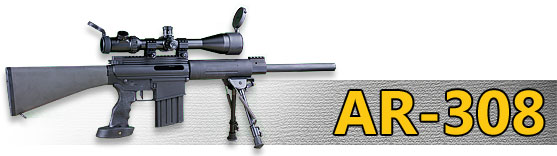
It’s time to start loading some precision 308 Winchester ammo for the LR-308 project! Our rifle is all tuned up and tricked out, and now we need some capable ammunition to shoot.
In this video, I’ll walk through the process of validating sizing die setup with the new Redding Instant Indicator, and we’ll see how to size cases. Following that, I’ll show using the Hornady Case Prep Center to trim the brass to length, chamfer the case mouth, and also ream the primer pocket (an important final touch when working with military brass like the 7.62×51 once-fired brass that I’m using for this project).
Next, we’ll use the Redding case neck gage to sort cases by neck thickness and neck uniformity.
Thanks,
Gavin
About the author























































Gavin,
Thanks for keeping up the flow of great information. You always bring some advanced stuff and great equipment into the videos so I always enjoy them.
Honestly though, I’m a little confused as to the greater purpose of the first section of your video. What were you really doing? I like the introduction to the Instant Indicator but I guess I didn’t fully understand that it looks like you are making a test bed package of reloads to fire form in YOUR rifle. Then you’ll REALLY get the ammo dialed in?
I had to watch back through the video again to try to fully understand what you were doing and what you were trying to achieve with the Redding Instant Indicator and the once-fired brass (that you didn’t actually fire in your .308 rifle).
1) The dial was zeroed with a min spec setup body.
2) The once fired brass measured at .006 to .007 over the minimum before sizing.
3) After depriming and sizing, the shoulder measured .007.
So you really didn’t knock bath the shoulder at all with the sizing die. This is where I got a bit confused. You said something to the effect that this die was all the way down in the press and really couldn’t get it any further down. So if you need it further down, a different sizing die may be necessary?
Your comment: “Okay so we’re a little over there” really didn’t make sense to me. Maybe you can help me better understand what’s happening.
Ashley- the primary purpose here was to show how the Instant indicator is used, and here I was really validating the proper range for shoulder bump. What’s hard to account for is the progressive fire forming effect that happens when you fire the brass and resize the cases multiple times. Eventually, the brass stops “forming” if you are careful to setup your sizing die. Until the cases are fired a few times in the LR-308b, the measurements are less meaningful unfortunately. If we saw excessive shoulder bump with the gage, we could then back off the sizing die until the shoulder bump was “right were we wanted it”. But that’s only possible when the brass is fully fire-formed.
Hope that helps!
-Gavin
Thanks for the reply Gavin. I’m looking forward to seeing the next steps and also seeing how the accuracy of the ammo improves through the cycles of fire forming to your .308 chamber. Because you’ve got to shoot them anyway, might as well see where they are on paper.
I also enjoyed the demonstration of the Hornady Power Case Prep Center. Seems like a great improvement over using individual tools. I couldn’t find a Hornady primer flash hole deburring tool on Hornady’s site or MidwayUSA even though Hornady mentions that this phantom product can be added to the Prep Center. Did you pick one up with your purchase?
Take care.
-Ashley
Gavin, I was interested to see your technique with the L-N-L powered case trimmer. I noticed you simply putting the case in and locking it with the cam and then running the arm to trim. I tried this and had terrible issues with it trimming unevenly, sometimes upwards of 5 thousandths. Hornady told me to always set the case in, run the ram down until the case touches the cutter and then lock the cam. This has improved the function but I often will repeat the process after turning the case 1/3 of a rotation or so and am experiencing the occasional variation of 1.5 thousandths.
The cliffs notes: Is there anything special you have done in your tool or technique that allows you to not have to go through the steps I mentioned above?
Does anyone out there have any .308 loads worked up for WC846? ….and …yes I am familiar with the fact that many substitute BLC (2) and apparently that works out for them. But I would like to get some data specific to WC846 for .308 and also for .223…Thanks
Gavin,
You installed the Hornaby lock and load bushing conversion kit. Can you provide the part numbers for both the die bushings and the press receiver bushings. I have the same press (Gem) and would like to convert.
Thanks,
Richard
whoever told you that gauge is checking concentricity is dead wrong. your gauge measures run-out, a gauge like that could not possibly measure concentricity….that gauge cant even measure total run-out….just run-out.
If the bullet is concentric with the case, there’s no runout- the two terms are used together. http://www.hornady.com/store/Ammunition-Concentricity-Tool/
“Concentricity is a complex tolerance used to establish a tolerance zone for the median points of a cylindrical or spherical part feature. Concentricity is generally reserved for high-precision parts, and only when there is a need to control median points.”
“Run-out or runout is an inaccuracy of rotating mechanical systems, specifically that the tool or shaft does not rotate exactly in line with the main axis.”
your measuring tool measures how far the bullet runs out in relationship to that 1 single point where your indicator is. your using terms that mean 1 thing, to say something entirely different.”
for a case to be actually concentric there is a minimum and maximum diameter that the case can not go past the entire length of it at any point and usually dimensioned off a center line. what your measuring is the diameter of that case at 1 single point as you rotate the case around….concentricity is significantly harder to achieve than what your measuring.
In plain English: The goal is to have the centerline axis of the bullet co-linear with the centerline axis of the case. From wikipeida: (Concentric) “In geometry, two or more objects are said to be concentric, coaxal, or coaxial when they share the same center or axis”.
I’m an engineer (Mechanical) – and I’m guessing you may be as well. 🙂 I understand that “bullet wobble” (runout) is only one measurement of a larger set of measurements to determine co-linearity. To me, it [dialing in runout] is a good “low hanging fruit” measurement to ensure things are dialed-in to a “first degree” of precision. Just my thoughts!
agree with you runout is a good enough measurement for aligning the axes of the bullet and case to centerline. I do though feel concentricity in terms of geometry (per your definition) is different than in relation to Geometric dimensioning and tolerancing (GD&T) which I feel would better apply to this situation.
I’m not an engineer but I did go to school for ME. I work as a machinist and a commercial pilot.
I know this is a very old post and thread, but this video series seems to be exactly what I’m looking for as I’m beginning to get into loading for an AR-10.
Unfortunately, the video’s seem to be “private” now. I’m assuming this was due to the Youtube commie-unity standards. Are the videos available publicly anywhere?