
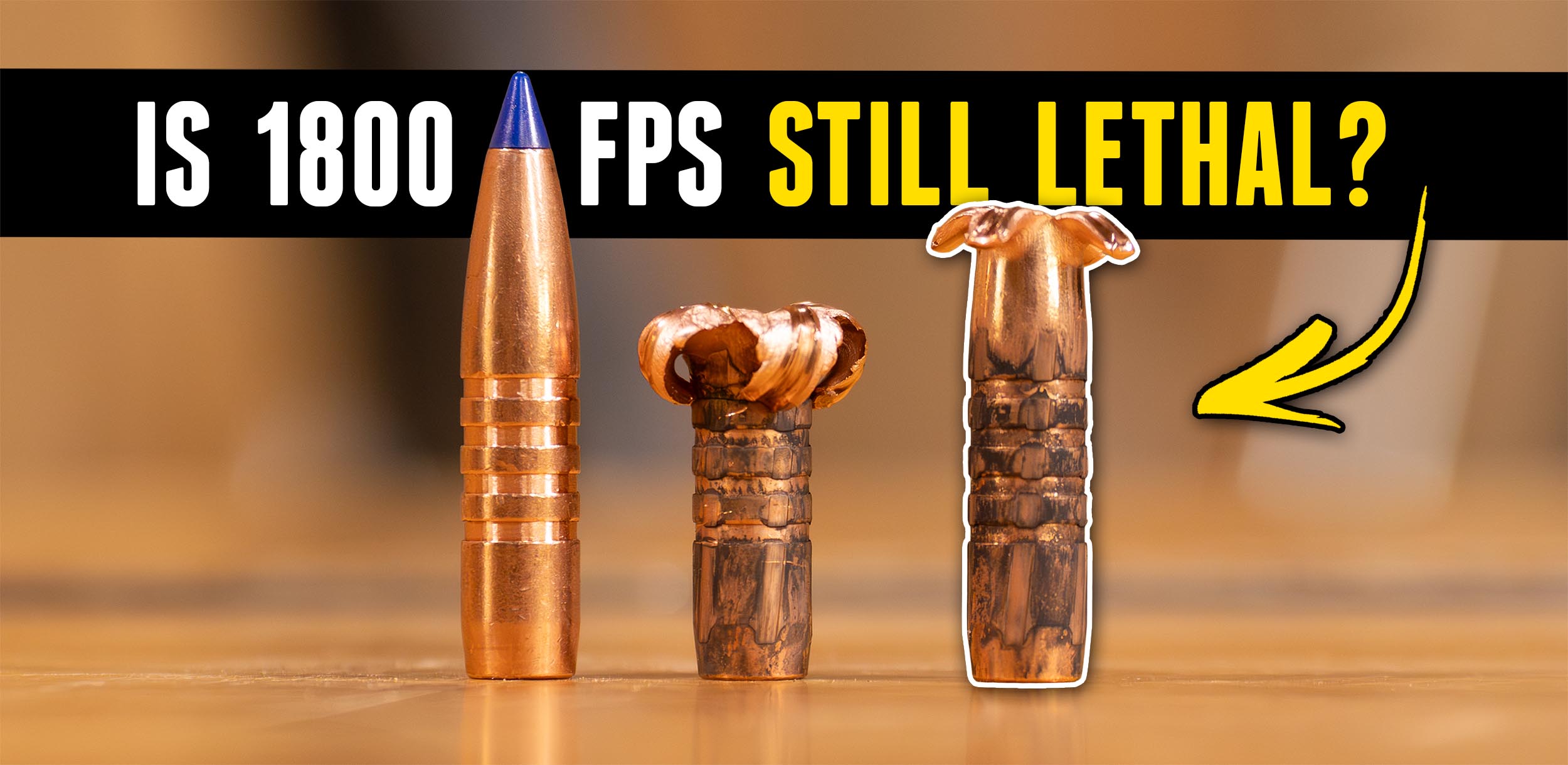
It’s been said that you need really high velocities for solid copper bullets to work well in hunting applications. In this video, we’re taking a closer look. We’ll break it down with ballistics gel tests at high and low velocities with Barnes TTSX and LRX Bullets, look at real-world data, and do some analysis. The results might just surprise you. Have we debunked this old copper bullets notion? Check it out!
Disclaimer
Ultimate Reloader LLC / Making with Metal Disclaimer: (by reading this article and/or watching video content you accept these terms). The content on this website (including videos, articles, ammunition reloading data, technical articles, gunsmithing and other information) is for demonstration purposes only. Do not attempt any of the processes or procedures shown or described on this website. All gunsmithing procedures should be carried out by a qualified and licensed gunsmith at their own risk. Do not attempt to repair or modify any firearms based on information on this website. Ultimate Reloader, LLC and Making With Metal can not be held liable for property or personal damage due to viewers/readers of this website performing activities, procedures, techniques, or practices described in whole or part on this website. By accepting these terms, you agree that you alone are solely responsible for your own safety and property as it pertains to activities, procedures, techniques, or practices described in whole or part on this website.
About Copper Bullets
Barnes Bullets is highly regarded for their solid copper hunting bullets. Their family includes three different types: TSX, Tipped TSX (TTSX), and LRX.
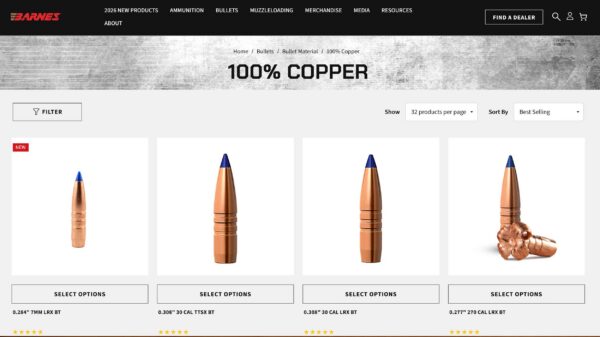
Most TSX bullets have a flat base and a lower BC compared to the TTSX and LRX bullets. They are designed for rapid expansion out to 300 yards. Most Tipped TSX bullets are boat tail. They have higher BC than the TSX and are optimized to perform from 0 to 500 yards.
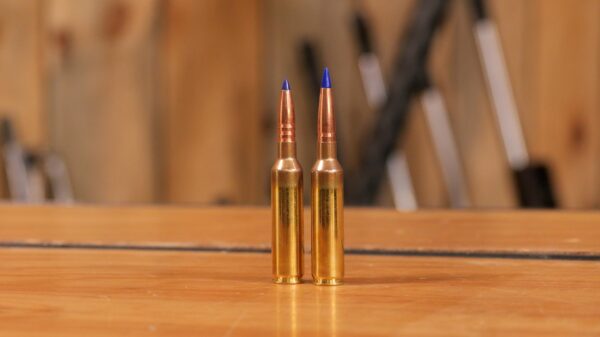
LRX bullets are tipped, long-range optimized out to 700 yards. These have the highest BC of the Barnes solid copper rifle bullet family. Remember to always check twist rate requirements for your selected bullet. (The 7mm 160-Gr. LRX requires a 1:8 twist.)
From Barnes Bullets:
Fred Barnes, founder of Barnes Bullets, began selling bullets out of his basement workshop in Bayfield, CO in 1932. Randy and Coni Brooks purchased the company in 1974 and moved the business to American Fork, Utah.
Fred Barnes stayed on to consult with the couple for several months. Randy and Coni were young in their careers, but what they lacked in experience, they made up with grit and determination. Both passionate hunters, their love of the sport gave them the firsthand experience and knowledge to push Barnes Bullets to success.
In the fall of 1985 while hunting brown bears in Alaska, Randy conceived the idea of an expanding all-copper bullet. Coni was skeptical at the idea of doing away with lead, but after a few successful hunts with Randy’s prototypes, they knew they were on to something that would raise the bar for bullet performance.
Their prototype became the world-renowned X Bullet® and changed the way hunters viewed bullet construction and terminal performance.
In 1989, Barnes launched the X Bullet and became the leader in bullet innovation, forging a reputation for epic knockdowns and devastating on-game performance. Today, Barnes products are highly trusted and respected among hunters and shooters worldwide.
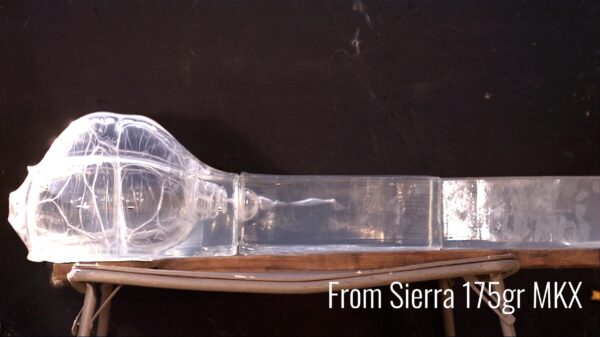
Monolithic copper bullets have some advantages over traditional lead cup and core bullets. They offer deeper penetration, great expansion at proper velocity, and are legal for hunting in all 50 states. The bullets also hold together. Cup and core bullets combine easy accuracy with an explosive wound channel, but do not penetrate as far as solid copper. We’ve observed very large wound channels with Sierra MatchKingX bullets in ballistics gel.
Ballistics Gel Tests
We’ve had a number of requests to run ballistics gel at extended ranges to simulate hunting at further distances. In order to achieve equivalent results at shorter ranges, we used ballistics data and talked with the engineers at Barnes Bullets to determine appropriate velocities.
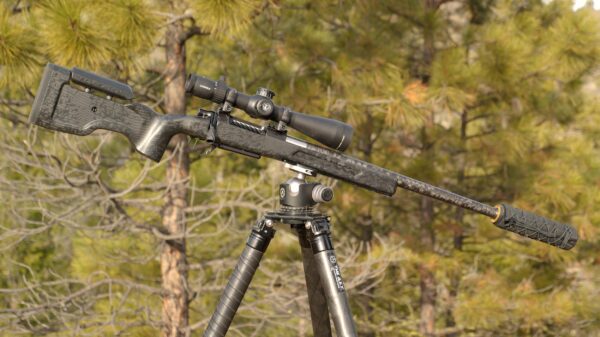
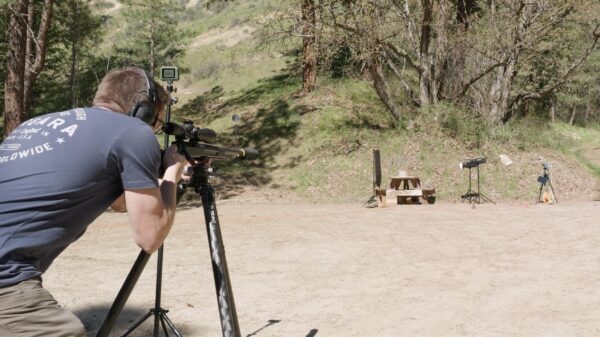
I settled on testing the 7mm PRC in my medium action custom build. This rifle pairs a BAT Machine Vesper-M action with a Foundation Ezekiel stock, a Carbon Six 22” 1:8 twist .284 barrel, TriggerTech Diamond two-stage trigger, and Hawkins Precision Hunter DBM and Hunter Mag. This combination of components makes for a top-tier, lightweight hunting rifle.
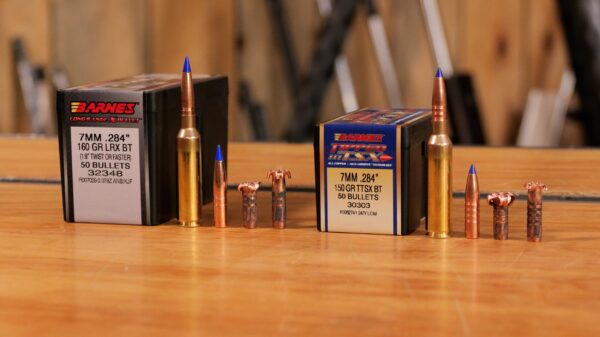
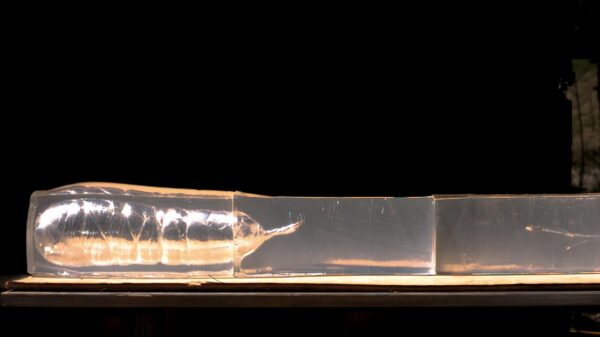
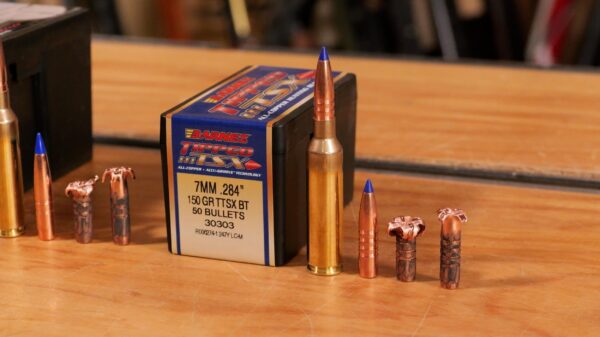
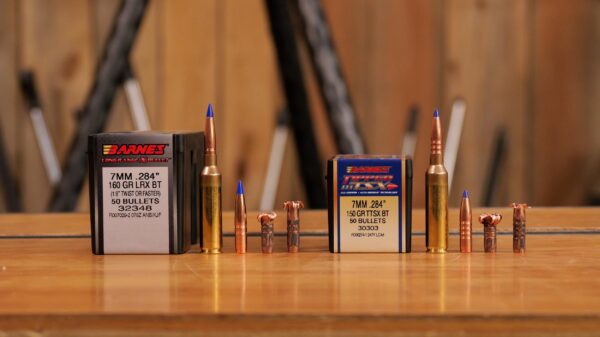
We ran two different gel block tests—one with high velocity, one with low velocity— for two different bullets: Barnes 7mm 150-Gr. TTSX BT and Barnes 7mm 160-Gr. LRX BT. The ballistic engineers at Barnes suggested using the same high and low velocity approximations for both bullets. 2600 fps on the high side simulates a 300-yard shot through a 24” 7mm PRC while bullet expansion is optimized down to 1800 fps.
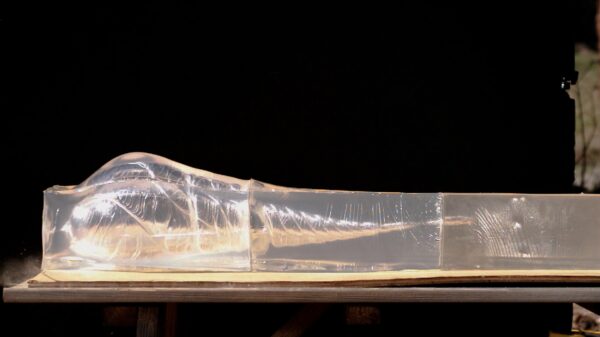
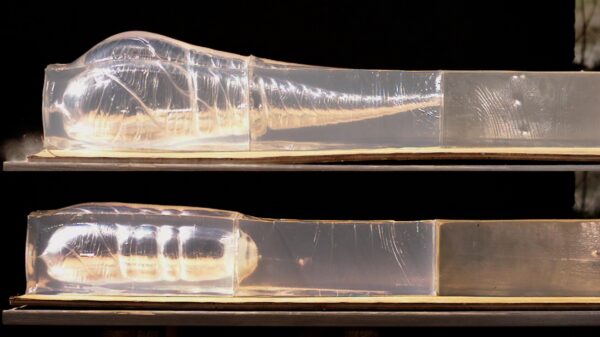
I loaded Barnes Bullets over H1000 in Peterson Brass. This magnum powder was not well-suited to the reduced load, resulting in some large extreme spreads. The faster 150-Gr. TTSX load came in at 2,654 fps with 40.5” of penetration. The expanded bullet measured 0.557” with 99.5% weight retention.
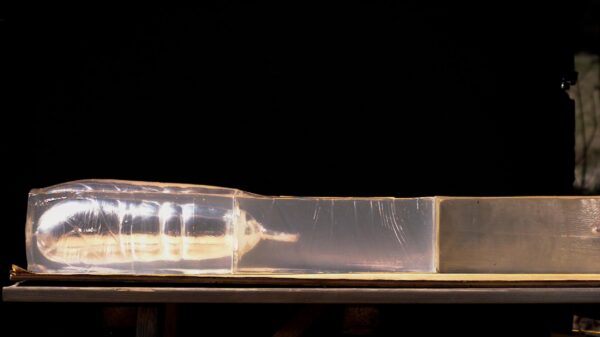
The downloaded recipe had a velocity of 1,842 fps with 22.5” of penetration, representing a 700-yard shot. The expanded bullet diameter was 0.499” with 99.8% weight retention.
The high-velocity 160-Gr. LRX round had a velocity of 2,557 fps with 27” of penetration. The expanded diameter measured 0.459” with 90.1% weight retention.
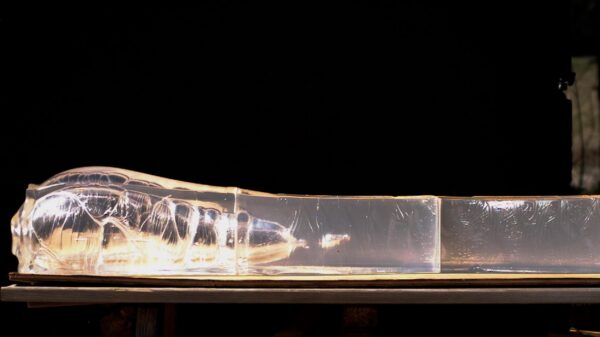
The downloaded load had a velocity of 1,734 fps with 22.5” of penetration, representing a 1,000-yard shot. The bullet’s expanded diameter was 0.4835” with 98.8% weight retention.
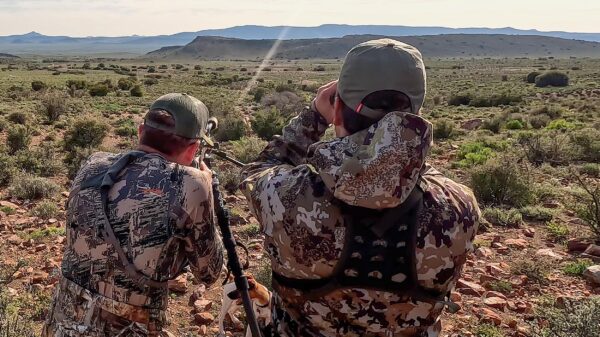
I would not personally be comfortable making a 1,000 yard shot on a game animal, but this is an ethical decision every hunter has to make for himself/herself.
Conclusion
Across both tests, the Barnes TTSX and LRX delivered lethal performance at both high and low velocities.
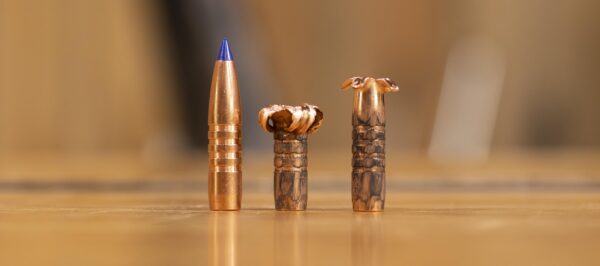
This destroys the myth that copper bullets only expand at high velocities. Our tests show that hunters can get great performance and lethal expansion out of Barnes copper bullets out to distances that many hunters will never attempt.
The TTSX and LRX both held together well and meet hunting requirements in all 50 states. Remember that Barnes offers three different families—TSX, TTSX, and LRX— all optimized for different distances with a wide window of effective velocities.
Whatever you choose, always take an ethical shot within the limits of your skill and equipment.
Get the Gear
Shop Barnes Bullets at Midsouth Shooters Supply!
Peterson Brass at Creedmoor Sports
Hodgdon H1000 at Hodgdon and Midsouth Shooters Supply
Don’t miss out on Ultimate Reloader updates, make sure you’re subscribed!
Thanks,
Gavin Gear
About the author