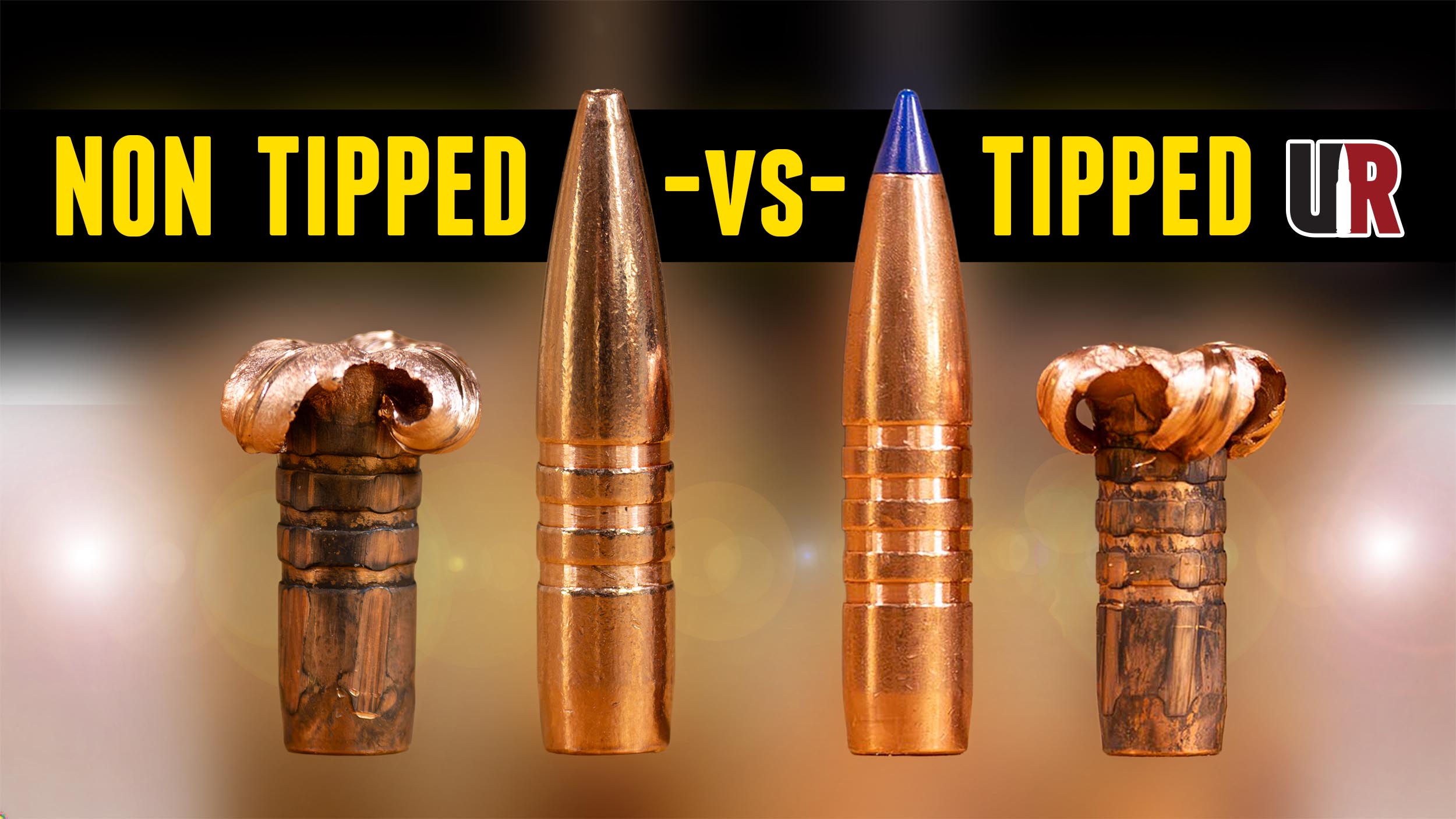
If you’ve settled on solid copper bullets for hunting, but don’t know whether to choose tipped or non-tipped, this video is for you!
Disclaimer
Ultimate Reloader LLC / Making with Metal Disclaimer: (by reading this article and/or watching video content you accept these terms). The content on this website (including videos, articles, ammunition reloading data, technical articles, gunsmithing and other information) is for demonstration purposes only. Do not attempt any of the processes or procedures shown or described on this website. All gunsmithing procedures should be carried out by a qualified and licensed gunsmith at their own risk. Do not attempt to repair or modify any firearms based on information on this website. Ultimate Reloader, LLC and Making With Metal can not be held liable for property or personal damage due to viewers/readers of this website performing activities, procedures, techniques, or practices described in whole or part on this website. By accepting these terms, you agree that you alone are solely responsible for your own safety and property as it pertains to activities, procedures, techniques, or practices described in whole or part on this website.
About Barnes Copper Bullets
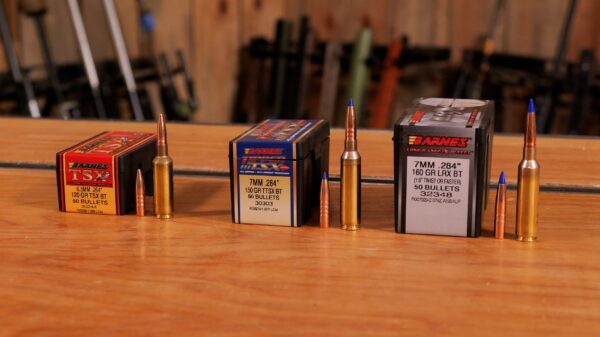
Barnes is a world-leader in copper bullets and is highly-regarded among big game hunters around the globe. They offer three different types of hunting bullets: TSX, Tipped TSX (TTSX) and LRX.
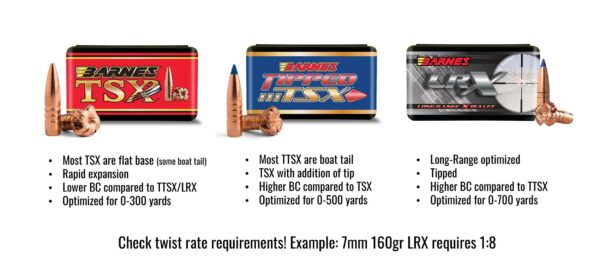
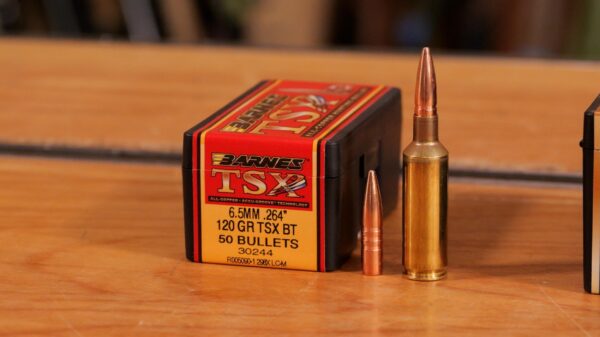
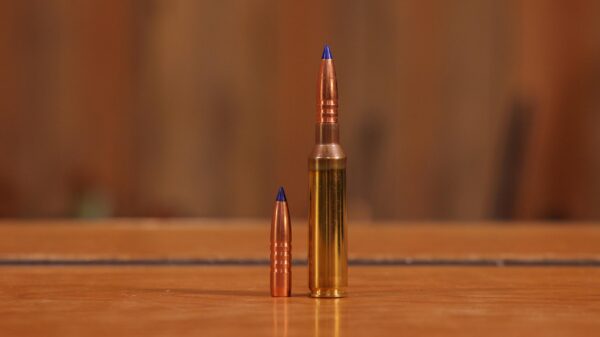
Most TSX bullets have a flat base and a lower BC compared to the TTSX and LRX bullets. They are designed for rapid expansion out to 300 yards.
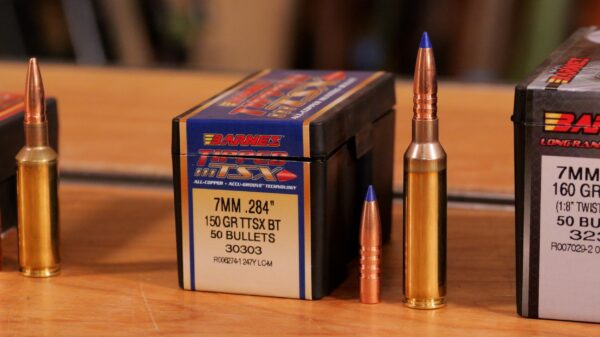
Most Tipped TSX bullets are boat tail. They have higher BC than the TSX and are optimized to perform from 0 to 500 yards.
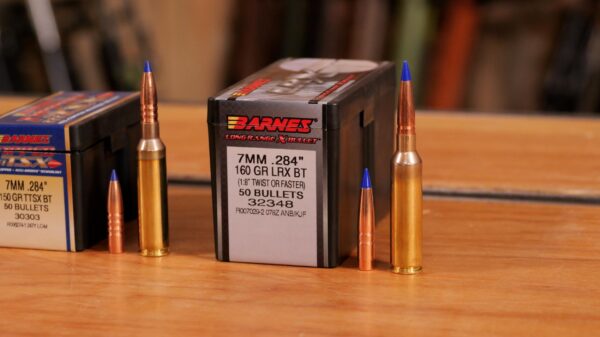
LRX bullets are tipped, long-range optimized out to 700 yards. These have the highest BC of the Barnes solid copper rifle bullet family. Remember to always check twist rate requirements for your selected bullet.
For a BC comparison, I selected three .30 caliber Barnes bullets: the 150-grain TSX, 150-grain TTSX, and 175-grain LRX. (The lowest weight .30 caliber LRX option was 175 grains).

Ballistics Gel
We took a close look at Barnes TTSX and LRX in our Science of Copper Bullets video, running ballistics gel tests at low and high velocities.
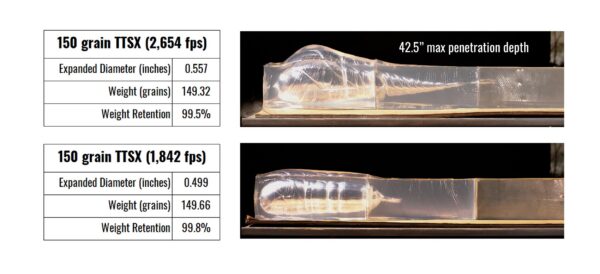
I compared the 7mm 150-grain TTSX to the 7mm 160-grain LRX, firing both through the same 7mm PRC. To summarize, the TTSX bullet had 99.5% weight retention at high velocity (2,654 fps) with 40.5” penetration depth into Clear Ballistics Gel. The same bullet at 1,842 fps had 99.8% weight retention and 22.5” of penetration.
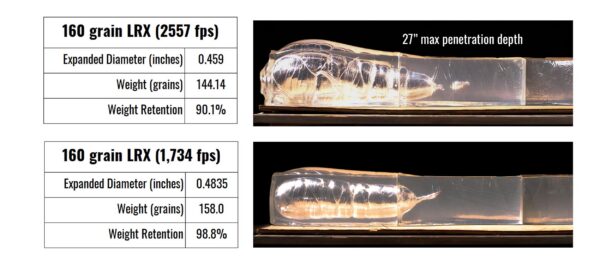
Moving up to the 160-grain LRX, we documented 90.1% weight retention and a 27” maximum penetration depth at 2,557 fps (high velocity). The LRX opens more readily and is more prone to lost petals than the TTSX. The low-velocity shot (1,734 fps) had a weight retention of 98.8% and 22.5” of penetration.
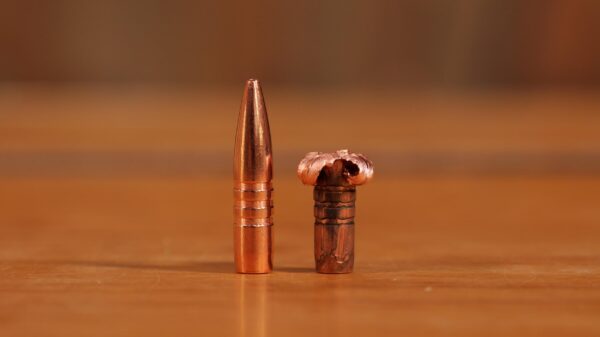
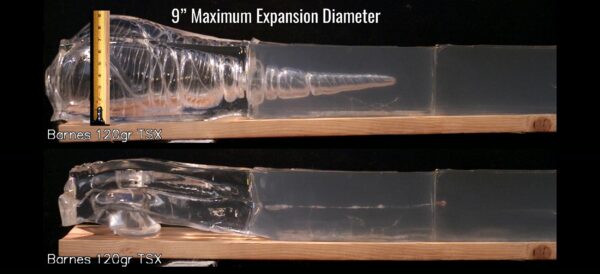
To add to the ballistics gel data we have collected with tipped bullets, Kyle Shields worked up a 6.5 Sherman Short load for a high velocity test, sending the Barnes 6.5mm 120-grain TSX at 2933.7 fps.
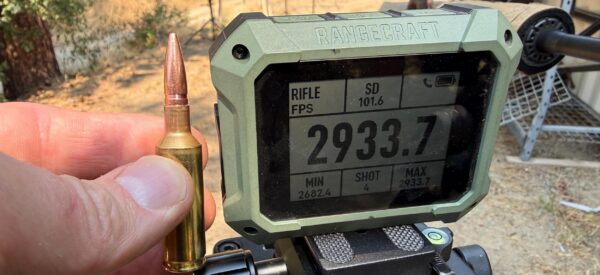
You can easily push the 6.5 Sherman Short over 3,000 fps, but with one ballistics gel shot, we wanted to ensure its velocity was under maximum. We recorded 9” maximum expansion diameter in the ballistics gel with 32” of penetration.
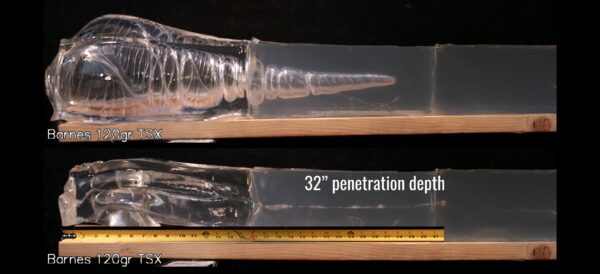
The bullet expanded 215.91% with 100% weight retention. (There was no plastic tip to break off with the TSX.) This particular load generated impressive expansion and penetration, making it ideal for hunting big game.
Guy Miner’s Hunting Experience
Guy Miner is a big fan of Barnes bullets and has had fantastic results with various bullets across different cartridges. He reported excellent penetration with the .25 caliber 100-Grain TSX and his 25-06, taking two mule deer with this bullet.
Guy also tested the .30 caliber 130-grain TTSX bullet with none other than his beloved 30-06. As a sort of torture test for the lightweight bullet, we sent it at 3,200 fps into Clear Ballistics Gel.
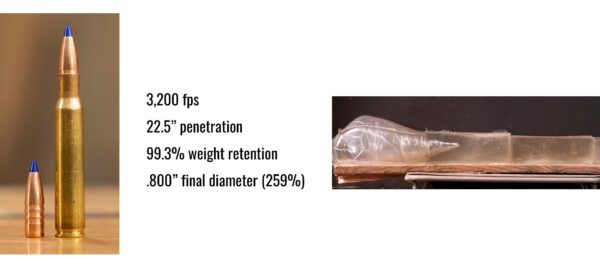
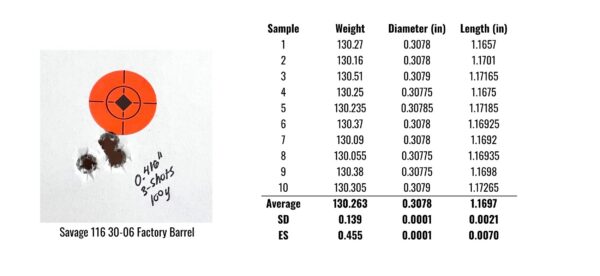
It retained 99.3% of its weight with a final diameter of 0.800”. It penetrated 22.5” into the blocks with a max cavitation of 10”. In accuracy testing, Guy fired a 0.416” three-shot group at 100 yards with a factory Savage 116 with a sporter barrel.
We also collected weight, diameter, and length measurements. The results were exceptional!
Conclusion
By design, solid copper bullets have better penetration and better weight retention but less explosive expansion than cup and core lead bullets.
On this note, our TSX ballistics gel test was really impressive, rivaling the cavitation we observed in Sierra TMK ballistics gel tests.
The biggest consideration in the choice between tipped and non-tipped Barnes bullets comes in what distance you will be impacting animals at.
We have had great accuracy with Barnes bullets across the board. You must decide what level of expansion and penetration your hunting situation requires. Consider trying a few different SKUs to see what works best in your rifle.
Get the Gear
Shop all Barnes bullets at Midsouth Shooters Supply
Athlon RangeCraft Velocity PRO Chronograph at Midsouth Shooters Supply
Don’t miss out on Ultimate Reloader updates, make sure you’re subscribed!
Thanks,
Gavin Gear
About the author