
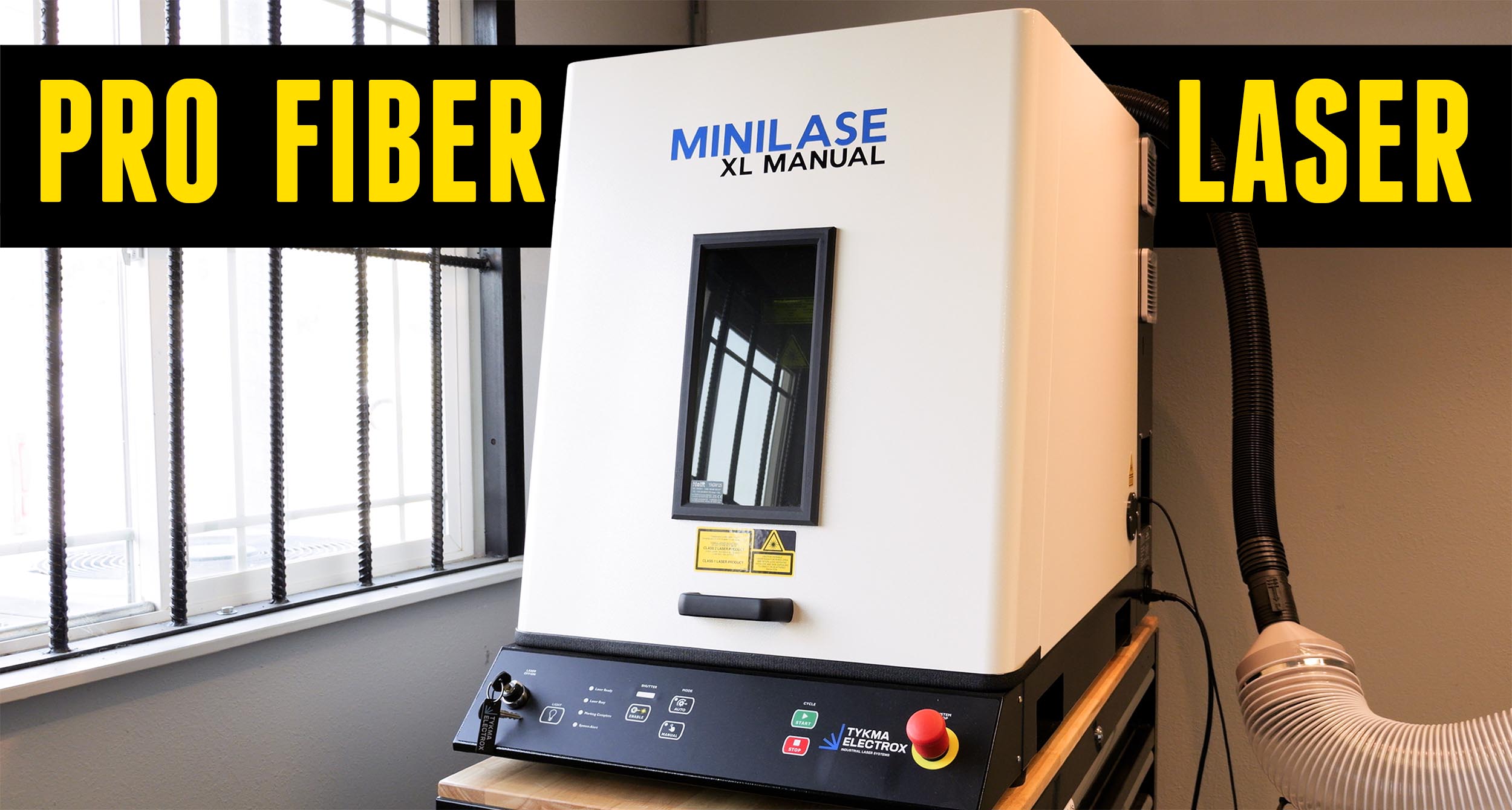
After seeing Cerakote laser imaging firsthand at Cerakote headquarters and at Shot Show, a laser upgrade was in order at Ultimate Reloader. Wanting to elevate capabilities beyond routine mechanical work (such as burning details and logos onto chambered barrels), We selected a professional system: the TYKMA MiniLase XL Manual.
Disclaimer
Ultimate Reloader LLC / Making with Metal Disclaimer: (by reading this article and/or watching video content you accept these terms). The content on this website (including videos, articles, ammunition reloading data, technical articles, gunsmithing and other information) is for demonstration purposes only. Do not attempt any of the processes or procedures shown or described on this website. All gunsmithing procedures should be carried out by a qualified and licensed gunsmith at their own risk. Do not attempt to repair or modify any firearms based on information on this website. Ultimate Reloader, LLC and Making With Metal can not be held liable for property or personal damage due to viewers/readers of this website performing activities, procedures, techniques, or practices described in whole or part on this website. By accepting these terms, you agree that you alone are solely responsible for your own safety and property as it pertains to activities, procedures, techniques, or practices described in whole or part on this website.
Why TYKMA?
After previously using a lower-end unit with limited support and lacking capabilities, the team wanted production-friendly equipment with solid domestic support for replacement parts, service, and custom solutions. TYKMA systems range from standard models to custom solutions, such as the setup seen at Cerakote headquarters.
Machine Specifications & Setup
The machine arrived on a pallet, flawlessly packed, and was uncrafted using two 2x4s. Four people lifted the unit (weighing roughly 75 to 100 pounds each) onto a roller to move it into the shop, allowing for mobility and integrated storage underneath.
Model: TYKMA MiniLase XL Manual
Laser Source: Mopa Fiber (available in 30W, 60W, or 100W; Ultimate Reloader uses the 30W model).
Pulse Duration: Ranges from a standard 250 nanoseconds down to 2 nanoseconds (two billionths of a second)—the key setting used for Cerakote laser imaging.
Frequency Range: 1 kHz to 4,000 kHz.
Work Area: Configurable to either 12” x 12” with a larger spot size (ideal for larger rifle chassis and Cerakote work) or 10” x 10” with a more concentrated smaller dot size (ideal for deep steel or aluminum engraving).
Max Part Size: Accommodates parts up to 20″ x 12½” x 8″ high (with alternative configurations up to 11″ x 27″ x 8″).
Class 1 Enclosure: Features a work-safe enclosure with green glass that blocks destructive light wavelengths, meaning operators do not need to wear safety glasses while the machine is running. It also includes an integrated safety switch on the door.
Cooling & Ventilation: Forced air cooling, internal fans, and a fume evacuation system connected via a 2-inch outlet.
Software Overview & Test Burns
Guided by Steve from TYKMA, the team walked through the software installation, machine identification, setting Z-heights, adding crosshatch hatching (such as 0.006 spacing), and utilizing features like trace, show contour, and bounding boxes.
Stainless Steel Deep Engraving
For ATF compliance, serial numbers require a depth of 3,000ths of an inch, though the shop typically goes 5 to 8 thousandths to ensure proper look and overfill definition with Cerakote.
Settings Used: Multi-layer setup combining text and multiple logo passes (including a final cleanup pass with a wider line spacing to eliminate crosshatch marks).
Process: Height was measured in millimeters using calipers (e.g., 43.62 mm), typed into each layer, applied, homed, traced, and run with the enclosure closed and shutter enabled.
Cerakote Laser Imaging (Ablation)
To test Cerakote laser imaging, the team used a panel coated in robin’s egg blue with black on top, ablating through the black layer to reveal the blue underneath.
Settings Used: Speed at 2,000 mm/s, frequency at 800 kHz, power adjusted to 50, and pulse width dropped down to 2 nanoseconds.
Result: Clean, sharp, fast results that showcase the “magic” of laser ablation over traditional vinyl stenciling and manual weeding.
What’s Next?
This introduction scratches the surface of the TYKMA MiniLase. Ultimate Reloader has two in-depth follow-up videos planned: one focused on metal deep engraving and another diving deeper into complex Cerakote laser imaging projects.
Get the Gear
TYKMA Minilase XL Laser Marking System
Don’t miss out on Ultimate Reloader updates, make sure you’re subscribed!
Thanks,
Gavin Gear
About the author