
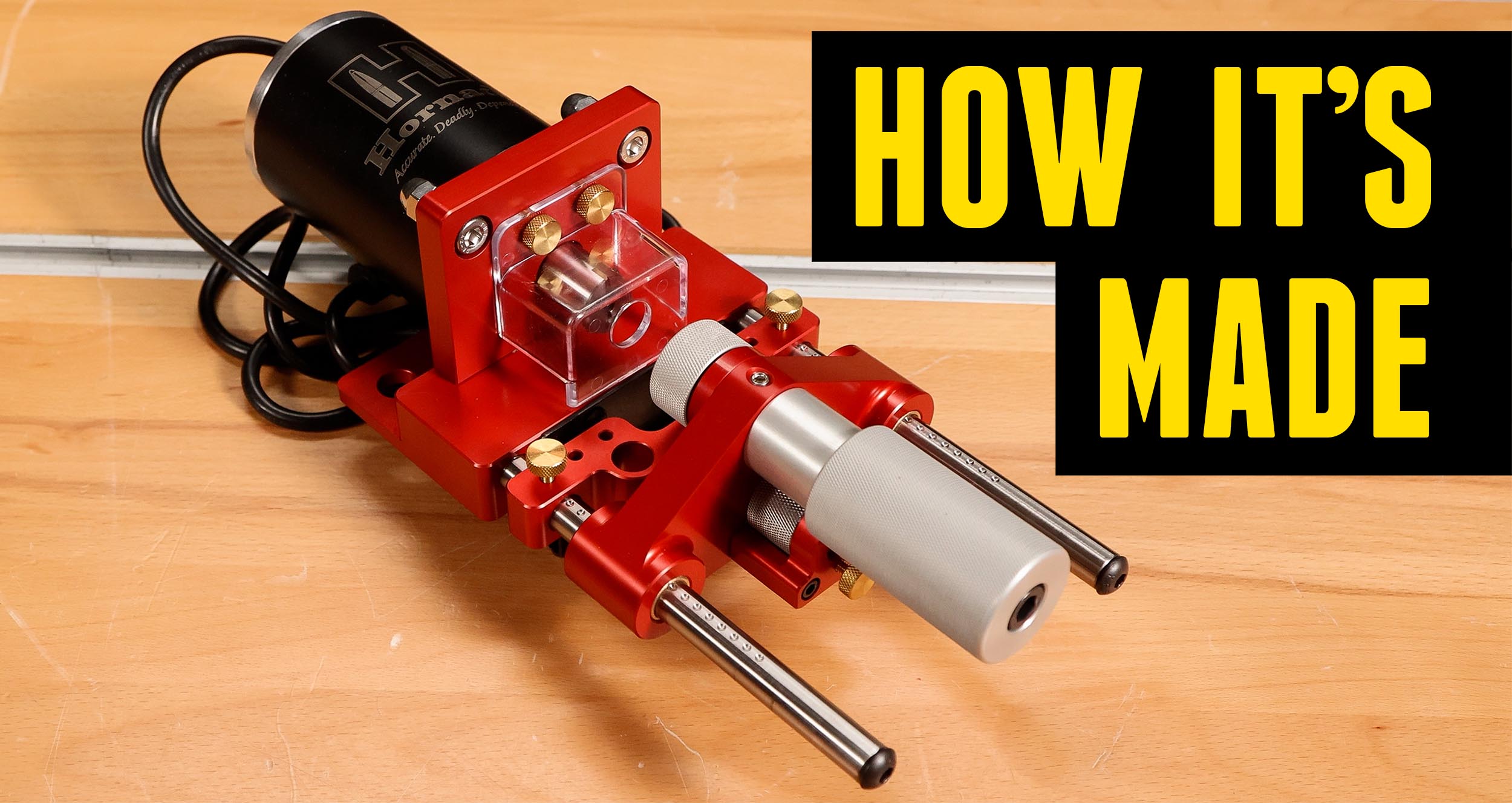
I recently traveled to Grand Island, Nebraska, to visit Hornady headquarters. While there, I stepped into the engineering room for Reloading Tools to meet with Lead Engineer Dylan Hood. I wanted to see the entire lifecycle of a reloading tool—from raw materials and design to machining and final assembly. To demonstrate the process, Dylan walked me through the complete manufacturing cycle of one of their premium tools: the Hornady High-Speed 3-in-1 Case Trimmer.
Disclaimer
Ultimate Reloader LLC / Making with Metal Disclaimer: (by reading this article and/or watching video content you accept these terms). The content on this website (including videos, articles, ammunition reloading data, technical articles, gunsmithing and other information) is for demonstration purposes only. Do not attempt any of the processes or procedures shown or described on this website. All gunsmithing procedures should be carried out by a qualified and licensed gunsmith at their own risk. Do not attempt to repair or modify any firearms based on information on this website. Ultimate Reloader, LLC and Making With Metal can not be held liable for property or personal damage due to viewers/readers of this website performing activities, procedures, techniques, or practices described in whole or part on this website. By accepting these terms, you agree that you alone are solely responsible for your own safety and property as it pertains to activities, procedures, techniques, or practices described in whole or part on this website.
Design and Foundation: Building Around the Motor
When designing the 3-in-1 case trimmer, the Hornady engineering team fundamentally started with the motor and built the rest of the modular design around it.
The heart of the trimmer is a direct-drive motor spinning at 2,200 RPM. Because it is direct-drive—meaning there are no belts—it provides instant torque and instant stopping power.
From a material standpoint, the trimmer is highly diverse. 6061 aluminum is used for the primary housing and structural chassis components. 12L14 steel is utilized for high-wear internal components like the collets and pilots while 2011 aluminum composes the handle subassemblies. The razor-sharp cutters are C2 carbide. All injection-molded components and stamped steel pieces are sourced entirely in the United States.
Advanced Machining and CAM
Taking a solid 3D model and turning it into physical parts requires meticulous programming in Mastercam. Hornady’s machine operators program the toolpaths and cut the raw stock utilizing advanced machinery, including a brand-new 5-axis CNC mill.
Utilizing 5-axis machining allows Hornady to be incredibly flexible and efficient. For example, parts like the trimmer’s shuttle used to require three or four separate machining operations. Now, they can complete the part in just two operations. Touching the part less means the machines hold significantly tighter tolerances.
Other components, like the faceplates, are drilled and cleaned up in a single operation from the front side. Even the custom brass thumb screws (which hold on the clear shaving shroud and are also used on Hornady’s comparator tools) are dropped completely in-house. Once raw aluminum batches are finished, they are sent out to be hard-coat anodized.
As for the motor itself, it arrives at the factory in a raw aluminum finish. A technician places it into a dedicated fixture where an automated laser program permanently engraves the signature Hornady logo directly onto the motor housing.
Final Assembly and Quality Control
Start to finish, it takes an experienced technician about 20 minutes to assemble a 3-in-1 trimmer. However, to optimize production, Hornady utilizes a subassembly manufacturing model.
Just like an engine being built separately before dropping into a car chassis, Hornady technicians pre-build the handle assemblies and the macro-adjust stop carriages. Once these subassemblies are complete, they are united with the base plate and laser-engraved motor.
During this final step, the assembled trimmers are checked with a concentricity gauge to ensure everything is perfectly aligned. They are then placed on a fast-track line to bypass the other heavy presses, where they are immediately shrink-wrapped, boxed, and put on a pallet to head to “Hornady West” for distribution.
Conclusion
Seeing raw stock turned into a highly precise case preparation tool in real-time is a gearhead’s dream. Dylan and the engineering team at Hornady have an incredibly dialed-in process, blending advanced 5-axis machining with smart, modular assembly techniques.
(As an added bonus for the trip, Dylan and the team surprised me with a gorgeous, custom laser-engraved Ultimate Reloader anodized aluminum loading block!)
Get the Gear
Hornady Case Trimmer at Midsouth Shooters Supply
Don’t miss out on Ultimate Reloader updates, make sure you’re subscribed!
Thanks,
Gavin Gear
About the author