
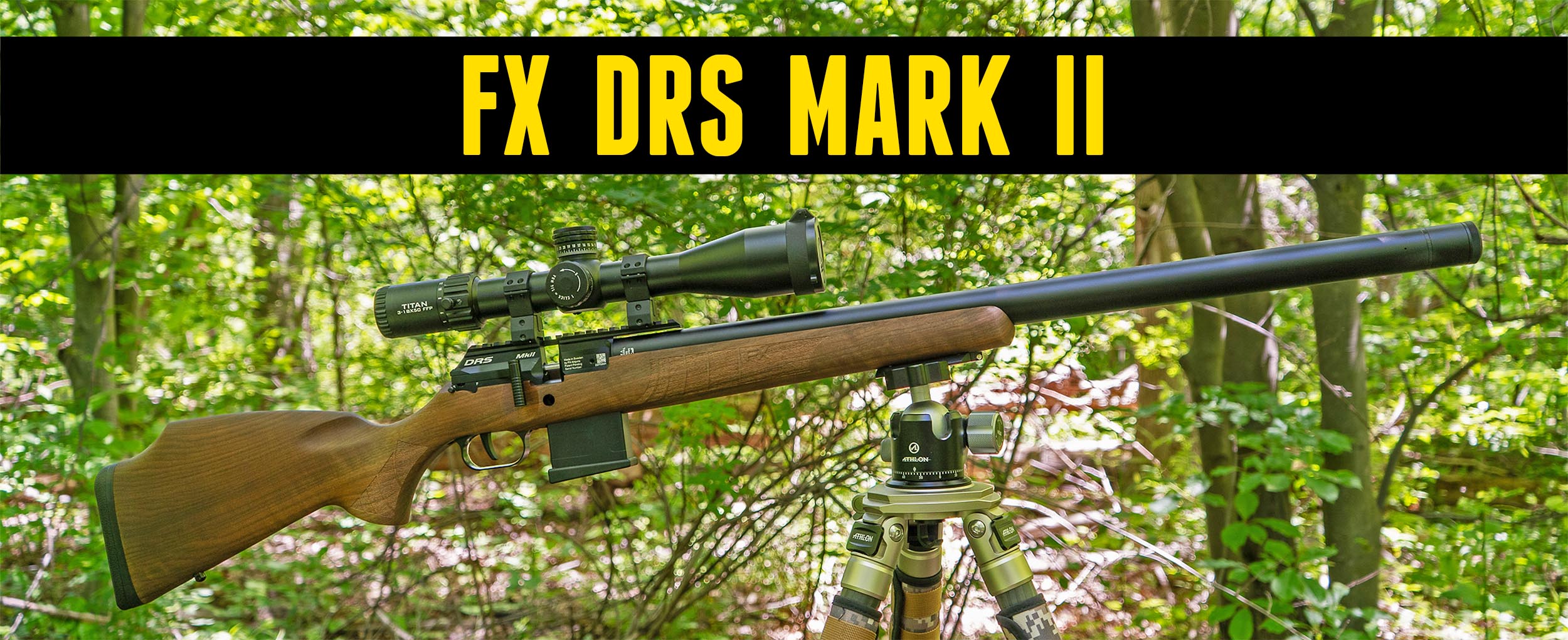
You might wonder why air guns? That’s a question I asked myself for the first time several years ago. The truth is, air rifles in certain configurations can meet or exceed the performance of .22 LR. More importantly to me, they increase your opportunities for shooting. That’s what I’ll get into in this video.
Disclaimer
Ultimate Reloader LLC / Making with Metal Disclaimer: (by reading this article and/or watching video content you accept these terms). The content on this website (including videos, articles, ammunition reloading data, technical articles, gunsmithing and other information) is for demonstration purposes only. Do not attempt any of the processes or procedures shown or described on this website. All gunsmithing procedures should be carried out by a qualified and licensed gunsmith at their own risk. Do not attempt to repair or modify any firearms based on information on this website. Ultimate Reloader, LLC and Making With Metal can not be held liable for property or personal damage due to viewers/readers of this website performing activities, procedures, techniques, or practices described in whole or part on this website. By accepting these terms, you agree that you alone are solely responsible for your own safety and property as it pertains to activities, procedures, techniques, or practices described in whole or part on this website.
About the FX DRS Mark II Classic
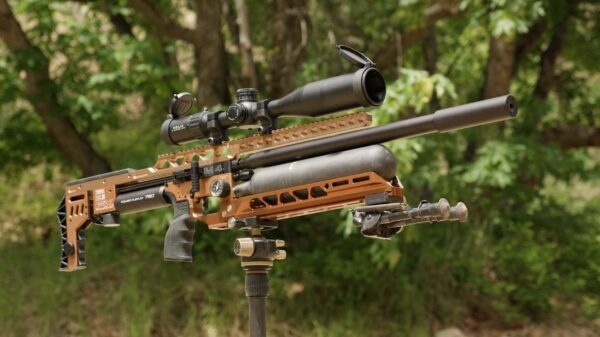
The last and first time we showed air guns on the Ultimate Reloader channel, Gavin was shooting rock trucks out at the Ultimate Reloader Ranch with an FX Airguns Impact M4 with 30 caliber slugs.
This time, I have something a bit more traditional, the FX DRS Mark II Classic. Airguns are incredibly versatile and not the BB guns you got for Christmas as a kid. They are precision tools that need to be treated with respect. Remember that all of the rules of firearm safety still apply.
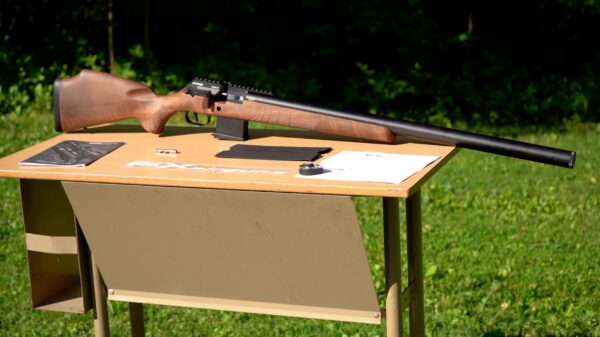
The DRS Mark II Classic comes with one magazine in your caliber of choice (17, 22, 25, or 30), a fill probe, two extra seals, an owner’s manual, a sticker, and an FX certificate of authenticity.
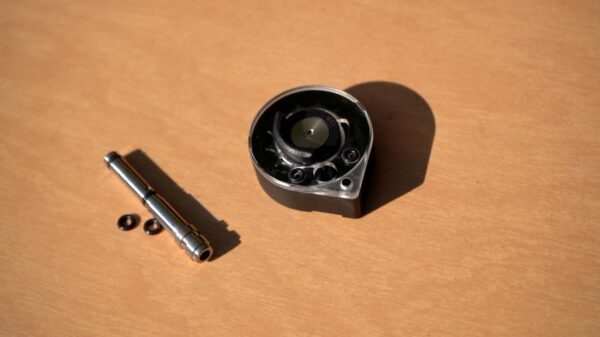
This may seem like such a small thing, but I was actually very happy and impressed to see FX include this because it’s basically a cheat code.
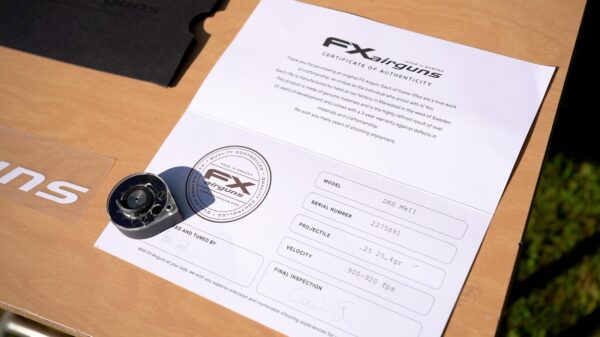
It not only gives you who quality control checked and tuned the rifle, but it tells you what it is tuned for from the factory. My sample rifle has a 700 mm sniper barrel tuned for 25.4 grain pellets. The expected velocity is between 900 and 920 ft per second. That gave me a starting point so that I wasn’t in the dark about what to expect.
From FX Airguns:
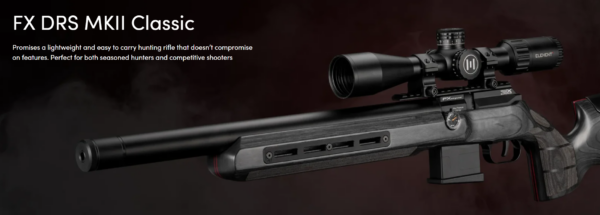
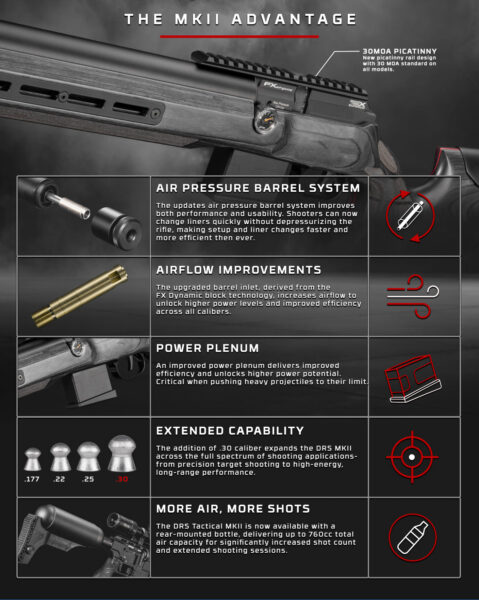
The FX DRS Classic MKII builds on the groundbreaking DRS platform with enhanced efficiency, refined airflow, and greater versatility than ever before. Featuring the new APB barrel system, an improved power plenum, and the Dynamic Block barrel inlet for optimized air delivery, the MKII delivers the consistency and precision modern shooters demand. Now available in calibers up to .30 and equipped with a 30 MOA Picatinny rail across the platform, it is built to perform at every distance.
Designed to blend traditional rifle aesthetics with cutting-edge airgun technology, the DRS Classic MKII maintains its sleek over-the-barrel air cylinder design for exceptional balance and handling.
Available in three distinct stock options — rugged synthetic soft-touch, elegant walnut, or the striking Redline laminate — the DRS Classic MKII offers a configuration to match every shooter’s style, whether in the field or on the range.
About the FX DRS Mark II Line
The FX Air Guns DRS Mark II line is actually one integrated core with three different configurations.
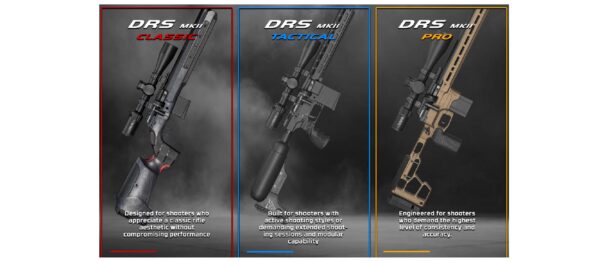
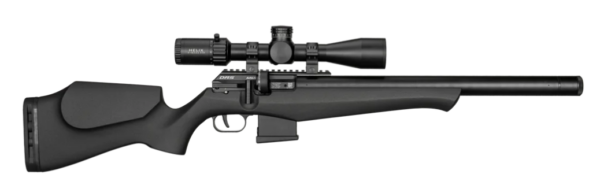
The DRS Mark II Classic is available with a walnut stock like my test gun, a synthetic stock, or a new redline option with M-LOK slots for accessory compatibility.
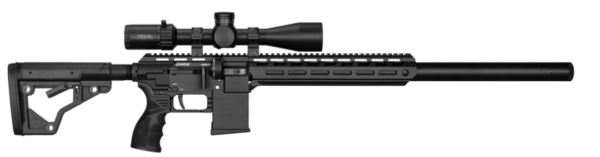
The DRS Mark II Tactical is designed for greater modularity. It’s ideal for people who want to have more shots before they have to fill the gun again, and those who want to engage targets on the move. This platform is available with either an AR-15 buttstock option (you have to choose and add your own buttstock) or the bottle option which allows an extra 760cc of air. This allows you to go further before your next fill.
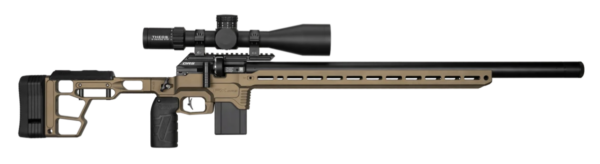
Both the DRS Mark II Classic and DRS Mark II Tactical arrive tuned from the factory for pellets. The DRS Mark II Pro is designed and tuned for slugs. The Pro model is specifically set up for precision rifle series type competition. This includes the Rocky Mountain Air Gun Challenge’s precision marksman challenge as well as NRL22 and any shooting disciplines in which you can engage multiple targets at various distances across a number of different shooting positions. The Pro model is competition-ready right out of the box with a MDT chassis familiar to precision competitors.
Across the board, there are some differences between the original FX DRS series and the new DRS Mark II series. All the DRS Mark II models have a 30 MOA Picatinny rail. This allows you to get greater elevation when adding an optic. DRS Mark II models are also available in 30 caliber. Previously, they were only available in 17, 25, and 22 caliber models. The DRS Mark II system has been redesigned with efficiency in mind, designed to push heavier projectiles farther and faster. You’ll notice the upgraded power plenum as well as the new APB barrel system, which allows you to do caliber changes without having to degas the rifle.
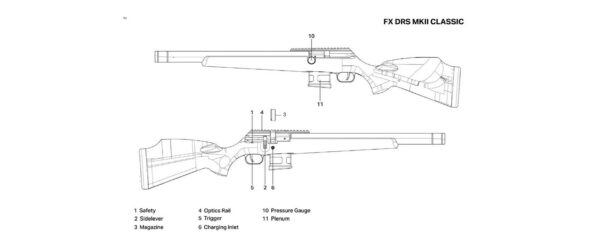
The basic features of the DRS Mark II Classic include a 30 MOA Picatinny rail, safety, a two-stage adjustable trigger, an upgraded power plenum, a pressure gauge, an upgraded charging inlet, sling swivel studs, and a threaded barrel. This allows you to add a moderator if you so choose, but the rifle is already pretty quiet as is.

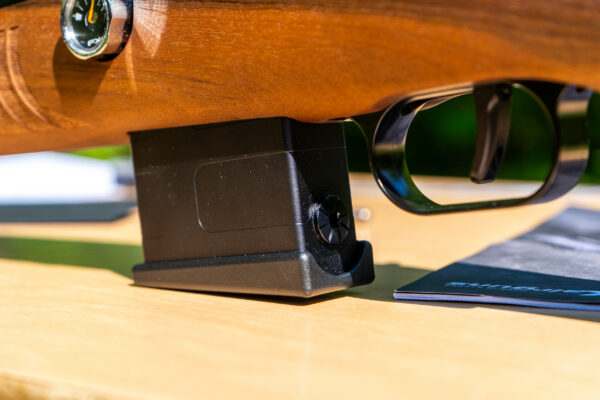
Pulling back the side lever allows you to insert the magazine and feed a pellet into the chamber. Note also that the power plenum looks like a removable box magazine, but is not removable and does not store projectiles.
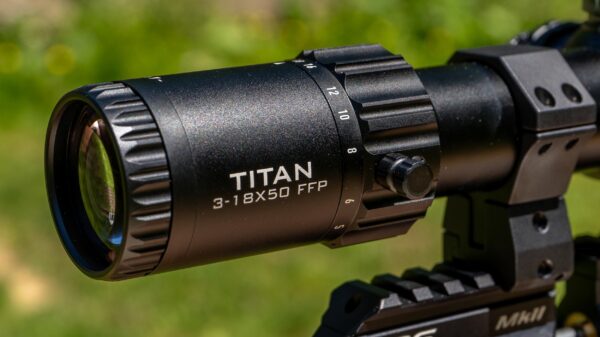
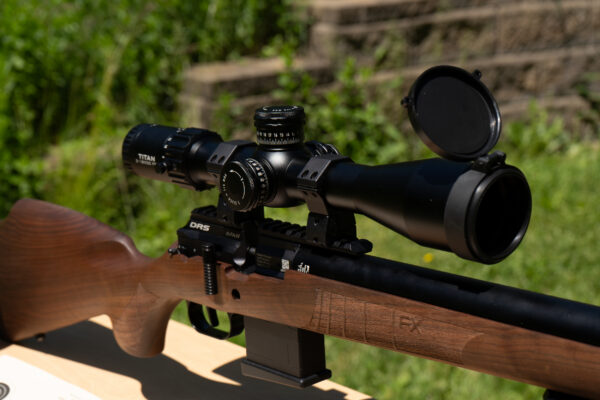
I made a few upgrades to this rifle, starting with an Element Optics 3-8x 50 FFP Titan along with FX No-Limit scope rings. These scope rings are able to move up farther to allow for greater elevation. I didn’t need that, so I just left them in their base configuration.
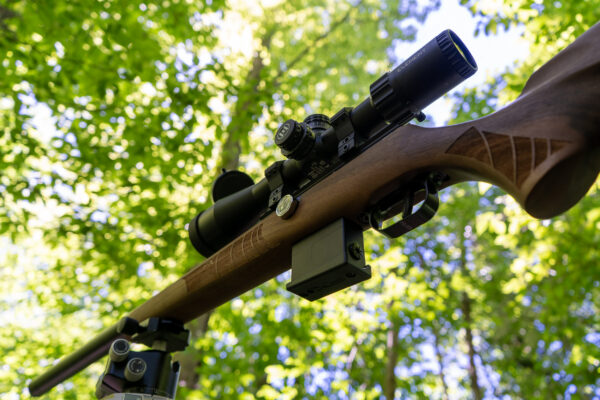
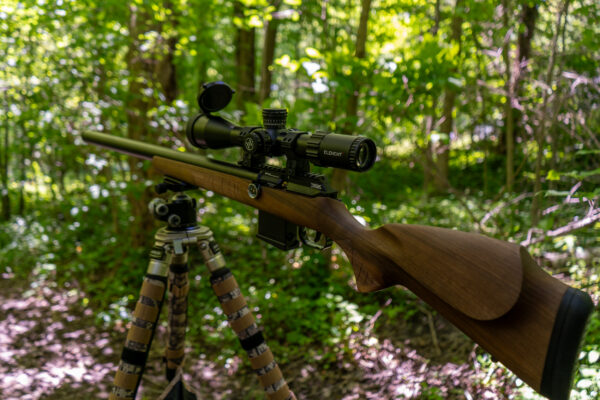
I also added an EZ ARCA rail from Salmon River Solutions. This rail brings ARCA compatibility to traditional rifles that only have sling swivel studs.
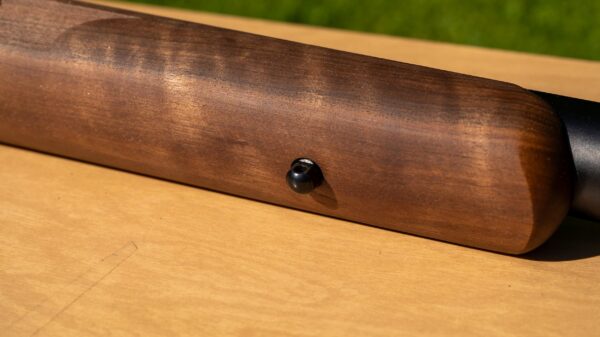
I removed the sling swivel stud and replaced it with a center fastener through the ARCA rail. I then tightened the four set screws until they dug slightly into the wood and secured them with Loctite. The SRS EZ ARCA rail came with two screws, but the design of this airgun required a longer one. I was able to get one from the local hardware store.
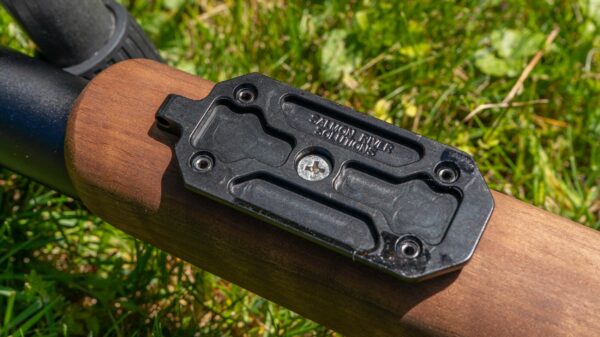
Overall, I was very impressed with this simple upgrade. It maximized the versatility of this platform, allowing me to add a bipod and use this rifle with my Athlon Midas tripod.

A Brief Note on Airgun Tuning & Estimating Regulator Pressure
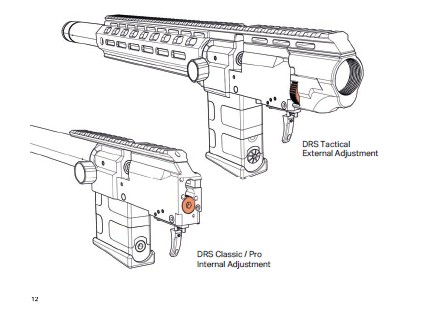
Just as you can go down the rabbit hole with reloading and fine-tune ammunition to fit your rifle, you can actually fine-tune an air rifle to perform best with your desired projectiles. I did not go deep into tuning with this rifle as I wanted to discuss exactly what this rifle is able to do out of the box, but know that you can adjust both the hammer spring tension and the regulator pressure.
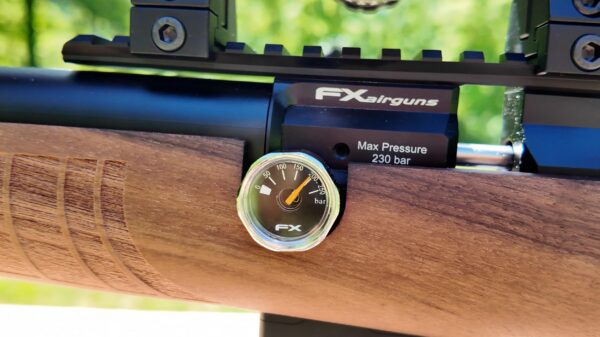
This air rifle works as a system, and the system pressure cannot exceed 230 bar. Overpressuring a PCP can be dangerous. This maximum pressure is marked above the pressure gauge so it’s easy to reference.
Some rifles have a separate gauge that tells you the regulator pressure. The DRS Mark II Classic does not, but there is a connection area on the rear of the power plenum for the addition of a gauge. The regulator ensures the same amount of pressure is fed for each shot, setting the output/working pressure for the rifle. The main reservoir (tank pressure) has to have more pressure than the regulator for the rifle to work properly.
The regulator pressure varies by barrel length, caliber, and model. Without a regulator gauge, I had to do testing to approximate what it was set to. The way that I went about figuring out the minimum tank pressure was by firing shots without refilling the rifle. I monitored velocities using an Athlon RangeCraft Pro chronograph. I was able to shoot over 50 shots before I began to see any lower and irregular velocities—somewhere around 140 bar.
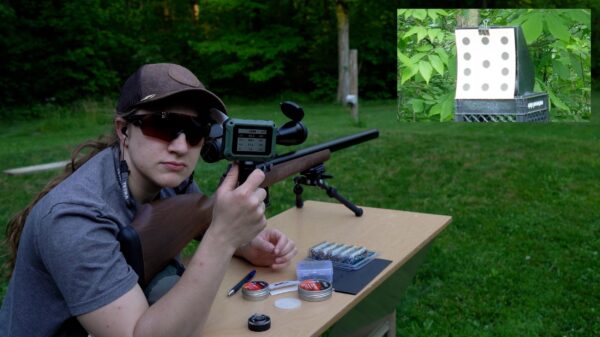
Just to be safe, I personally would not run this 700mm 25-caliber DRS Mark II Classic below 150 bar. For the most consistent shots and best accuracy, always keep the tank pressure between the regulator pressure and maximum system pressure (150 bar – 230 bar).
Filling a Magazine
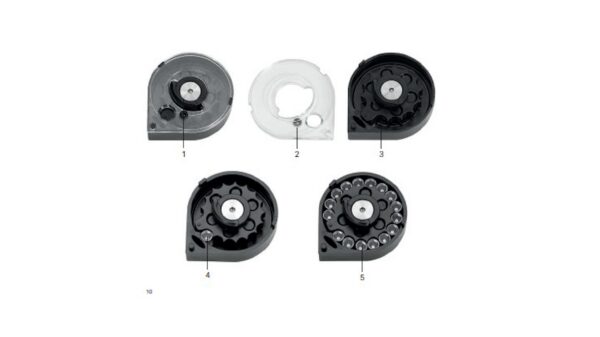
FX rotary magazines can be a bit tricky to learn how to fill. Some time ago, I began looking at the plastic magazine tab as a smile. If you rotate the “smile” so that it falls into the open area, you’re able to remove the cover. Rotate the inner piece counterclockwise until the part that’s marked with the caliber, in this case 25, is all the way over at about the 1:00 position. This is under spring tension and needs a pellet to make it stay. I like to add two, though one can do the trick. Hold your finger beneath the pellet you insert over the open hole so that it doesn’t fall through to the other side. Once you have a pellet holding the spring tension, you can easily fill the entire magazine. Once you’ve filled it to capacity, put the lid back on and turn the frown upside down. It is ready to insert into the rifle.
Shooting
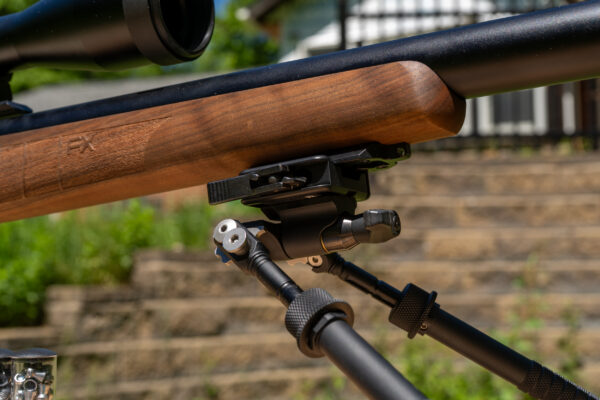
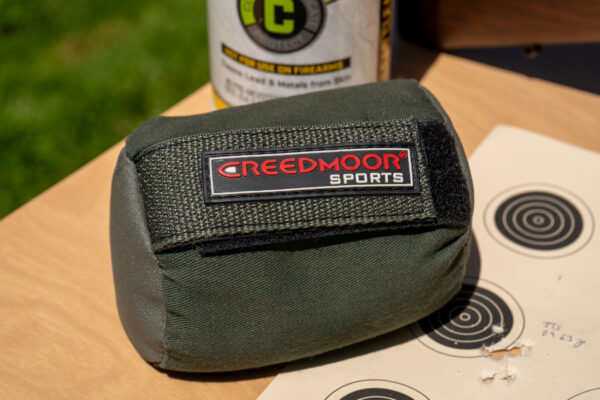
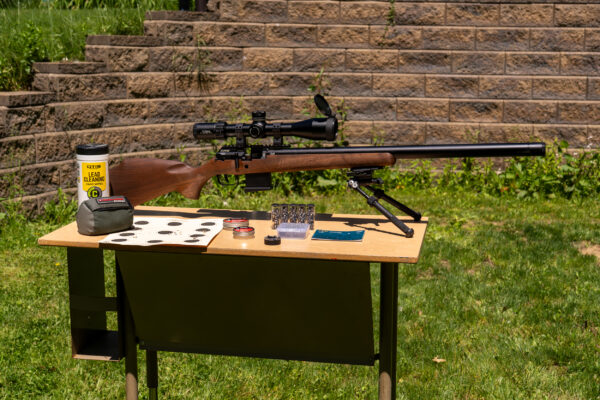
After estimating the regulator pressure, I decided to shoot some groups off a bipod with a Creedmoor Soup Can rear bag.
I filled the rifle with air, making sure not to exceed 230 bar, and also to be sure not to use pure oxygen or any other gas, only dry air.

You can get a scuba tank from a scuba shop or airgun supplier. Pyramyd Air is local to me in Ohio and sells everything you need to get started with airguns. They very kindly supplied a number of projectiles for me to test, including several sampler packs and hunting pellets. The sampler packs were very convenient as they allowed me to try multiple pellet weights in small quantities to see what the rifle likes.
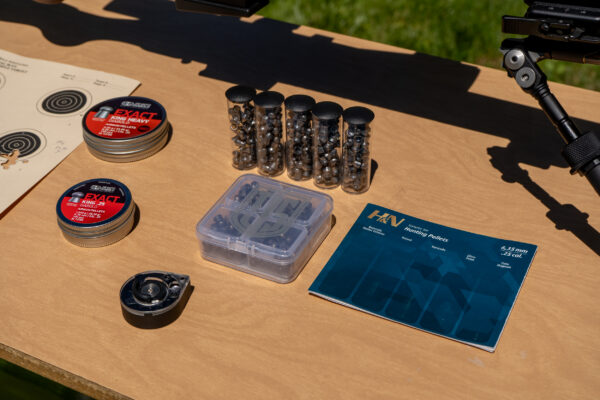
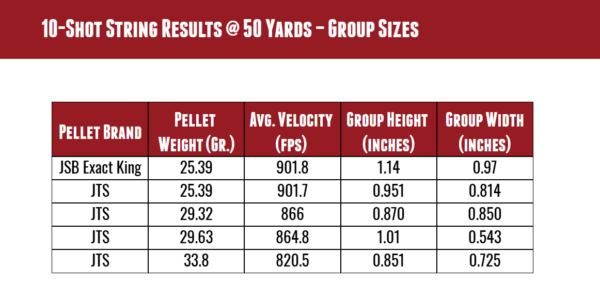
As I mentioned, I already had the cheat sheet with the certificate of authenticity. It told me that the rifle was tuned from the factory for 25.4 grain pellets. I went ahead and started with 25.39-grain JSB Diabolos. JSB is a very popular brand and exactly what it was tuned for from the factory. When I chronographed these, they came in about 905 feet per second, which is exactly within the 900 to 920 fps range that FX specified. I placed a rimfire trap at 50 yards, set up a smallbore target, and shot 10-shot groups with six different pellet types.
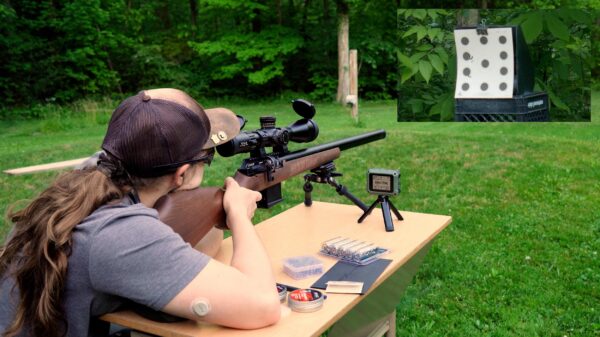
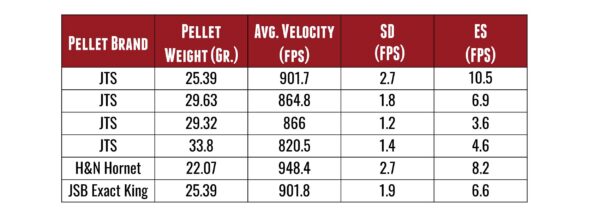
The JTS sampler pack had 25.39, 29.32, 29.63, and 33.8 grain pellets. I tested all of those in addition to the 25.39 JSB Exact King. I purposely tested two of the same grain weight because I wanted to see exactly how they would perform from two different brands. I also tried the H&N Hornet 22.07-grain hunting pellet. As I expected, this performed a lot differently than everything else and looks pretty nasty. I would not want to get hit by one of those. Here are the average velocities, standard deviations, and extreme spreads that I captured for this testing. As expected, the heavier the pellet, the slower the average velocity. Both the JTS 25.39 grain and the JSB Exact King 25.39 grain came in at about 902 feet per second, which is right at the low end of what FX specified from the factory.
Remember that your rifle is going to shoot differently in different environmental conditions. What it was tuned for from the factory will get you started, but you may have to make adjustments over time to be able to get your desired performance. The greater number of shots that I fired, the more a pattern began to emerge. I was able to see a more representative cone of fire for each of the six different pellets that I shot.
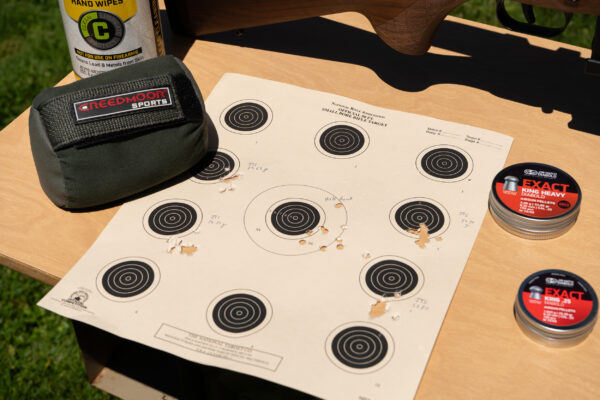
Here are the groups I measured at 50 yards. While not tiny groups, I was happy with them out-of-the-box with no tuning. I’d like to get the velocity up closer to 920 fps for the 25.39-grain pellets and see what effect that would have.
Why Airguns?
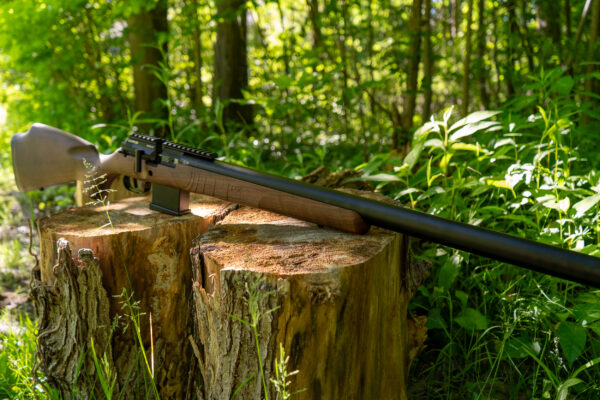
The DRS Mark II, particularly in its classic configuration, is an excellent bridge between air guns and powder burners. It’s incredibly traditional and familiar, looking much like a regular hunting rifle. This means that there’s not a huge transition into the feel, but it is cheaper to shoot per shot.
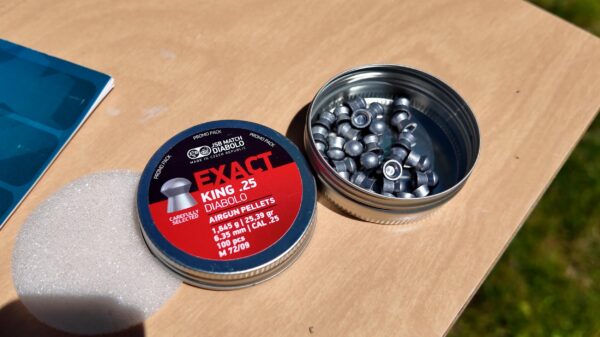
The initial investment with the PCP air rifle is the gun and the way to fill it, whether that be a compressor, a scuba tank, etc. Pellets are affordable. A 100-count tin of the 25.39-grain JSB Diabolo pellets costs about $12. You can shoot all day and don’t have to take the time to reload.
Besides the cost savings, air rifles offer greater opportunities for shooting. Always check local laws and regulations, but air rifles are not classified as firearms. This means that you can shoot them in many more places than you can a traditional powder burner. Firearm safety rules still apply to airguns, so make sure that you have an appropriate and safe back stop. Rimfire traps work splendidly for this and allow you to shoot in backyards or smaller areas that you wouldn’t necessarily be able to safely fire a rifle.
Air rifles are great tools for getting people involved in shooting, particularly women, younger shooters, or people who are nervous, apprehensive about firearms or afraid of recoil. One of the reasons it took me so long to get into shooting is because I wasn’t strong enough to pump a BB gun. I enjoyed shooting it, but quickly lost interest. I can only imagine what my journey would have looked like had I had something like this DRS Mark II Classic at the same age.
Conclusion
Overall, I was incredibly happy with this rifle’s performance. It was really fun to be able to go out into the backyard and shoot for hours with no recoil, just enjoying being behind a rifle. Check the local laws and regulations, but odds are you can shoot an air gun like this in more areas than you can a firearm.
Realize that air guns are versatile. You can use them for hunting with dedicated pellets like the sampler pack from H&N, but you can also use them for target shooting and introducing new people to marksmanship. It is a very affordable and accessible way to get people involved in shooting and to make sure that they have a great first experience.
Get the Gear
FX DRS Mark II Classic at Utah Airguns and Pyramyd Air
Shop the FX DRS Mark II Series at Utah Airguns and Pyramyd Air
Element Optics Titan 3-18×50 FFP at Utah Airguns and Pyramyd Air
Salmon River Solutions EZ ARCA Rail
Creedmoor Sports Soup Can Rest
Athlon RangeCraft Velocity PRO Radar Chronograph at Midsouth Shooters Supply
Athlon Midas CF36 Carbon Fiber Tripod at Utah Airguns
H&N Hunting Pellet Sampler .25, 5 Types at Pyramyd Air
JTS Dead Center Precision Sampler Pack .25 Cal, at Pyramyd Air
JSB Match Diabolo Exact King .25 Cal, 25.39 Grains at Pyramyd Air
JSB Match Diabolo Exact King MKII Heavy .25 Cal, 33.95 Grains at Pyramyd Air
Don’t miss out on Ultimate Reloader updates, make sure you’re subscribed!
Thanks,
Serena Juchnowski
About the author